

What is Artificial Intelligence? The Core Concept Explained
At its heart, Artificial Intelligence (AI) is a broad field of computer science dedicated to creating machines that can perform tasks traditionally requiring human intelligence. Think about what makes humans intelligent: learning, problem-solving, decision-making, understanding language, and recognizing patterns. AI seeks to replicate these cognitive functions in machines, enabling them to perceive their environment, reason, learn, and take action to achieve specific goals, often with a level of efficiency and scale far beyond human capabilities.
The journey of AI began with ambitious dreams in the mid-20th century, conceptualized by pioneers who imagined “thinking machines.” Early AI focused on symbolic reasoning, attempting to program computers with explicit rules and knowledge to solve problems. This approach, while foundational, often struggled with the complexities and ambiguities of the real world. The modern era of AI, particularly over the last two decades, has been largely defined by a shift towards data-driven approaches, where machines learn from vast amounts of information rather than being explicitly programmed for every scenario.
It’s crucial to understand that AI isn’t a single technology but a collection of diverse technologies and methodologies. These include machine learning, deep learning, natural language processing (NLP), computer vision, robotics, and expert systems, among others. Each of these sub-fields contributes to the overarching goal of creating intelligent systems. For instance, an AI system designed to understand human speech might leverage NLP, while one that identifies objects in images would use computer vision techniques. The ultimate aim is to empower machines to adapt, learn, and perform tasks that, until recently, were exclusively within the domain of human intellect.
This pursuit of intelligent machines isn’t just about creating sophisticated tools; it’s about augmenting human potential and solving some of the world’s most pressing challenges. From accelerating scientific discovery to optimizing logistical chains and personalizing educational experiences, AI holds immense promise. However, understanding its foundational principles is the first step towards appreciating its power and navigating its future implications responsibly.
Understanding the Different Types of AI: Narrow, General, and Super
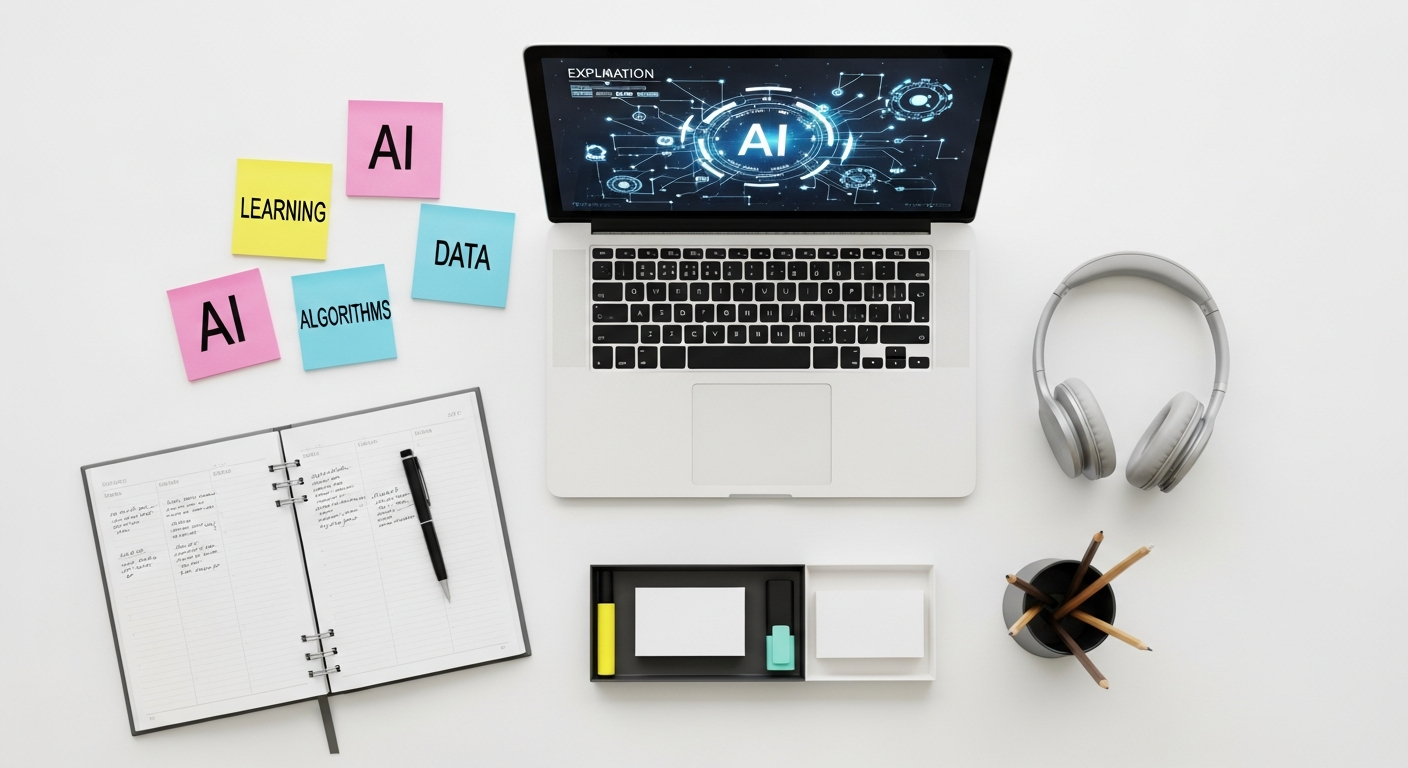
When we talk about Artificial Intelligence, it’s important to differentiate between the various levels or types of AI, as they represent distinct stages of development and capability. Broadly, AI is categorized into three main types based on their intelligence and functionality: Artificial Narrow Intelligence (ANI), Artificial General Intelligence (AGI), and Artificial Super Intelligence (ASI).
Artificial Narrow Intelligence (ANI) – The AI We Use Today
Artificial Narrow Intelligence, often referred to as “Weak AI,” is the only type of AI that currently exists and is widely deployed. ANI systems are designed and trained for a specific task or a narrow set of tasks. They can perform these particular functions exceptionally well, often surpassing human performance, but they lack the ability to perform outside their designated domain or to generalize their intelligence to other tasks. They don’t possess genuine consciousness, self-awareness, or human-like understanding.
- Examples of ANI:
- Voice Assistants: Siri, Alexa, Google Assistant can understand and respond to specific voice commands, play music, set alarms, or search for information. They are highly effective within these defined parameters.
- Recommendation Systems: Platforms like Netflix, Amazon, and Spotify use ANI to analyze your past preferences and suggest movies, products, or songs you might like.
- Spam Filters: These AI systems learn to identify and block unwanted emails based on patterns in spam messages. This is a prime example of how AI can enhance your digital hygiene, working in tandem with the Best Email Management Tools 2026 to keep your inbox clean and focused.
- Self-Driving Cars: While complex, these systems are still ANI, focused solely on the task of driving within defined parameters and environments.
- Image Recognition: AI that can identify faces in photos or objects in videos.
- Game AI: AI opponents in video games are programmed to play within the rules of a specific game.
The vast majority of AI applications you interact with daily fall under ANI. They are powerful tools because they specialize, making our lives easier and more efficient in countless ways.
Artificial General Intelligence (AGI) – The Hypothetical Human-Level AI
Artificial General Intelligence, or “Strong AI,” refers to hypothetical AI systems that possess the ability to understand, learn, and apply intelligence across a wide range of tasks, just like a human being. An AGI system would be capable of performing any intellectual task that a human can, including reasoning, problem-solving, abstract thinking, learning from experience, and even understanding complex concepts. It would have consciousness, self-awareness, and the ability to feel and express emotions.
- Characteristics of AGI:
- Versatility: Not limited to a single task.
- Learning and Adaptation: Can learn new skills and adapt to new environments without explicit programming for every scenario.
- Common Sense: Possesses an intuitive understanding of the world.
- Creativity: Capable of original thought and innovation.
Currently, AGI remains a theoretical concept and a significant challenge for AI researchers. We are still far from achieving true AGI, though it is a long-term goal for many in the field.
Artificial Super Intelligence (ASI) – Beyond Human Capabilities
Artificial Super Intelligence is an even more advanced and purely hypothetical form of AI that would not only match but far surpass human intelligence in virtually every field, including scientific creativity, general wisdom, and social skills. An ASI would be capable of solving problems that are currently beyond human comprehension and could lead to rapid technological advancements, potentially transforming society in unimaginable ways.
- Characteristics of ASI:
- Vastly Superior Intellect: Outperforms the smartest human minds in all cognitive aspects.
- Accelerated Self-Improvement: Could rapidly enhance its own capabilities, leading to an intelligence explosion.
- Unpredictable Impact: The implications of ASI are profound and widely debated, with some envisioning a utopian future and others warning of existential risks.
ASI is still firmly in the realm of speculation and theoretical discussion. While it raises fascinating philosophical and ethical questions, it’s important for beginners to understand that our current reality is dominated by ANI, and the path to AGI and ASI is complex and uncertain.
How Does AI Work? Demystifying the Mechanisms
Machine Learning: Learning from Data
Imagine you want to teach a computer to identify cats in images. Instead of writing millions of lines of code to describe every possible feature of a cat (whiskers, ears, fur, tail, etc., in every conceivable angle and lighting), you would use machine learning. You feed the computer a vast dataset of images, some containing cats and some not, with each image labeled accordingly. The machine learning algorithm then processes this data, identifying patterns and correlations that distinguish cats from other objects. Over time, it “learns” to make accurate predictions on new, unseen images.
- Key Components of Machine Learning:
- Data: The fuel for AI. The more high-quality, relevant data an AI system is trained on, the better it performs. This data can be text, images, audio, numbers, or any other form of information.
- Algorithms: These are the set of rules or instructions that the AI system follows to learn from the data. Different algorithms are suited for different types of tasks (e.g., classification, regression, clustering).
- Models: The output of the learning process. Once an algorithm has been trained on data, it produces a “model” that can then be used to make predictions or decisions on new data.
Machine learning itself has various sub-types, including supervised learning (where the data is labeled, like our cat example), unsupervised learning (where the AI finds patterns in unlabeled data), and reinforcement learning (where the AI learns by trial and error, receiving rewards or penalties for its actions, much like training a pet).
Deep Learning: Inspired by the Human Brain
A particularly powerful subset of machine learning is Deep Learning. This approach is inspired by the structure and function of the human brain, utilizing artificial neural networks. Just as our brains have billions of interconnected neurons, deep learning models consist of multiple layers of “artificial neurons” (nodes) that process information. Each layer learns to recognize different aspects or features of the input data, passing its output to the next layer for further processing.
- Artificial Neural Networks (ANNs):
- Input Layer: Receives the raw data (e.g., pixels of an image, words in a sentence).
- Hidden Layers: These are the “deep” part of deep learning. There can be many hidden layers, each performing complex calculations and extracting increasingly abstract features from the data. For example, an early layer might detect edges, a later layer might combine edges to form shapes, and an even later layer might recognize entire objects.
- Output Layer: Produces the final result (e.g., “cat” or “not cat,” a predicted stock price, a translated sentence).
The “deep” aspect refers to the number of hidden layers. More layers allow the network to learn more intricate patterns and representations, which is why deep learning has been so successful in complex tasks like speech recognition, natural language processing, and computer vision. Training these deep networks requires immense computational power, often utilizing specialized hardware like Graphics Processing Units (GPUs).
Natural Language Processing (NLP) and Computer Vision
Two other critical mechanisms often powered by machine and deep learning are Natural Language Processing (NLP) and Computer Vision.
- Natural Language Processing (NLP): This field focuses on enabling computers to understand, interpret, and generate human language. NLP is what allows voice assistants to understand your commands, email systems to filter spam, and translation software to convert text from one language to another. It involves tasks like sentiment analysis, text summarization, and named entity recognition.
- Computer Vision: This enables computers to “see” and interpret visual information from the world. It involves tasks like object detection, facial recognition, image classification, and autonomous navigation. Self-driving cars rely heavily on computer vision to understand their surroundings.
In essence, AI works by enabling machines to learn from experience (data), identify patterns, make predictions, and adapt their behavior, mimicking aspects of human intelligence through sophisticated algorithms and computational power. This learning capability is what makes AI so versatile and powerful across a multitude of applications.
Key Applications of AI in Everyday Life

AI is not just a futuristic concept; it’s already deeply integrated into our daily routines, often in ways we don’t even consciously realize. From the moment we wake up until we go to bed, AI-powered systems are working behind the scenes, enhancing convenience, efficiency, and entertainment. Here are some of the most prominent applications:
Virtual Assistants and Smart Devices
Perhaps the most visible form of AI for many, virtual assistants like Apple’s Siri, Amazon’s Alexa, and Google Assistant have become commonplace. They use natural language processing (NLP) to understand voice commands, answer questions, set reminders, control smart home devices, and provide information. Beyond voice assistants, AI is embedded in smart thermostats that learn your preferences, smart refrigerators that track inventory, and even robotic vacuum cleaners that map your home.
Personalized Recommendations and Content Curation
Think about your favorite streaming service, online shopping site, or music app. AI algorithms are constantly at work, analyzing your past viewing, purchasing, or listening habits, along with those of millions of other users. This allows them to predict what you might like next, offering highly personalized recommendations for movies, products, articles, or songs. This AI-driven personalization significantly enhances user experience and engagement across platforms like Netflix, Amazon, Spotify, and YouTube.
Healthcare and Medicine
AI is revolutionizing healthcare in numerous ways. It assists doctors in diagnosing diseases more accurately and earlier, often by analyzing medical images (X-rays, MRIs, CT scans) for subtle patterns that might escape the human eye. AI also plays a crucial role in drug discovery, accelerating the identification of potential new compounds and predicting their efficacy. Furthermore, AI-powered systems are used for personalized treatment plans, patient monitoring, and even robotic surgery, promising to make healthcare more efficient and effective.
Finance and Banking
The financial sector heavily relies on AI for various critical functions. AI algorithms are adept at detecting fraudulent transactions by identifying unusual patterns in spending or account activity, protecting consumers and institutions. They are also used for algorithmic trading, credit scoring, risk assessment, and personalized financial advice. Many banking apps use AI-powered chatbots to handle customer queries, providing instant support and freeing up human agents for more complex issues.
Transportation and Logistics
Self-driving cars are perhaps the most talked-about AI application in transportation, leveraging computer vision, sensor fusion, and machine learning to navigate roads safely. Beyond autonomous vehicles, AI optimizes traffic flow in smart cities, manages logistics for delivery companies (e.g., route optimization, warehouse automation), and powers predictive maintenance for aircraft and trains, improving safety and reducing downtime.
Education and Learning
AI is transforming education by offering personalized learning experiences. AI tutors can adapt to a student’s pace and learning style, providing customized content and feedback. AI also helps automate grading for certain types of assignments, identifies students who might be struggling, and assists in creating tailored educational resources. This allows educators to focus more on individual student needs and foster deeper engagement.
Content Creation and Communication
AI is increasingly used to generate content, from writing news articles and marketing copy to composing music and creating visual art. Tools powered by large language models (LLMs) can draft emails, summarize documents, and even assist in brainstorming creative ideas. In communication, AI enhances translation services, provides real-time captioning, and powers intelligent chatbots for customer service, making interactions more efficient and accessible.
These examples illustrate just a fraction of AI’s pervasive influence. As AI technology continues to advance, its applications will only grow, further integrating into every aspect of our lives and reshaping industries across the globe.
AI and Your Productivity: A Synergistic Relationship
In the fast-paced digital world, maximizing productivity is a constant pursuit for individuals and businesses alike. Artificial Intelligence, far from being a distant, abstract concept, is rapidly becoming an indispensable ally in this quest. AI-powered tools and systems are designed to automate mundane tasks, provide insightful analytics, and personalize workflows, fundamentally changing how we approach work and manage our time. This synergy between AI and productivity is creating new benchmarks for efficiency.
Automating Repetitive Tasks
One of the most immediate benefits of AI in productivity is its ability to automate repetitive and time-consuming tasks. Imagine the hours spent on data entry, scheduling meetings, categorizing emails, or generating routine reports. AI can handle these tasks with remarkable speed and accuracy, freeing up human workers to focus on more complex, creative, and strategic activities that require critical thinking and emotional intelligence. For example, AI-powered transcription services can convert audio to text in minutes, and intelligent chatbots can handle routine customer inquiries, reducing workload for support teams.
Intelligent Organization and Prioritization
The sheer volume of information and tasks we face daily can be overwhelming. AI excels at processing and making sense of vast datasets, which translates directly into better organization and prioritization. AI-powered project management tools can analyze task dependencies and deadlines, suggesting optimal workflows. Smart calendars can automatically schedule meetings based on availability and preferences, even suggesting the best times to avoid fatigue. This intelligent organization helps individuals and teams stay on track and allocate their energy more effectively.
Enhanced Email Management
Email overload is a common productivity killer. This is where AI truly shines. Modern Best Email Management Tools 2026 are increasingly integrated with AI features to streamline your inbox. AI can automatically filter spam and categorize emails (e.g., promotions, social updates, primary), ensuring that critical communications don’t get lost. Some AI assistants can even draft quick responses to common queries, summarize long email threads, or highlight key action items, significantly reducing the time you spend managing your inbox and allowing you to focus on meaningful interactions.
Personalized Insights and Decision-Making
AI’s ability to analyze data extends beyond automation; it can provide deep, personalized insights that inform better decision-making. For a sales team, AI might identify the most promising leads. For a marketer, it could pinpoint the most effective campaign strategies. For an individual, AI-powered productivity apps might analyze your work patterns, identifying peak performance times or suggesting breaks to prevent burnout. This data-driven approach helps you understand your own productivity habits and optimize them.
The Future of Productivity Apps
Looking ahead to the Best Productivity Apps 2026, we can expect AI to be even more deeply embedded. These apps will likely feature more sophisticated predictive capabilities, hyper-personalized task management, and seamless integration across platforms. Imagine an app that not only reminds you of a deadline but also proactively gathers relevant information, suggests collaborators, and even drafts an initial outline for your task, all based on your past work and preferences. The goal is to create a digital assistant that anticipates your needs and proactively supports your workflow.
Hardware and the AI Productivity Ecosystem
While AI primarily functions as software, the hardware you use plays a crucial role in leveraging its benefits. A high-performance computer is essential for running demanding AI applications, and a well-optimized workspace can significantly enhance your ability to interact with these tools. For instance, when considering How To Choose Monitor For Work, factors like screen size, resolution, and ergonomics become paramount. A large, high-resolution monitor allows you to view multiple AI-powered dashboards or applications simultaneously, improving multitasking and reducing eye strain. Clear visuals and sufficient screen real estate are vital for reviewing AI-generated reports, interacting with complex AI interfaces, or overseeing automated processes. The synergy is clear: powerful AI software, when paired with optimal hardware, creates an unparalleled environment for boosting productivity.
In summary, AI is transforming productivity by taking over repetitive tasks, organizing information intelligently, providing actionable insights, and personalizing our digital experiences. Embracing AI tools is no longer optional; it’s a strategic move for anyone looking to stay efficient and effective in an increasingly AI-driven world.
The Future of AI: Opportunities and Challenges
As Artificial Intelligence continues its rapid ascent, it ushers in a future brimming with both unprecedented opportunities and significant challenges. Understanding these facets is crucial for anyone looking to comprehend AI’s long-term impact on society, the economy, and our individual lives.
Transformative Opportunities
The potential positive impact of AI is vast and far-reaching:
- Advancements in Healthcare: AI promises to accelerate medical research, lead to breakthroughs in disease treatment and prevention, enable personalized medicine tailored to individual genetic profiles, and improve access to healthcare, especially in underserved regions. Imagine AI systems that can predict disease outbreaks or help develop new vaccines in record time.
- Solving Global Challenges: AI can be a powerful tool in addressing some of humanity’s most pressing issues. It can optimize energy grids to combat climate change, improve agricultural yields to combat food scarcity, and enhance disaster response systems through predictive analytics and autonomous robotics.
- Economic Growth and Innovation: AI is poised to drive new industries, create new types of jobs (though some existing ones may be displaced), and boost productivity across all sectors. It fuels innovation by enabling faster research and development cycles, leading to new products, services, and business models.
- Enhanced Human Capabilities: AI can augment human intelligence, helping us process information more efficiently, make better decisions, and even enhance our creative abilities. Think of AI as a co-pilot for intellectual tasks, allowing humans to reach new heights of achievement.
- Personalized Experiences: Beyond recommendations, AI will create increasingly personalized experiences in education, entertainment, and daily living, adapting to individual needs and preferences in dynamic ways.
Significant Challenges and Ethical Considerations
Alongside these opportunities, AI presents complex challenges that require careful consideration and proactive solutions:
- Job Displacement and Workforce Transformation: As AI automates more tasks, there’s a legitimate concern about job displacement in sectors heavily reliant on routine or manual labor. While new jobs will emerge, there’s a need for massive reskilling and upskilling initiatives to prepare the workforce for an AI-driven economy.
- Ethical AI and Bias: AI systems learn from data, and if that data reflects existing societal biases (e.g., racial, gender, socioeconomic), the AI will perpetuate and even amplify those biases. This can lead to unfair or discriminatory outcomes in areas like hiring, loan approvals, or criminal justice. Developing ethical AI requires careful data curation, transparent algorithms, and robust oversight.
- Privacy Concerns: AI systems often require vast amounts of personal data to function effectively. This raises significant privacy concerns about how data is collected, stored, used, and protected. Balancing the benefits of AI with individual privacy rights is a critical challenge.
- Security Risks: AI systems can be vulnerable to cyberattacks, leading to data breaches or malicious manipulation. Furthermore, AI could be used to create sophisticated new forms of cyber threats or for autonomous weaponry, raising complex questions about control and accountability.
- Accountability and Transparency: When an AI system makes a mistake or causes harm, who is accountable? The developer, the user, the data provider? The “black box” nature of some complex AI models (especially deep learning) makes it difficult to understand how they arrive at decisions, posing challenges for transparency and auditability.
- The “Control Problem” and Superintelligence: While still hypothetical, the long-term concern about Artificial Super Intelligence (ASI) raises questions about human control. If AI surpasses human intelligence, how can we ensure it remains aligned with human values and goals? This philosophical debate underscores the need for responsible AI development from the outset.
- Digital Divide: The benefits of AI may not be evenly distributed, potentially widening the gap between those with access to advanced technology and those without. Ensuring equitable access and opportunity will be vital.
Navigating the future of AI requires a multi-stakeholder approach involving governments, industry, academia, and civil society. Developing robust ethical guidelines, regulatory frameworks, educational programs, and fostering public dialogue are essential steps to harness AI’s potential while mitigating its risks, ensuring that AI serves humanity’s best interests.
Getting Started with AI: Learning and Engagement
For beginners curious about AI, the vastness of the field might seem intimidating. However, there are numerous accessible pathways to learn more, engage with AI, and even start building your own understanding. You don’t need a computer science degree to grasp the core concepts and appreciate its impact. Here’s how you can begin your journey into the world of Artificial Intelligence:
Educate Yourself with Accessible Resources
The first step is to build a foundational understanding. Fortunately, there’s a wealth of information available:
- Online Courses and MOOCs: Platforms like Coursera, edX, Udacity, and Khan Academy offer introductory courses on AI and machine learning, often taught by university professors. Look for courses titled “AI for Everyone” or “Introduction to Machine Learning” which are specifically designed for non-technical audiences.
- Books for Beginners: Many authors have penned excellent books that explain AI concepts without heavy jargon. Search for titles aimed at a general audience or those that simplify complex topics with real-world examples.
- Blogs and Articles: Follow reputable tech blogs, academic institutions, and industry leaders who regularly publish articles on AI developments, applications, and ethical considerations. Bookmark Sharer, for instance, provides insights into how AI intersects with digital productivity.
- Documentaries and Podcasts: Visual and auditory learning can be very effective. Many documentaries explore the history, current state, and future of AI, while podcasts offer discussions with experts and thought leaders in the field.
Experiment with AI Tools and Applications
The best way to understand AI is to interact with it directly. Many AI-powered tools are freely available and easy to use:
- Voice Assistants: Engage with Siri, Alexa, or Google Assistant. Pay attention to what they can do, what they struggle with, and how they interpret your commands.
- Generative AI Tools: Experiment with AI text generators (like ChatGPT or Google Bard) to see how they can generate creative content, answer questions, summarize text, or even assist with brainstorming ideas. Try AI image generators (like Midjourney or DALL-E) to understand how AI can create visual art from text prompts.
- Recommendation Systems: Actively observe how streaming services, e-commerce sites, and social media platforms personalize your experience. Try to understand the patterns they might be detecting in your behavior.
- AI-Powered Productivity Apps: Explore how AI is integrated into tools you already use or could use. Look for smart features in project management software, note-taking apps, or Best Productivity Apps 2026 that offer AI-driven insights or automation. Check out how modern Best Email Management Tools 2026 use AI for smart sorting or response suggestions.
Stay Informed and Engage in Discussions
AI is a rapidly evolving field. Staying current with developments is key:
- Follow News and Trends: Keep an eye on major technological news outlets and research publications for updates on AI breakthroughs, new applications, and policy discussions.
- Join Communities: Participate in online forums, social media groups, or local meetups focused on AI. Engaging with others can provide different perspectives and deepen your understanding.
- Consider the Ethical Implications: As you learn about AI, actively think about its ethical dimensions, such as bias, privacy, and societal impact. Forming your own informed opinions is a crucial part of engaging with this technology responsibly.
Think About AI in Your Own Work or Industry
Reflect on how AI might impact your specific profession or industry. Could AI automate parts of your job? Could it create new opportunities? Understanding these potential shifts will help you adapt and thrive in an AI-powered future. For instance, consider how AI might influence your choice of hardware; a high-end monitor might be essential if you’re working with AI-driven design tools, influencing How To Choose Monitor For Work in 2026 and beyond.
Starting with AI doesn’t mean becoming a data scientist overnight. It means cultivating curiosity, seeking knowledge, and actively engaging with the technology that is shaping our world. By taking these initial steps, you’ll gain a valuable perspective and be better equipped to understand and leverage the power of artificial intelligence.
Frequently Asked Questions
Recommended Resources
Related reading: What Is Affiliate Marketing And How To Start (Eamped).
For more on artificial intelligence explained, see Information Architecture Explained on Layout Scene.