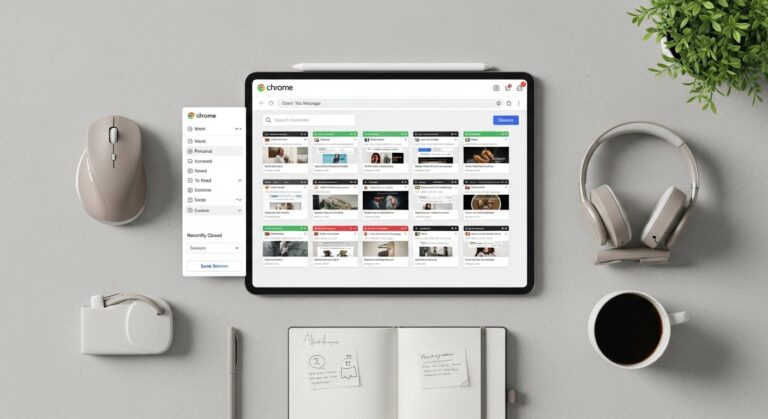

Streamline Collaboration: The Ultimate Guide to Sharing Curated Link Lists with Friends and Colleagues
Imagine a scenario where every team member has instant access to the most pertinent industry articles, research papers, design inspirations, or competitive analyses, neatly organized and contextualized. No more hunting for that one link someone mentioned last week, no more duplicated efforts in research. By adopting a strategic approach to curating and sharing link lists, you not only save time but also foster a culture of collective intelligence, ensuring everyone is on the same page and equipped with the information they need to succeed. This comprehensive guide will walk you through the benefits, tools, and best practices for mastering this essential productivity skill.
Why Curate and Share Links? The Power of Collective Intelligence
You might already be saving links for personal reference, but extending this practice to sharing with your network unlocks a multitude of benefits that transcend individual productivity. It transforms isolated knowledge into a shared asset, amplifying its value exponentially.
- Combating Information Overload: The internet is a vast ocean of data. By curating links, you act as a filter, presenting only the most relevant and high-quality resources to your colleagues. This saves them time and mental energy that would otherwise be spent sifting through irrelevant content. You become a trusted source, reducing the cognitive load on your team.
- Fostering Knowledge Sharing and Learning: When you share a carefully selected list of articles, tutorials, or research, you’re not just sharing links; you’re sharing insights. This encourages continuous learning within your team, exposing everyone to new ideas, methodologies, and trends they might have otherwise missed. It democratizes access to valuable information.
- Enhancing Collaboration and Project Alignment: For project-based work, sharing a curated list of resources ensures that all team members are working from the same foundation of information. Whether it’s competitor research, design inspiration, or technical documentation, having a single source of truth for key links minimizes misunderstandings and keeps everyone aligned with project goals.
- Saving Time and Reducing Redundancy: How often have you or a colleague spent time researching a topic only to find out someone else on the team already had the perfect link? A centralized, shared link list eliminates this redundancy, allowing everyone to tap into a collective reservoir of previously discovered information. This frees up valuable time for more critical tasks.
- Building a Shared Resource Library: Over time, these curated lists evolve into a living, breathing knowledge base for your team or community. This library becomes an invaluable asset for onboarding new members, referencing past projects, or quickly getting up to speed on specific topics. It’s an institutional memory that grows with your collective efforts.
By consciously curating and sharing, you move beyond merely consuming information to actively contributing to a more informed, efficient, and collaborative environment.
Essential Features to Look for in a Link Sharing Tool

Choosing the right tool is critical to making your link sharing efforts effective and sustainable. While many platforms offer basic link saving, a truly robust solution for sharing curated lists will possess several key features:
- Easy Capture and Saving: The tool should allow for quick and seamless saving of links from any browser or device, ideally with browser extensions or “share sheet” functionality.
- Robust Organization (Tags, Folders, Collections): You need flexible ways to categorize your links. Look for strong tagging capabilities, nested folders, or thematic collections to keep things tidy and searchable.
- Annotation and Contextualization: Merely sharing a link isn’t enough. The ability to add notes, highlights, or summaries directly to the saved link provides crucial context for your colleagues, explaining *why* a link is important.
- Collaborative Sharing Options: This is paramount. The tool must support sharing with specific individuals, groups, or even publicly, with granular control over permissions (view-only, edit access).
- Search and Filtering: As your collection grows, a powerful search function (by keyword, tag, author, source) and advanced filtering options become indispensable for quick retrieval.
- Readability View (Optional but Recommended): For articles and blog posts, a “reader mode” that strips away distractions can enhance the consumption experience for those you share with.
- Integrations: Does it play well with other tools in your productivity stack (e.g., Slack, Notion, project management software)? Seamless integration can streamline workflows.
- Cross-Device Sync: Ensure your curated lists are accessible from your desktop, laptop, tablet, and smartphone.
- Privacy Controls: For sensitive information, the ability to control who sees what is vital.
Evaluating these features against your specific needs will guide you toward the best platform for your individual and team-based link sharing endeavors.
Top Tools for Personal Link Curation and Sharing
While many tools excel at personal link saving, some offer robust features that make them ideal for extending that curation into a sharing practice. Here are a few popular choices:
1. Pocket (formerly Read It Later)
- Key Features: Excellent “read-it-later” functionality, offline reading, robust tagging, article highlighting, and a clean interface. It allows you to share individual links directly via email, social media, or to other apps. You can also create curated “collections” which can then be shared with a public URL.
- Pricing: Free for basic saving and sharing. Pocket Premium ($4.99/month or $44.99/year) offers permanent library backups, full-text search, suggested tags, and more advanced highlighting.
- Best For: Individuals who want to save articles for later and occasionally share highly curated collections or individual insights with a specific audience without needing deep collaborative features. Great for researchers, content creators, and avid readers.
- Use Case: You’re a marketing professional constantly finding insightful articles on SEO trends. You save them to Pocket, tag them “SEO_Trends_2024,” highlight key statistics, and then create a “Q2 SEO Insights” collection. You share this collection’s public URL with your team via Slack, adding a note, “Check out these articles for our next content strategy meeting.”
2. Raindrop.io
- Key Features: Visually stunning interface, powerful nested collections, robust tagging, screenshot capture, duplicate finder, and “pro” features like cloud backup and broken link finder. It offers collaborative collections, allowing multiple users to add and manage links within a shared space.
- Pricing: Free for basic features. Raindrop.io Pro ($3/month or $28/year) offers nested collections, cloud backup, full-text search, duplicate detection, and broken link monitoring.
- Best For: Visual learners, designers, researchers, and small teams who value a beautiful, highly organized, and collaborative bookmarking experience. Its collaborative collections are a standout feature.
- Use Case: Your design team is working on a new website. You create a shared Raindrop.io collection called “Website Inspiration – Q3.” Each team member adds links to websites, UI elements, and color palettes they find inspiring, tagging them appropriately (e.g., “typography,” “navigation,” “animations”). Everyone can see and comment on each other’s additions, creating a living mood board.
3. Instapaper
- Key Features: Another strong contender in the “read-it-later” space, known for its minimalist interface and excellent text parsing. It offers highlighting and notes, and you can share articles via email, social media, or to other apps. While primarily individual, its sharing options are solid for disseminating curated content.
- Pricing: Free for basic features. Instapaper Premium ($2.99/month or $29.99/year) offers full-text search, unlimited notes, text-to-speech, and ad-free reading.
- Best For: Professionals who prioritize a distraction-free reading experience and need to share articles with highlights and notes. Great for academic research or in-depth industry analysis.
- Use Case: As a consultant, you’ve read several lengthy whitepapers on emerging market trends. You save them to Instapaper, highlight key data points and conclusions, and add personal notes. You then share these annotated articles with your client via email, providing them with a concise, pre-digested summary of critical information.
Collaborative Platforms for Team Link Management

When your link sharing needs extend beyond occasional dissemination to active, ongoing team collaboration, general-purpose productivity platforms often provide the robust features required.
1. Notion
- Key Features: A highly flexible workspace that can be customized for almost anything. You can create databases specifically for links, complete with custom properties like “tags,” “status,” “priority,” “owner,” and “notes.” Pages within these databases can embed links, add context, and be shared with specific team members or publicly. Supports commenting and real-time collaboration.
- Pricing: Free for personal use. Team plans start at $8/user/month (billed annually) for unlimited blocks, file uploads, and version history.
- Best For: Teams looking for an all-in-one workspace that can handle not just links but also notes, tasks, wikis, and project management. Highly customizable for complex link curation needs.
- Use Case: Your product development team needs a central repository for competitor analysis, user feedback, and technical documentation. You create a Notion database called “Product Research.” Each entry is a link to a relevant resource, with properties for “Competitor,” “Feature,” “Source,” “Date Added,” and a rich text field for detailed summaries and discussion. Team members can filter by any property, add comments, and assign follow-up tasks directly within Notion.
2. Trello
- Key Features: A visual, board-based project management tool. Each “card” can represent a link, allowing you to add descriptions, attachments, checklists, due dates, and comments. You can organize cards into “lists” (e.g., “To Review,” “In Progress,” “Approved Resources”) and invite team members to collaborate on boards.
- Pricing: Free for basic boards and cards. Standard ($5/user/month), Premium ($10/user/month), and Enterprise plans offer advanced features like unlimited boards, custom fields, and integrations.
- Best For: Teams that prefer a Kanban-style visual workflow for managing and discussing links, especially for project-specific resource gathering or content pipelines.
- Use Case: Your content team is planning a series of blog posts. You create a Trello board called “Content Resource Hub.” Each list represents a blog topic (e.g., “AI in Marketing,” “Future of Work,” “Productivity Hacks”). As team members find relevant articles, research papers, or images, they add them as cards to the appropriate list, including a brief summary in the card description. They can assign each other to review links, add comments, and move cards through a workflow.
3. Google Keep / Google Docs
- Key Features:
- Google Keep: Simple, color-coded notes that can contain links, images, and checklists. Easy to share notes with collaborators and assign labels for organization. It’s quick and accessible across all Google services.
- Google Docs: A powerful word processor where you can embed links, add extensive text, comments, and suggestions. Offers robust collaboration features with real-time editing and version history.
- Pricing: Free with a Google account. Google Workspace plans offer enhanced storage, security, and administrative controls.
- Best For: Teams already deeply integrated into the Google ecosystem. Keep is for quick, informal sharing, while Docs is for more structured, detailed, and collaborative link lists with extensive context.
- Use Case (Keep): Your small team needs to quickly share a few urgent links for a client pitch. You create a shared Keep note titled “Client X Pitch Resources,” dropping in links to their website, recent news articles, and competitor profiles. Everyone can add notes and check off items as they review.
- Use Case (Docs): For a comprehensive quarterly report, your research team compiles a Google Doc titled “Q2 Market Trends Report – Raw Data.” Within this document, they paste links to research papers, news articles, and statistical databases, adding detailed summaries, highlights, and direct quotes next to each link. The commenting feature allows for collaborative discussion and refinement of the shared resources.
4. Airtable
- Key Features: A hybrid spreadsheet-database tool that provides incredible flexibility for organizing information. You can create a “base” (like a spreadsheet) with various “tables” (tabs). Each record (row) can be a link, and you can define custom fields (columns) for tags, descriptions, ratings, dates, attached files, and even linked records to other tables. Supports multiple views (grid, calendar, gallery, Kanban) and robust collaboration.
- Pricing: Free for up to 1,200 records per base. Plus ($10/user/month), Pro ($20/user/month), and Enterprise plans offer increased record limits, storage, and advanced features.
- Best For: Teams that need highly structured, database-like organization for their links, especially when dealing with large volumes of resources or complex categorization. Excellent for content calendars, research databases, or asset management.
- Use Case: Your editorial team manages a large content calendar and needs to track all source materials for articles. You create an Airtable base called “Content Source Library.” One table is for “Articles,” another for “Research Papers,” and another for “Image Resources.” Each record is a link, with fields for “Topic,” “Author,” “Publication Date,” “Status (Used/Unused),” “Notes,” and a “Linked Article” field to connect it to the content it supports. This allows for powerful filtering and tracking of all shared resources.
Comparison Table: Link Sharing Tools
| Tool Name | Pricing (Approx.) | Key Features | Best For |
|---|---|---|---|
| Free / Premium: $4.99/month | Read-it-later, offline access, tagging, highlighting, public collections. | Individual content consumption, sharing curated reading lists, researchers. | |
| Raindrop.io | Free / Pro: $3/month | Visual bookmarks, nested collections, robust tagging, collaborative collections. | Visual thinkers, designers, small teams needing aesthetic and collaborative bookmarking. |
| Notion | Free / Team: $8/user/month | Flexible databases, custom properties, real-time collaboration, all-in-one workspace. | Teams needing highly customizable, database-driven link management within a broader workspace. |
| Trello | Free / Standard: $5/user/month | Kanban boards, visual organization, task management, comments, attachments. | Project-focused link sharing, content pipelines, visual workflow teams. |
| Airtable | Free / Plus: $10/user/month | Hybrid spreadsheet-database, custom fields, multiple views, advanced filtering. | Large teams needing structured, database-like link organization for extensive resource libraries. |
Advanced Strategies for Effective Link Sharing
Simply dumping links into a shared space isn’t enough. To truly maximize the impact of your curated link lists, consider these advanced strategies:
- Provide Context and Summaries: Never just share a raw link. Always include a brief summary of what the link is about and, critically, *why* it’s relevant to your audience. What insight should they glean? What problem does it solve?
- Example: Instead of “
https://example.com/long-article-on-ai“, write: “AI in Marketing: How Generative AI is Reshaping Content Creation. (Key takeaway: Focus on personalized customer journeys, not just mass content.)”
- Example: Instead of “
- Consistent Tagging and Categorization: Establish a clear, consistent taxonomy for your tags or categories. This is vital for discoverability. Agree on a naming convention (e.g., “industry_news,” “research_paper,” “tool_review”) and stick to it.
- Tip: Create a shared document outlining your tagging conventions.
- Encourage Annotation and Discussion: Choose tools that allow for commenting, highlighting, or adding notes directly to the saved links. Encourage your team to engage with the content, ask questions, and share their own insights. This transforms passive consumption into active learning.
- Define Roles and Responsibilities: For team-wide link curation, clearly define who is responsible for adding, reviewing, organizing, and archiving links. Is there a “curation lead” for specific topics?
- Regular Review and Archiving: Information quickly becomes outdated. Schedule regular reviews of your shared link lists to remove irrelevant content, update broken links, and archive historical resources. A stale list loses its value.
- Integrate with Workflow: Don’t make link sharing an isolated activity. Integrate it into existing team rituals.
- Mention new additions during stand-ups.
- Link to relevant curated lists in project briefs.
- Use automated notifications (if your tool supports it) for new content.
- Vary the Format: While articles are common, remember to include links to videos, podcasts, tools, templates, datasets, or even relevant social media threads. A diverse resource library is more valuable.
Real-World Scenarios: Applying Link Sharing to Your Workflow
To illustrate the versatility of sharing curated link lists, let’s look at specific applications across various professional contexts:
Marketing & Content Creation
- Scenario: Your content team needs to stay abreast of SEO best practices, competitor content, and trending topics for blog posts.
- Solution: Use Raindrop.io or Notion. Create a shared “Content Inspiration” collection/database. Team members add links to high-ranking articles, keyword research tools, and successful competitor campaigns. They tag each link with relevant keywords (e.g., “SEO,” “AI_content,” “competitor_blog”) and add notes on why it’s a good example or what insights can be drawn. This fuels content ideas and ensures everyone is updated on industry shifts.
Software Development & Engineering
- Scenario: A development team is researching new libraries, frameworks, or solutions for a complex technical challenge.
- Solution: Leverage Trello or Notion. Create a board/database called “Tech Research – Project X.” Each card/entry is a link to a potential solution, API documentation, or a relevant Stack Overflow thread. Team members can add comments, vote on preferred solutions, and attach code snippets or proof-of-concept links. This facilitates collective decision-making and knowledge transfer.
Research & Academia
- Scenario: A group of researchers or students are collaborating on a literature review for a thesis or paper.
- Solution: Google Docs or Airtable are excellent choices. In a Google Doc, create a structured list of links to academic papers, journals, and data sources, adding summaries, key findings, and discussion points directly in the document. For more complex organization, an Airtable base can track each paper as a record, with fields for “Author,” “Publication Year,” “Key Themes,” “Abstract,” and a “Status” (e.g., “To Read,” “Reviewed,” “Cited”).
Project Management
- Scenario: A project manager needs to centralize all relevant documentation, client feedback, and design assets for a new project.
- Solution: Notion or Trello. Create a dedicated project page/board. Within it, have sections or lists for “Client Requirements (links to briefs, emails),” “Design Assets (links to Figma/Canva files),” “Technical Specifications (links to internal documentation),” and “Competitor Analysis (links to market research).” This ensures all stakeholders have a single, updated source for project resources.
Education & Training
- Scenario: An educator wants to provide students with a curated list of supplementary reading, videos, and interactive exercises for a course module.
- Solution: Pocket (public collections) or Google Docs. The educator can build a public Pocket collection for each module, providing a clean, accessible list of recommended resources. Alternatively, a shared Google Doc can serve as a syllabus supplement, with links organized by topic, including brief descriptions and learning objectives for each.
Overcoming Challenges in Collaborative Link Sharing
While the benefits are clear, collaborative link sharing isn’t without its hurdles. Being aware of these common challenges and proactively addressing them will ensure your efforts remain effective.
- Information Overload (Again): Ironically, poorly managed shared lists can become just another source of overwhelm.
- Solution: Enforce strict curation standards. Emphasize quality over quantity. Utilize strong tagging and categorization to allow users to filter for what’s relevant to them. Regularly prune outdated or irrelevant links.
- Inconsistent Tagging and Categorization: Without a clear system, tags can become a chaotic mess, rendering search useless.
- Solution: Establish a clear, shared tagging taxonomy or convention. Appoint a “tag master” or team lead to oversee consistency. Use tools that allow for tag suggestions or auto-completion to guide users.
- Lack of Context: A link without explanation is often ignored.
- Solution: Make it mandatory to add a brief summary or “why this matters” note for every shared link. Encourage the use of highlighting or annotation features.
- Tool Adoption and Buy-in: Getting everyone on board with a new tool or system can be challenging.
- Solution: Start small with a pilot group. Clearly communicate the benefits to the team (time-saving, better collaboration). Provide training and make it easy to contribute. Lead by example.
- Broken Links and Outdated Content: The web is dynamic; links break, and information ages.
- Solution: Schedule regular review sessions to check for broken links and update content. Some tools (like Raindrop.io Pro) offer automated broken link detection. Archive or remove old content.
- Permission Management: Ensuring the right people have the right access levels can be complex, especially with sensitive information.
- Solution: Choose tools with robust permission controls. Clearly define who has view-only access, who can edit, and who can manage the shared lists. Regularly audit permissions.
By proactively addressing these challenges, you can transform your shared link lists into a highly valuable, well-maintained, and actively used resource for your entire network.
Key Takeaways
- Sharing curated link lists significantly boosts team productivity, fosters knowledge sharing, and reduces information overload.
- Look for tools with robust organization (tags, folders), annotation capabilities, and flexible sharing options for effective curation.
- Personal tools like Pocket and Raindrop.io excel for individual curation with sharing, while collaborative platforms like Notion, Trello, and Airtable are ideal for team-wide link management.
- Always provide context, use consistent tagging, and encourage discussion around shared links to maximize their value.
- Proactively address challenges like information overload, inconsistent tagging, and tool adoption to ensure long-term success of your shared resource library.
Frequently Asked Questions
Q: What’s the best tool for sharing links with a very small team (2-3 people)?
A: For a very small team, tools like Google Keep or Raindrop.io’s collaborative collections are excellent, especially if you prioritize ease of use and visual organization. Google Docs can also work if you need more structured text alongside the links. Notion is powerful but might be overkill for minimal needs unless you plan to expand its use.
Q: How can I ensure team members actually use the shared link list?
A: The key is integration and communication. Make the shared list an integral part of your workflow – reference it in meetings, link to it in project briefs, and encourage active contribution by celebrating useful additions. Lead by example, consistently adding valuable, contextualized links yourself. Keep the list organized and easy to navigate to reduce friction.
Q: What’s the difference between a “read-it-later” app and a collaborative link management tool?
A: “Read-it-later” apps (like Pocket, Instapaper) are primarily designed for individual saving and consumption, often with offline reading capabilities. While they offer basic sharing, their core focus is on personal queues. Collaborative link management tools (like Notion, Trello, Airtable, Raindrop.io’s shared collections) are built from the ground up for multiple users to contribute, organize, and discuss links within a shared workspace, often with more robust permission controls and integration options.
Q: How often should I review and clean up our shared link lists?
A: The frequency depends on the volume and dynamism of the content. For fast-moving industries or active projects, a monthly or quarterly review might be appropriate. For more evergreen resources, a semi-annual or annual check-up could suffice. Assigning responsibility for this task helps ensure it gets done consistently. Tools with broken link checkers can automate part of this process.
Q: Can I share links securely, or are they always public?
A: Most collaborative tools offer robust privacy and permission settings. You can typically choose to share links only with specific individuals or groups, often with varying access levels (view-only, edit, manage). Public sharing is usually an option, but it’s explicitly chosen. Always check the privacy settings of your chosen tool to ensure your data is shared appropriately.
Mastering the art of sharing curated link lists is no longer a niche skill; it’s a fundamental component of effective collaboration and knowledge management in the modern workplace. By strategically selecting the right tools, implementing smart organizational practices, and fostering a culture of active contribution, you can transform scattered web resources into a powerful, shared asset for your team or community. Embrace the collective intelligence of your network, and watch your productivity soar.
Article by Eleanor Vance, Productivity & Collaboration Strategist.