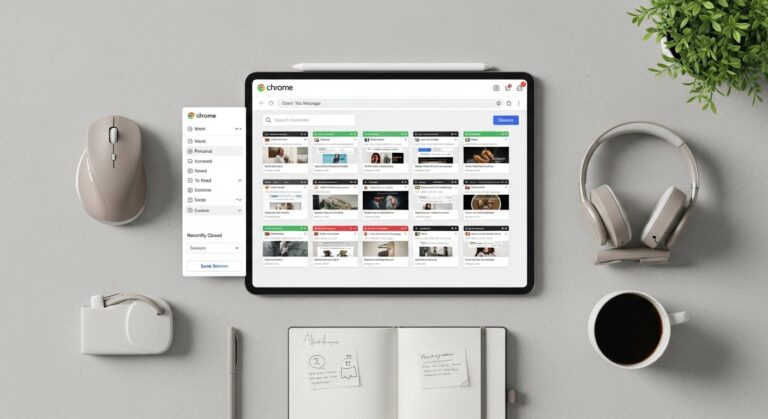

Mastering Link Categorization: Beyond Folders with Tags and Smart Lists
The Limitations of Traditional Folder Structures for Link Management
For decades, folders have been the cornerstone of digital organization. They provide a clear, hierarchical structure that’s intuitive because it mimics our physical world. You create a folder for “Work,” inside that “Project X,” and within that “Research.” Simple, right? Not always, especially when dealing with the dynamic and multi-faceted nature of web links.
Consider these inherent drawbacks:
- The “Single Parent” Problem: A link can only exist in one folder at a time. What if an article on “AI ethics” is relevant to “Project X” (a client project), “Future Research” (a long-term interest), and “Personal Learning” (for your general development)? You’re forced to choose one primary location, create duplicates (which leads to version control and clutter issues), or rely on memory to recall where you filed it. This often results in links being “lost” even when you know they exist somewhere.
- Lack of Flexibility for Multi-Contextual Links: Modern information rarely fits neatly into a single category. A single link might be a “how-to guide,” a “competitor analysis,” and a “marketing strategy” all at once. Forcing it into a rigid folder structure means you lose the ability to discover it from multiple relevant contexts.
- Scalability Issues with Deep Hierarchies: As your collection grows, so do your folder trees. Navigating through multiple layers of subfolders to find a specific link becomes a cumbersome and time-consuming task. The deeper the hierarchy, the more clicks and mental effort required, diminishing productivity rather than enhancing it.
- Difficulty in Retrieval Without Exact Recall: If you’ve forgotten the precise folder path you used, finding a link can feel like searching for a needle in a haystack. You might remember keywords or themes, but folders don’t inherently support keyword-based discovery across multiple categories.
- Maintenance Overhead: Reorganizing folders can be a monumental task. If a project structure changes or your understanding of a topic evolves, refiling dozens or hundreds of links individually is a deterrent to maintaining an up-to-date system.
These limitations highlight why relying solely on folders for link categorization is akin to using a rotary phone in the age of smartphones. It gets the job done, but it severely restricts your capabilities and efficiency.
Embracing Tags: The Power of Multi-Dimensional Categorization

Tags offer a revolutionary approach to link organization by breaking free from the linear constraints of folders. Imagine tags as keywords or labels you attach to your links, much like adding hashtags to social media posts. The key difference is that a single link can have multiple tags, allowing it to exist conceptually in many “places” simultaneously without duplication.
What are Tags?
A tag is simply a descriptive keyword or phrase associated with a digital item. Instead of putting a link into a folder, you label it with relevant tags. For instance, an article about “the future of remote work” could be tagged with #remotework, #futureofwork, #productivity, #HRtrends, and #strategy. Each tag acts as an access point, making the article discoverable from any of those contexts.
Benefits of a Tag-Based System:
- Unparalleled Flexibility: A link can be associated with as many tags as necessary, reflecting its multi-faceted nature.
- Enhanced Discoverability: You don’t need to remember a specific folder path. Just recall a relevant keyword, and your link will appear if tagged appropriately.
- Flatter Structure: Tags inherently create a flatter, more interconnected network of information, rather than a deep, rigid hierarchy.
- Contextual Retrieval: Easily pull up all links related to “Project X” AND “marketing,” or “AI” AND “ethics,” by filtering with multiple tags.
- Dynamic Organization: Your tags can evolve with your needs without requiring a major structural overhaul.
- No Duplication: The original link remains in one place, but its accessibility is multiplied.
Best Practices for Effective Tagging:
To harness the full power of tags, consistency and a clear strategy are essential:
- Be Consistent: Use singular or plural consistently (e.g.,
#projectvs.#projects), and decide on capitalization rules (e.g.,#AIvs.#ai). Most tools are case-sensitive. - Aim for Granularity, But Avoid Bloat: Start with broad categories and refine them as needed. Don’t create a tag for every single word in an article. A good rule of thumb is 3-7 tags per link.
- Create a Tagging Schema: Before you begin, list your primary categories. This might include:
- Topics:
#AI,#cloudcomputing,#fintech - Projects:
#ProjectTitan,#ClientAcme - Content Type:
#article,#video,#tutorial,#researchpaper - Status/Action:
#toread,#inprogress,#completed,#actionitem - Urgency:
#urgent,#highpriority - Source/Domain:
#HarvardBiz,#TechCrunch
- Topics:
- Use Compound Tags (If Supported/Needed): Some tools allow tags like
#project/marketingor#topic/AI/ethicsto create a pseudo-hierarchy within tags, but this isn’t always necessary. - Regularly Review and Refine: Periodically check for redundant tags (e.g.,
#AIand#ArtificialIntelligence) and merge them. Remove unused tags.
By thoughtfully applying tags, you transform your link collection from a rigid filing cabinet into a dynamic, interconnected knowledge graph, ready to serve your information needs from any angle.
Smart Lists and Saved Searches: Dynamic Organization at Your Fingertips
While tags provide the raw power of multi-dimensional categorization, smart lists (often called saved searches or collections in various tools) take that power a step further by offering dynamic, automated organization. Think of a smart list not as a static folder you manually fill, but as a continuously updated filter that automatically gathers links based on predefined rules.
What are Smart Lists/Saved Searches?
A smart list is essentially a saved query that automatically displays all links that meet specific criteria. Instead of manually moving links into a folder, you define the conditions (e.g., “all links tagged #AI AND #toread,” or “all links from example.com containing the keyword ‘productivity’”). The list then populates itself and updates in real-time as new links are added or existing links are modified to match the criteria.
How They Work:
Smart lists operate on a rules-based filtering system. You set up parameters that can include:
- Tags: Include links with specific tags (e.g.,
#marketing,#projectX). - Keywords: Search for specific words in the title, description, or even the full text of the saved page.
- Domains/URLs: Filter by specific websites (e.g.,
nytimes.com,medium.com). - Date Added/Modified: Show links added within the last week, month, or a custom range.
- Read Status: Filter for unread articles, archived items, or favorites.
- Item Type: Differentiate between articles, videos, images, PDFs.
- Combinations: The true power lies in combining these criteria with “AND,” “OR,” and “NOT” operators (e.g., “links tagged
#AIAND NOT#completedAND fromtheverge.com“).
Benefits of Smart Lists:
- Automation: No manual sorting required. Your lists update automatically.
- Real-time Updates: As you add new links or modify existing ones, your smart lists reflect the changes instantly.
- Custom Views: Create highly specific views of your data tailored to immediate tasks or long-term projects.
- Enhanced Focus: Quickly access precisely the set of links you need for a current task, reducing cognitive load.
- Dynamic Project Management: Create smart lists for active projects that show all relevant resources, automatically excluding completed or irrelevant items.
Creating Effective Smart Lists (Use Cases):
Here are some practical examples of smart lists you can create:
- “Unread Articles on AI”: Tags:
#AIAND#toread. This list automatically populates with all AI-related articles you’ve saved but haven’t yet marked as read. - “Project X Resources (Client Acme)”: Tags:
#ProjectXAND#ClientAcme. This gives you a consolidated view of all resources pertinent to that specific project and client. - “Videos to Watch Later”: Tags:
#videoAND#towatch. A dedicated list for all video content you’ve bookmarked for later consumption. - “Competitor Analysis – Tech Sector”: Tags:
#competitoranalysisAND#techsector. Keep an eye on industry rivals with a dynamically updated list of relevant articles. - “High-Priority Research”: Tags:
#researchAND#highpriority. Prioritize your reading and review based on urgency. - “Articles from Specific Publications”: Domain:
hbr.orgORforbes.com. Consolidate content from your favorite trusted sources.
By combining the granular control of tags with the automated power of smart lists, you move beyond mere organization to a truly intelligent and adaptable system for managing your digital knowledge.
Popular Tools for Advanced Link Management

The market offers a variety of tools designed to help you move beyond basic folder structures and leverage the power of tags and smart lists. Here’s a comparison of some leading options, highlighting their features and pricing to help you choose the best fit for your workflow.
| Tool Name | Pricing (as of late 2023/early 2024, subject to change) | Key Features | Best For |
|---|---|---|---|
| Raindrop.io |
|
|
Visual learners, designers, researchers, anyone needing robust, flexible organization with strong visual cues. Excellent for both personal and team use. |
| Pocket (formerly Read It Later) |
|
|
Casual readers, students, anyone primarily interested in saving and consuming articles and web content with a clean reading experience. |
| Diigo |
|
|
Researchers, students, educators, and teams who need to not only save links but also actively annotate, highlight, and collaborate on web content. |
| Anybox (macOS, iOS) |
|
|
Apple ecosystem users (Mac, iPhone, iPad) who prioritize a native experience, robust tagging, and advanced smart list capabilities. |
| Pinboard |
|
|
Developers, power users, and those who value speed, simplicity, privacy, and a tag-first approach over visual aesthetics. Excellent for long-term archival. |
When selecting a tool, consider your primary use case: Are you saving articles for reading, curating resources for research, or managing project-specific links? Do you need visual organization, annotation capabilities, or just raw tagging power? Your workflow will dictate the best choice.
Crafting Your Personal Link Categorization System
Transitioning from a folder-centric approach to one based on tags and smart lists requires a shift in mindset and a structured approach. Here’s a step-by-step guide to help you build a robust and flexible system:
-
Audit Your Current Link Collection:
Start by understanding the scope of your existing links. Are they scattered across browser bookmarks, disparate apps, or within a chaotic folder structure? Identify the main categories of information you deal with (e.g., work projects, personal interests, learning resources, actionable items).
-
Choose the Right Tool(s):
Based on the comparison above and your specific needs (e.g., visual, annotation-heavy, minimalist, platform-specific), select a primary link management tool. Don’t be afraid to try free tiers before committing.
-
Define Your Core Tagging Schema:
This is the most critical step. Brainstorm a list of foundational tags. Think about:
- Purpose/Context:
#work,#personal,#learning,#projectX,#clientAcme - Topic/Subject:
#AI,#marketing,#finance,#design,#productivity - Content Type:
#article,#video,#tutorial,#tool,#resource,#report - Status/Action:
#toread,#inprogress,#completed,#reference,#action,#archive - Urgency/Priority:
#urgent,#highpriority,#later(use sparingly)
Keep your tags consistent (e.g., always singular, always lowercase or Title Case). Document your core tags somewhere accessible.
- Purpose/Context:
-
Start Small and Iterate:
Don’t try to tag everything at once. Begin by tagging all new links you save. As you encounter older links, tag them on the fly. You’ll naturally discover new tags you need and identify redundant ones. Your schema will evolve.
-
Integrate Tagging into Your Workflow:
Make tagging a habit. Whenever you save a link, take an extra 10-20 seconds to add relevant tags. Use browser extensions for quick tagging. The initial effort pays dividends in future retrieval.
-
Create Essential Smart Lists:
Once you have a decent number of tagged links, create your initial set of smart lists. Start with “Unread Articles,” “Current Project X Resources,” “High-Priority Action Items,” or “Videos to Watch.” These will immediately demonstrate the power of your new system.
-
Regular Review and Refinement:
Periodically (e.g., monthly or quarterly) review your tags. Look for:
- Tag Bloat: Too many similar tags (e.g.,
#AI,#artificialintelligence,#A.I.). Merge them. - Unused Tags: Tags you rarely or never use. Consider deleting them or re-evaluating their necessity.
- Missing Tags: Are there common contexts or topics missing from your tag list? Add them.
Refine your smart lists as your projects and priorities change.
- Tag Bloat: Too many similar tags (e.g.,
By following these steps, you’ll gradually build a personalized, dynamic, and highly efficient link categorization system that truly supports your productivity needs.
Real-World Applications and Advanced Strategies
The beauty of tags and smart lists lies in their adaptability to diverse professional roles and advanced use cases. Let’s explore how different knowledge workers can leverage these tools and some strategies to elevate your system.
Specific Professional Applications:
- Researchers & Academics:
- Tags:
#topic_name,#author_surname,#year,#journal,#methodology,#theory,#toread,#cited,#data_source. - Smart Lists: “AI Ethics – Unread Papers (2023-2024),” “Literature Review – Machine Learning,” “Data Sets for Project Alpha,” “Articles Citing Smith (2020).”
- Benefit: Quickly retrieve specific research papers, track citations, organize data sources, and manage reading lists for multiple projects or courses.
- Tags:
- Content Creators & Marketers:
- Tags:
#content_idea,#competitor_analysis,#SEO_research,#inspiration,#blog_post,#video_script,#client_name,#social_media,#trend. - Smart Lists: “Blog Ideas – Q4,” “Competitor Articles on SaaS,” “SEO Keyword Research – Project Blue,” “Social Media Trends 2024,” “Client Acme – Marketing Resources.”
- Benefit: Streamline content ideation, track industry trends, manage client-specific resources, and organize content for different platforms.
- Tags:
- Developers & Engineers:
- Tags:
#language_name,#framework,#library,#tutorial,#bug_fix,#documentation,#best_practice,#project_name,#API. - Smart Lists: “Python Tutorials – Data Science,” “React Component Libraries,” “Project Phoenix – API Docs,” “Debugging Tips – JavaScript,” “New GoLang Features.”
- Benefit: Efficiently manage code snippets, tutorials, documentation, and technical resources, reducing time spent searching and increasing coding efficiency.
- Tags:
- Project Managers & Business Analysts:
- Tags:
#project_name,#client_name,#meeting_notes,#requirements,#specs,#risk_assessment,#stakeholder_comms,#vendor_info,#action_item. - Smart Lists: “Project Delta – Requirements Docs,” “Client Red – Meeting Notes,” “Vendor Contracts – Active,” “High-Priority Action Items,” “Team Resources – Onboarding.”
- Benefit: Centralize project documentation, track important communications, manage vendor information, and ensure all team members have access to relevant, up-to-date resources.
- Tags:
Advanced Strategies:
- Nested Tags (where supported): Some tools (like Anybox or Raindrop.io’s nested collections) allow you to create hierarchical tags or tag groups (e.g.,
#ProjectX/Marketing,#ProjectX/Development). This can provide a degree of structure within your tag system without sacrificing flexibility. - Emoji Tags: Use emojis to add visual cues and quickly identify types of content (e.g.,
#📖 article,#🎥 video,#🛠️ tool,#💡 idea). This can make scanning your tag lists much faster. - Tagging for Actionability: Beyond topics, use tags to define the next action or status. Examples:
#toread,#toimplement,#todiscuss,#waitingon,#done. Combine these with smart lists to create dynamic to-do lists for your links. - Using a “Zettelkasten” Inspired Tagging: For knowledge workers, consider tags that represent concepts or atomic ideas. This allows you to connect disparate pieces of information around core concepts, fostering deeper understanding and new insights.
- Integration with Other Productivity Tools: Leverage tools like IFTTT or Zapier to automate saving and tagging. For example, automatically save and tag articles from specific RSS feeds, or send links from your email to your bookmarking tool with pre-assigned tags.
- “Meta-Tags” for System Management: Create tags specifically for managing your system, such as
#tag_review(for tags that need to be merged or refined) or#system_config(for links related to optimizing your tools).
By thoughtfully applying these advanced strategies, you can transform your link management system into a powerful, personalized knowledge base that actively supports your professional goals and enhances your productivity.
Overcoming Common Challenges and Maintaining Your System
Adopting a tag and smart list system is a significant upgrade, but it’s not without its challenges. Proactive strategies for maintenance and problem-solving are crucial for long-term success.
1. Tag Bloat: The Proliferation of Redundant Tags
- Challenge: You end up with too many similar tags (e.g.,
#AI,#artificial_intelligence,#A.I.,#machinelearning). This dilutes the power of your tags and makes retrieval difficult. - Solution:
- Establish a Canonical List: Create a definitive list of your core tags and stick to it.
- Regular Audits: Schedule monthly or quarterly reviews to identify and merge redundant tags. Most good tools allow you to rename a tag and apply that change across all associated links.
- Use Auto-Suggestions: Rely on your tool’s tag auto-completion feature to ensure you’re using existing tags rather than creating new, similar ones.
- Be Specific, Not Exhaustive: Don’t feel compelled to tag every single nuance. Focus on the most important keywords for retrieval.
2. Inconsistency: Variations in Tagging Practices
- Challenge: Different capitalization, singular vs. plural, or hyphenation leads to tags like
#ProjectX,#projectx,#projects,#project-x. - Solution:
- Define Clear Rules: Decide on a convention (e.g., all lowercase, always singular, use hyphens for spaces) and document it.
- Team Guidelines: If working with a team, ensure everyone adheres to the same tagging guidelines.
- Tool Features: Many tools offer tag management features that can help enforce consistency or easily merge variations.
3. Legacy Links: Migrating Existing Collections
- Challenge: You have hundreds or thousands of untagged links in old browser bookmarks or disparate folders.
- Solution:
- Don’t Try to Do It All at Once: This is a recipe for burnout. Start by exporting your old bookmarks into your new tool.
- Prioritize: Focus on tagging new links immediately. For old links, tag them only when you need to access them. This “just-in-time” tagging is efficient.
- Batch Processing: If your tool allows, select groups of links and apply common tags (e.g., all links from your “Work” folder might get a
#work_archivetag). - Archive Old