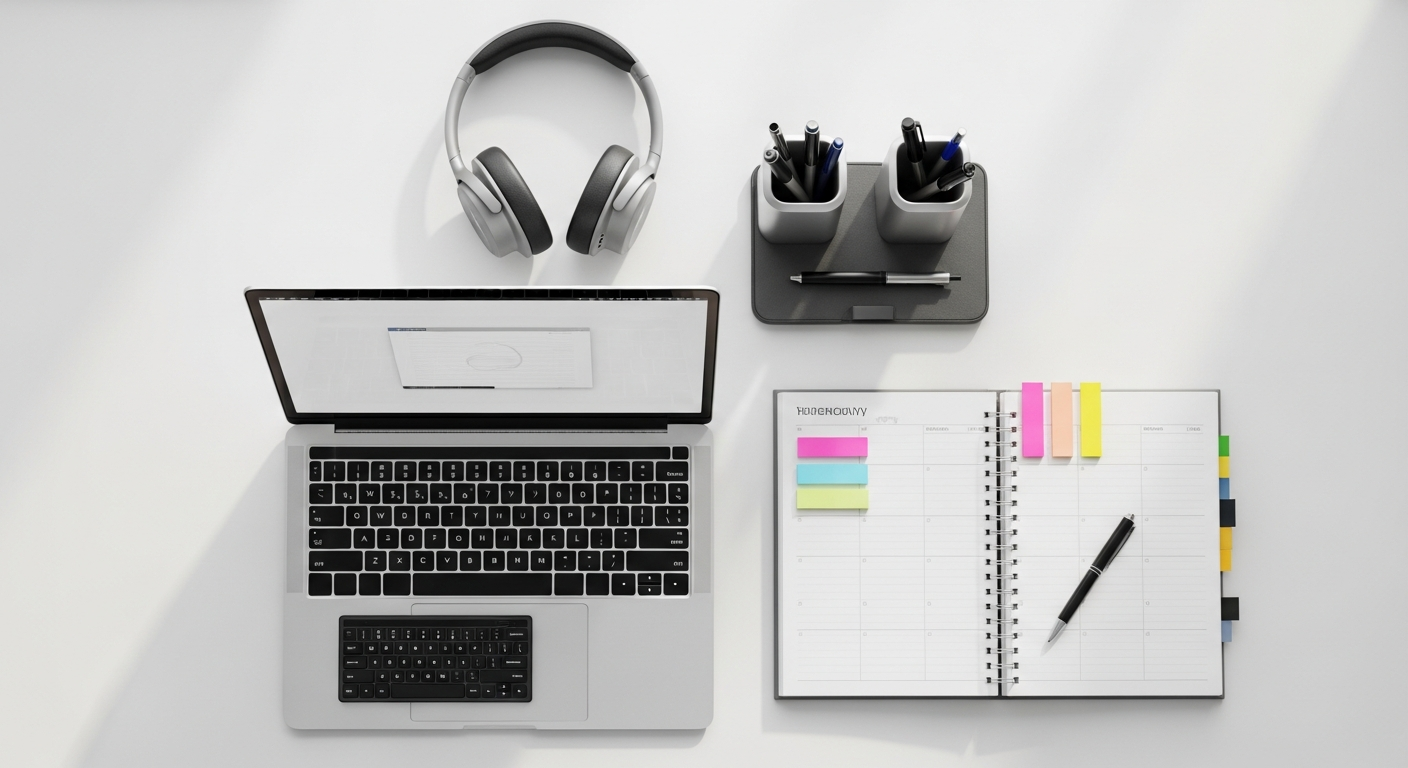

Why Mechanical Keyboards Are a Game Changer for Productivity
The shift from traditional membrane or scissor-switch keyboards to mechanical alternatives isn’t just a trend; it’s a strategic upgrade for anyone serious about their output. Mechanical keyboards offer a suite of benefits that directly translate into tangible productivity gains, making them a cornerstone of any high-performance workstation in 2026.
Unparalleled Typing Experience and Accuracy
At the heart of every mechanical keyboard lies individual switches beneath each keycap. Unlike membrane keyboards, where a single sheet registers keystrokes, mechanical switches provide distinct feedback at the actuation point. This means you don’t have to “bottom out” a key (press it all the way down) for it to register, leading to faster, more precise typing. The tactile bump or audible click associated with many switch types confirms a successful keystroke, reducing errors and increasing confidence. For tasks requiring extensive typing, such as coding, writing reports, or managing complex spreadsheets, this precision is invaluable. Imagine composing detailed emails using the Best Email Management Tools 2026; the ability to type quickly and accurately without constantly correcting mistakes can shave significant time off your daily routine.
Enhanced Durability and Longevity
Mechanical keyboards are built to last. While a typical membrane keyboard might withstand 5-10 million keystrokes per key, mechanical switches are often rated for 50-100 million keystrokes. This robust construction means your investment will endure years of heavy use, outlasting multiple conventional keyboards. This durability is not just about cost-effectiveness; it’s about reliability. You can depend on your mechanical keyboard to perform consistently day in and day out, minimizing disruptions to your workflow.
Reduced Typing Fatigue
The distinct feedback and lighter actuation force of many mechanical switches can significantly reduce strain on your fingers and hands. Less force required for each keystroke, combined with the clear indication of actuation, means your muscles work less, preventing the cumulative fatigue often associated with long typing sessions. For professionals who spend hours at their desks, perhaps utilizing the Best Productivity Apps 2026, this ergonomic advantage is crucial for maintaining focus and comfort throughout the workday.
Customization and Personalization
One of the most appealing aspects of mechanical keyboards is their immense potential for customization. From swapping out keycaps to changing entire switches (with hot-swappable boards), adjusting lubrication, or programming intricate macros, mechanical keyboards can be tailored to your exact preferences. This level of personalization allows you to create a typing experience that perfectly suits your unique style, further enhancing comfort and efficiency. Want a specific layout for your coding environment or dedicated macros for your favorite design software? A mechanical keyboard can deliver.
Superior Build Quality and Aesthetics
Mechanical keyboards often feature premium materials like aluminum frames, high-quality PBT keycaps, and robust cabling. This not only contributes to their durability but also to a more premium look and feel on your desk. A well-designed mechanical keyboard elevates your workspace, complementing other high-quality peripherals, much like a carefully selected monitor after considering How To Choose Monitor For Work. The satisfying heft and stability of a mechanical keyboard ensure it stays firmly in place during intense typing sessions.
Key Factors to Consider When Choosing a Productivity Mechanical Keyboard
Selecting the ideal mechanical keyboard for productivity in 2026 involves more than just picking a cool design. It requires a thoughtful consideration of several key factors that impact comfort, efficiency, and overall user experience.
1. Switch Type: The Heart of the Keyboard
Mechanical switches are the most critical component, determining the feel, sound, and actuation characteristics of your keyboard. They typically fall into three main categories:
- Linear Switches (e.g., Cherry MX Red, Gateron Yellow): These switches offer a smooth, consistent keystroke from top to bottom, with no tactile bump or audible click. They are favored by gamers for their rapid actuation and often by typists who prefer a quiet, fluid experience. For fast typists or those in open-plan offices where noise is a concern, linear switches can be an excellent choice.
- Tactile Switches (e.g., Cherry MX Brown, Gateron Brown): Featuring a noticeable “bump” midway through the keypress, tactile switches provide feedback that a key has been actuated without an audible click. This tactile feedback helps typists know when a key has registered, allowing them to release the key sooner and potentially type faster with less effort. They are often considered the best all-around switch for productivity, offering a good balance of feedback and relatively low noise.
- Clicky Switches (e.g., Cherry MX Blue, Gateron Blue): These switches combine a tactile bump with a distinct, audible click sound upon actuation. Many typists find the auditory feedback incredibly satisfying and helpful for maintaining typing rhythm and accuracy. However, their loudness can be disruptive in shared workspaces, making them more suitable for home offices or environments where noise isn’t an issue.
Beyond these primary types, a vast ecosystem of custom switches (e.g., Silent Reds, Holy Pandas, Kailh Box Jades) offers nuanced variations in weight, travel distance, and sound profile. Consider your work environment and personal preferences carefully.
2. Keyboard Layout: Size and Functionality
The layout of your keyboard dictates its size and the presence of certain key clusters. Your choice should align with your desk space, workflow, and portability needs:
- Full-Size (104/108 keys): Includes a full alphanumeric section, function row, navigation cluster, and a dedicated Numpad. Ideal for data entry specialists, accountants, or anyone who frequently uses numbers. Offers maximum functionality but requires more desk space.
- Tenkeyless (TKL – 87/88 keys): Omits the Numpad, making it more compact than a full-size board. This layout is extremely popular for productivity as it frees up desk space, allows your mouse hand to be closer to your body (improving ergonomics), and retains all essential keys for most users.
- Compact Layouts (75%, 65%, 60%): These increasingly popular layouts further reduce footprint by consolidating keys or removing less frequently used ones (e.g., the function row in a 60%). They are excellent for minimalist setups, small desks, or users who prefer maximum mouse space. However, they often require heavy reliance on function layers for accessing certain keys, which might have a learning curve for some.
3. Connectivity: Wired, Wireless, or Hybrid
- Wired: Offers the most reliable connection with zero latency and no need for battery management. Typically uses a detachable USB-C cable for convenience.
- Wireless (Bluetooth/2.4GHz): Provides a clutter-free desk and enhanced portability. Bluetooth is great for connecting to multiple devices, while 2.4GHz dongles offer a more stable, lower-latency connection often preferred by gamers and some professionals. Ensure the battery life is sufficient for your needs. Many high-end boards in 2026 offer robust multi-device Bluetooth 5.0 and reliable 2.4GHz options.
- Hybrid: Many modern mechanical keyboards offer both wired and wireless capabilities, providing the best of both worlds.
4. Build Quality and Materials
A keyboard’s construction significantly impacts its feel, durability, and acoustics.
- Case Material: Aluminum offers superior rigidity, weight, and acoustic properties, often found in premium boards. High-quality plastic cases are lighter and more affordable but can feel less substantial.
- Keycaps:
- ABS (Acrylonitrile Butadiene Styrene): Common, affordable, and good for backlighting. Can develop a shine over time.
- PBT (Polybutylene Terephthalate): More durable, resistant to shine, and often has a textured feel. Generally considered superior for longevity and feel.
Look for “doubleshot” keycaps where the legends are molded into the plastic, ensuring they never fade.
- Stabilizers: Good stabilizers (for longer keys like Spacebar, Shift, Enter) prevent wobble and ensure a consistent keypress. High-quality, factory-lubed stabilizers make a significant difference.
5. Hot-Swappability and Customization
A hot-swappable PCB allows you to change switches without soldering. This is a massive advantage for productivity users, enabling experimentation with different switch types, easy replacement of faulty switches, and future-proofing your keyboard. Other customization options include programmable macros, customizable RGB backlighting (for aesthetic or functional purposes), and dedicated media keys.
6. Ergonomics and Comfort
While mechanical keyboards inherently offer a more comfortable typing experience, some models go further. Features like adjustable tilt feet, integrated wrist rests, or even split ergonomic designs can significantly enhance comfort during extended work sessions. When considering How To Choose Monitor For Work, remember that your keyboard and mouse placement are equally vital for a complete ergonomic setup.
Top Mechanical Keyboards for Productivity in 2026
1. The All-Rounder Workhorse: “ErgoType Pro 2026”
The ErgoType Pro 2026 continues its legacy as a benchmark for professional mechanical keyboards. This keyboard strikes an exceptional balance between premium features, robust build quality, and user-friendliness, making it an ideal choice for a wide spectrum of productivity tasks.
- Key Features:
- Layout: TKL (Tenkeyless) or 75% for an optimal balance of functionality and desk space.
- Switches: Available with a wide range of factory-lubed tactile (ErgoType Brown 2.0) or linear (ErgoType Red 2.0) switches, specifically tuned for a quiet yet responsive typing experience. Also offers hot-swappable versions for full customization.
- Connectivity: Tri-mode connectivity (USB-C wired, Bluetooth 5.2, 2.4GHz wireless) with seamless switching between up to three Bluetooth devices.
- Build Quality: Anodized aluminum top plate with a high-density sound-dampening foam layer for superior acoustics. Double-shot PBT keycaps resist shine and provide a satisfying texture.
- Ergonomics: Multi-angle adjustable feet and an optional magnetic wrist rest.
- Software: Comprehensive companion software for macro programming, key remapping, and RGB customization, crucial for power users leveraging Best Productivity Apps 2026.
- Why it’s Great for Productivity: Its versatility and refined typing experience make it suitable for everything from intensive coding sessions to drafting lengthy reports. The quiet switches and solid build ensure it’s office-friendly, while the advanced connectivity options support a dynamic, multi-device workflow. The hot-swappable variant offers future-proofing and customization for evolving preferences.
- Considerations: While excellent, its premium features come at a higher price point.
2. The Ergonomic Champion: “SplitWave X 2026”
For those battling wrist strain or seeking the pinnacle of ergonomic design, the SplitWave X 2026 is a revolutionary keyboard. Its split design encourages a more natural hand and wrist posture, significantly reducing discomfort over long typing durations.
- Key Features:
- Layout: Fully split 60% or 75% layout, allowing users to position each half independently.
- Switches: Primarily offered with low-profile tactile or linear switches to minimize finger travel, further enhancing ergonomics. Hot-swappable versions for standard-height switches are also available.
- Connectivity: Wireless Bluetooth 5.2 for a completely cable-free setup, with an optional wired connection.
- Build Quality: Robust, lightweight aluminum construction for portability and durability. Sculpted PBT keycaps designed for optimal finger placement.
- Ergonomics: Adjustable tenting and negative tilt options for personalized comfort. Integrated, plush palm rests.
- Programmability: Deeply programmable layers and macros accessible directly from the keyboard, essential for streamlined tasks in Best Email Management Tools 2026.
- Why it’s Great for Productivity: Its core strength lies in its ergonomic design, which can prevent and alleviate repetitive strain injuries, allowing for longer, more comfortable, and ultimately more productive work sessions. The customizability of key functions allows for an incredibly personalized and efficient workflow.
- Considerations: The split layout requires an adaptation period, and its compact nature might mean some less-used keys are accessed via function layers.
3. The Compact & Portable Powerhouse: “VortexCore Mini 2026”
For the digital nomad, the minimalist, or anyone with limited desk space, the VortexCore Mini 2026 represents the ultimate in compact mechanical keyboards. It packs full functionality into an incredibly small footprint without compromising on the typing experience.
- Key Features:
- Layout: Ultra-compact 60% or 65% layout, eliminating the function row, Numpad, and navigation cluster in favor of FN layers.
- Switches: Highly customizable with hot-swappable sockets supporting a wide array of 3-pin and 5-pin switches. Popular choices include silent linear or light tactile switches for portability and office use.
- Connectivity: Dual-mode wireless (Bluetooth 5.2) and wired USB-C, with exceptional battery life for extended travel.
- Build Quality: Solid aluminum unibody construction provides surprising heft and stability for its size. High-quality double-shot PBT keycaps.
- Programmability: Advanced onboard programmability allows users to assign multiple functions to individual keys across several layers, making it surprisingly powerful for its size, especially for intricate shortcuts within Best Productivity Apps 2026.
- Why it’s Great for Productivity: Its small size makes it incredibly portable and ideal for decluttering small workspaces. The ability to program complex macros and layers means that despite its size, it can be just as functional as a larger keyboard for a skilled user.
- Considerations: The learning curve for accessing layered functions can be steep for new users. Not ideal for those who heavily rely on a dedicated Numpad or function row.
4. The Silent Office Performer: “WhisperClick 2026”
For open-plan offices, shared workspaces, or anyone who simply prefers a quiet typing experience, the WhisperClick 2026 is engineered to minimize noise without sacrificing the satisfying feel of a mechanical keyboard.
- Key Features:
- Layout: Available in TKL and 75% layouts, providing practical key options for professional use.
- Switches: Features proprietary “Silent Tactile” or “Silent Linear” switches, which incorporate dampening materials to significantly reduce both bottom-out and top-out noise.
- Connectivity: Reliable 2.4GHz wireless with an included dongle, plus Bluetooth 5.2 for multi-device pairing.
- Build Quality: High-quality plastic case with extensive internal sound dampening (foam, silicone pads) to absorb vibrations and further reduce acoustic output. Durable PBT keycaps.
- Additional Features: Dedicated media keys and a volume roller for quick audio control. Subtle, non-distracting white backlighting.
- Why it’s Great for Productivity: Its primary advantage is its whisper-quiet operation, making it perfect for environments where noise is a concern. You get all the tactile benefits of a mechanical keyboard without disturbing colleagues or family members, allowing for focused, uninterrupted work on demanding projects or while managing a busy inbox with the Best Email Management Tools 2026.
- Considerations: While quiet, it might not offer the same “thock” or “click” satisfaction as louder switches for those who enjoy the auditory feedback.
5. The Premium Customizer’s Delight: “ArtisanFlow 2026”
For the enthusiast who demands the absolute best in typing experience and customization, the ArtisanFlow 2026 is a barebones kit that allows for unparalleled personalization. This is for users who want to hand-pick every component to build their ultimate productivity machine.
- Key Features:
- Layout: Offered in 65%, 75%, and TKL layouts, providing flexibility for different preferences.
- Switches: No switches included; features hot-swappable PCB supporting virtually any 3-pin or 5-pin MX-style switch. This allows users to choose from hundreds of options to find their perfect feel and sound.
- Connectivity: High-quality wired USB-C connection, often with optional wireless modules available separately for Bluetooth 5.2 and 2.4GHz.
- Build Quality: CNC-milled aluminum case (various finishes), gasket-mount design for a softer, more consistent typing feel, and multi-layer sound dampening. Screw-in stabilizers are standard for optimal performance.
- Keycaps: No keycaps included, allowing users to select their preferred profile (Cherry, OEM, DSA, XDA) and material (PBT, ABS).
- Software: QMK/VIA compatibility for open-source, limitless programmability of every key and layer, ideal for deeply integrating with complex workflows and Best Productivity Apps 2026.
- Why it’s Great for Productivity: The ArtisanFlow 2026 allows for a truly bespoke typing experience. By selecting every component, users can fine-tune the feel, sound, and aesthetics to their exact preferences, leading to maximum comfort and a highly personalized workflow that is unmatched by off-the-shelf solutions. This level of control can lead to an unparalleled connection with your input device, enhancing long-term productivity.
- Considerations: This is a barebones kit, meaning it requires additional purchases (switches, keycaps) and assembly. It’s an investment in both time and money but offers the highest level of customization. Not recommended for beginners.
Optimizing Your Workflow: Beyond the Keyboard
While a superior mechanical keyboard is a foundational element for enhanced productivity, it’s part of a larger ecosystem. Integrating your keyboard with other tools and practices can amplify your efficiency significantly in 2026.
Leveraging Software and Macros
Modern mechanical keyboards, especially those with programmable software or QMK/VIA compatibility, unlock a new dimension of efficiency. You can program complex macros to automate repetitive tasks. Imagine a single keystroke that opens your Best Email Management Tools 2026, navigates to your inbox, and drafts a standard response. Or a macro that launches a specific project in your Best Productivity Apps 2026 and arranges your windows. This level of automation, combined with the speed and accuracy of a mechanical keyboard, drastically reduces mouse reliance and minimizes context switching.
The Complete Ergonomic Workstation
Your keyboard is one piece of the ergonomic puzzle. A well-designed workstation integrates all components for maximum comfort and health. Just as you’d carefully consider How To Choose Monitor For Work to ensure eye comfort and proper posture, think about your entire setup:
- Monitor Height: Top of the screen at eye level.
- Chair: Ergonomic chair with good lumbar support.
- Mouse: An ergonomic mouse that fits your hand comfortably, positioned close to your keyboard.
- Desk Height: Adjustable desk for sitting or standing throughout the day.
- Lighting: Adequate, glare-free lighting to reduce eye strain.
A mechanical keyboard, especially an ergonomic split design, fits perfectly into this holistic approach, supporting good posture and reducing strain.
Typing Techniques and Practice
Even with the best hardware, your typing technique matters. If you haven’t already, learn to touch-type. Online typing tutors and regular practice can significantly increase your words per minute (WPM) and accuracy. A mechanical keyboard’s clear feedback can accelerate this learning process, making it easier to distinguish individual key presses and build muscle memory. The investment in a quality keyboard is best realized when combined with efficient typing habits.
Maintaining Your Mechanical Keyboard for Longevity and Performance
To ensure your investment continues to deliver peak performance and lasts for years, proper maintenance is key. Mechanical keyboards, while durable, benefit from regular care.
- Regular Cleaning: Dust, crumbs, and debris can accumulate under keycaps, affecting switch performance and hygiene.
- Weekly Dusting: Use a can of compressed air to blow out loose particles.
- Monthly Deep Clean: Carefully remove keycaps (using a keycap puller) and clean the plate underneath with a soft brush or microfibre cloth. You can wash keycaps in warm, soapy water (ensure they are completely dry before reattaching).
- Switch Care (for Hot-Swappable Boards): If you have a hot-swappable keyboard, you can easily remove individual switches for cleaning or lubrication.
- Lubrication: Applying a thin layer of specialized lubricant to switches can significantly improve their smoothness and sound profile. This is an advanced technique but highly rewarding for enthusiasts.
- Replacement: If a switch becomes faulty, it can be easily replaced without needing to desolder.
- Cable Management: If using a wired keyboard, ensure the cable is not excessively bent or strained, which can lead to fraying or damage over time.
- Avoid Spills: Liquid damage is a common killer of keyboards. While some mechanical keyboards offer a degree of spill resistance, it’s always best to keep drinks away from your desk.
By dedicating a small amount of time to maintenance, you can preserve the pristine feel and functionality of your mechanical keyboard, ensuring it remains a reliable tool for your productivity needs throughout 2026 and beyond.
The Future of Productivity Keyboards: What to Expect in 2026 and Beyond
The innovation in mechanical keyboards shows no signs of slowing down. As we move further into 2026, we can anticipate several exciting developments that will further enhance productivity:
- Advanced Ergonomics: Expect more readily available and affordable split, tented, and columnar stagger designs, moving beyond traditional layouts to prioritize long-term health and comfort. Adaptive layouts that adjust to individual hand shapes or typing styles might also emerge.
- Smarter Connectivity: Even more seamless multi-device switching, extended wireless ranges, and ultra-low latency wireless technologies will become standard. Integration with smart home ecosystems and AI assistants for voice control and contextual macros will likely become more prevalent.
- Next-Gen Switches: Beyond current mechanical switches, we might see wider adoption of optical switches for even faster actuation and greater durability, or hall-effect switches offering adjustable actuation points for personalized typing experiences. Haptic feedback beyond simple tactile bumps could also become a feature, providing richer sensory input.
- Sustainable Materials: A growing focus on environmental responsibility will drive the use of recycled plastics, bio-based materials, and more easily recyclable components in keyboard manufacturing.
- Deeper Software Integration: Keyboard software will likely integrate more deeply with operating systems and Best Productivity Apps 2026, offering intelligent macro suggestions, adaptive key functions based on the active application, and personalized typing analytics to help users further optimize their technique. Imagine your keyboard automatically suggesting shortcuts for your Best Email Management Tools 2026 based on your usage patterns.
These advancements promise to make mechanical keyboards even more powerful, intuitive, and indispensable tools for productivity in the years to come, solidifying their position as a cornerstone of the modern digital workspace.
Frequently Asked Questions
Are mechanical keyboards truly worth the investment for productivity?▾
What’s the best switch type for office work where noise is a concern?▾
Can I use a mechanical keyboard with a Mac?▾
Are wireless mechanical keyboards reliable enough for productivity?▾
How often should I clean my mechanical keyboard?▾
Recommended Resources
Explore How To Use White Space In Design for additional insights.
For more on best mechanical keyboards, see Best Ecommerce Platforms For Startups In 2025 on Eamped.