
Understanding the Modern Email Subscriber in 2026
The contemporary email subscriber is a dynamic entity, far removed from the passive recipient of yesteryear. Their expectations are high, their attention spans are fragmented, and their digital footprint is vast. To optimize your email marketing strategy effectively, you must first develop a profound understanding of who this individual is, what motivates them, and how they interact with digital content in the current technological climate.
Evolving Expectations and Digital Habits
Modern audiences expect more than just promotional content. They seek value, relevance, and a personalized experience. They are accustomed to the hyper-personalized interfaces of social media and streaming services, and they expect the same level of tailored content in their email inboxes. This means understanding their journey not just within your email ecosystem, but across all digital touchpoints. They interact with emails on a multitude of devices – smartphones, tablets, smartwatches, and desktops – often switching between them throughout the day. This multi-device reality necessitates a mobile-first design approach, ensuring your emails are perfectly rendered and easily digestible, regardless of screen size.
Furthermore, the modern subscriber is often time-poor. They scan emails quickly, looking for immediate value. Long, text-heavy emails are frequently discarded in favor of concise, visually engaging content that communicates its message efficiently. The rise of short-form video content elsewhere has conditioned them to expect quick, impactful messages. Your emails must respect their time, offering clear calls to action and delivering information in an easily consumable format.
The Attention Economy and Information Overload
We live in an attention economy where every brand, every platform, and every piece of content is vying for a slice of the user’s limited cognitive resources. The average professional in 2026 receives dozens, if not hundreds, of emails daily. To stand out, your emails must offer something genuinely compelling. This often means providing exclusive insights, solving a specific problem, or delivering entertainment that aligns with their interests. Generic messages simply get lost in the deluge. The subject line, preheader text, and the initial glance at the email content become critical gatekeepers, determining whether your message earns precious attention or is swiftly archived or deleted.
Consider the professional who is constantly evaluating new tools or seeking to enhance their knowledge base. They might be interested in topics such as “Decoding ai development a comprehensive comparison of popular ai programming languages” to stay ahead in their field. Your email content should mirror this thirst for knowledge and practical application, offering genuine insights rather than just sales pitches. By understanding their professional curiosities and challenges, you can craft emails that feel less like marketing and more like valuable resources.
Data Privacy Concerns and Trust Building
In 2026, data privacy is no longer an abstract concept; it’s a fundamental expectation. Consumers are acutely aware of how their data is collected, used, and stored. Breaches of trust can be catastrophic for a brand’s reputation. Therefore, transparency and ethical data practices are paramount. Subscribers expect to know why you’re collecting their information, how it will be used to enhance their experience, and how they can control their preferences. Consent is not a one-time event but an ongoing relationship. Providing clear opt-out options, managing preferences easily, and being transparent about your data policies are non-negotiable.
This heightened awareness also impacts how subscribers perceive personalization. While they appreciate relevant content, overly intrusive or “creepy” personalization can backfire. The key is to leverage data ethically to provide helpful, anticipated content, rather than making them feel watched. Building trust means consistently delivering on your promises, respecting their inbox, and providing genuine value, ensuring that your communication feels like a welcomed interaction rather than an unsolicited intrusion.
The Core of Success: Advanced Segmentation and Hyper-Personalization
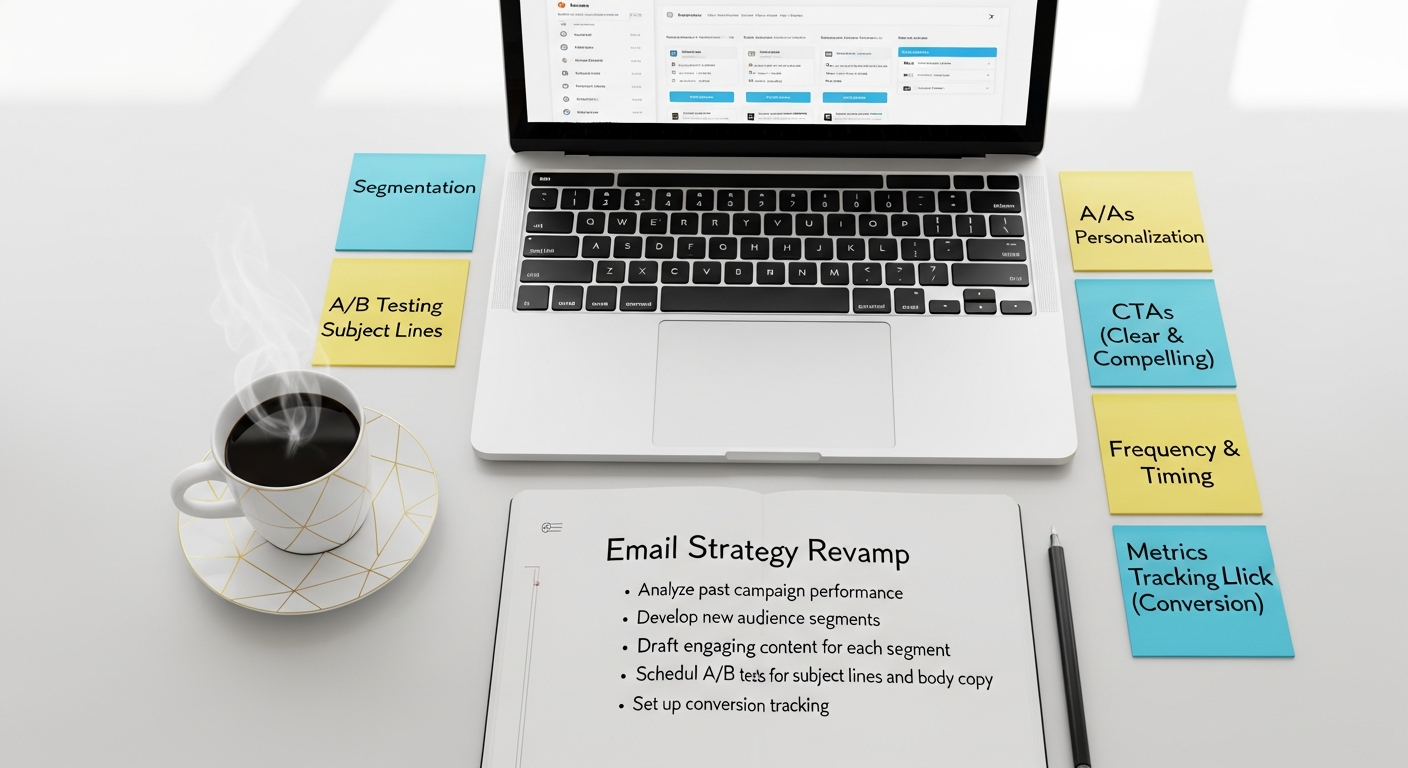
The bedrock of any successful email marketing strategy in 2026 is sophisticated segmentation combined with hyper-personalization. Moving beyond basic demographic filters, modern marketers must leverage a rich tapestry of behavioral, psychographic, and predictive data to create truly one-to-one communication.
Beyond Basic Demographics: Deep Dive into Data
While demographics like age and location still have their place, they are merely the starting point. Advanced segmentation delves much deeper, utilizing a wealth of data points to categorize subscribers into highly specific, actionable groups. This includes:
- Behavioral Data: Tracking website visits, pages viewed, products purchased or abandoned, email open and click-through rates, content downloaded, video watched, and engagement with previous emails. This tells you what actions they’ve taken and what their current interests are.
- Psychographic Data: Understanding subscriber interests, values, attitudes, and lifestyle. While harder to glean directly, surveys, social media listening, and content consumption patterns can provide strong indicators. For instance, if a subscriber frequently engages with articles about productivity tools, they likely value efficiency and innovation.
- Purchase History and Value: Segmenting by frequency of purchase, average order value, types of products bought, and recent purchase dates allows for targeted up-selling, cross-selling, and loyalty programs.
- Engagement Levels: Identifying active subscribers, dormant users, and those at risk of churning. This enables specific re-engagement campaigns for the latter groups, preventing list decay.
- Lifecycle Stage: Tailoring content for new subscribers, active customers, returning customers, or those in a trial phase. Each stage requires different messaging and calls to action.
By combining these data points, you can create nuanced segments. For example, instead of just “customers in California,” you might have “first-time customers in California who purchased Product X, viewed our ‘how-to’ video, and haven’t opened an email in 30 days.” This level of detail empowers incredibly precise targeting.
AI-Driven Insights and Dynamic Content
Artificial intelligence plays a transformative role in enabling this level of segmentation and personalization at scale. AI algorithms can analyze vast datasets far more efficiently than humans, identifying patterns and predicting future behavior. This allows for:
- Predictive Segmentation: AI can forecast which subscribers are most likely to make a purchase, churn, or respond to a specific offer, allowing you to proactively target them with relevant campaigns.
- Dynamic Content Generation: Instead of creating multiple email versions for different segments, AI-powered platforms can dynamically insert personalized content blocks (product recommendations, articles, offers) into a single email template based on each individual subscriber’s profile and real-time behavior. This can include personalized subject lines, body copy variations, and calls to action.
- Optimal Send Time: AI can analyze individual open patterns to determine the best time to send an email to each subscriber, maximizing open rates and engagement.
The true power lies in using these AI insights to fuel dynamic content. Imagine an email that changes its product recommendations based on a subscriber’s recent browsing history, or an article suggestion that updates based on their latest content consumption. This makes every email feel uniquely crafted for the recipient, significantly boosting relevance and engagement.
Individual Customer Journey Mapping
Hyper-personalization extends beyond individual emails; it encompasses the entire customer journey. This means mapping out the various touchpoints a subscriber has with your brand – from initial signup to becoming a loyal advocate – and tailoring email communications to guide them seamlessly through each stage. Every email should serve a purpose within this journey, whether it’s onboarding, educating, nurturing, converting, or retaining.
For instance, a new subscriber might receive a welcome series that introduces them to your brand’s values, followed by educational content relevant to their indicated interests. A customer who just made a purchase might receive a post-purchase series with usage tips, complementary product suggestions, or an invitation to leave a review. This journey-centric approach ensures that every email feels like a natural progression in their relationship with your brand, making them feel understood and valued rather than just another contact on a list.
The goal is to create a seamless, integrated experience that anticipates needs and proactively offers solutions, fostering a sense of genuine connection and making your email marketing not just effective, but truly exceptional in the competitive landscape of 2026.
Crafting Compelling Content That Converts
Mobile-First Design and Readability
Given that a significant majority of emails are first opened on mobile devices, a mobile-first design approach is non-negotiable. This means designing your emails so they render perfectly and are easily navigable on small screens before optimizing for larger displays. Key considerations include:
- Responsive Templates: Ensure your email templates automatically adjust to different screen sizes, preventing awkward layouts or broken images.
- Single-Column Layouts: These are generally easiest to read and scroll on mobile devices.
- Large, Legible Fonts: Avoid tiny text that forces users to zoom. Use clear, easily readable fonts.
- Ample White Space: Cluttered emails are overwhelming. Use white space to break up text and guide the reader’s eye.
- Thumb-Friendly Buttons: Calls to action (CTAs) should be large enough to be easily tapped with a thumb, with sufficient padding around them to prevent accidental clicks.
- Optimized Images: Use high-quality images that are compressed for fast loading, especially on mobile data connections.
Remember, if an email is difficult to read or interact with on a phone, it will likely be deleted, regardless of its content’s potential value.
Interactive Elements and Video Integration
To capture and retain attention, static emails are giving way to more dynamic and interactive experiences. Interactive elements can significantly boost engagement:
- Embedded Forms or Polls: Allow subscribers to provide feedback or answer questions directly within the email, reducing friction.
- Image Carousels or Accordions: Present multiple images or expand/collapse content sections to make emails more dynamic and conserve space.
- Animated GIFs: Use short, tasteful GIFs to add visual interest, demonstrate a product feature, or convey emotion without requiring a full video load.
Video integration is also a powerful tool. Instead of just linking to a video, consider embedding short, autoplaying video clips (where supported by email clients) or a prominent image with a play button that links directly to a hosted video. Video can convey complex information quickly, build personal connections, and demonstrate products effectively. For instance, a quick tutorial video on a new software feature can be far more impactful than a lengthy text description. The goal is to provide a richer, more engaging experience that stands out in a crowded inbox.
Concise Copy, Value Proposition, and Storytelling
Even with visuals and interactive elements, compelling copy remains crucial. In the age of short attention spans, brevity is key. Get straight to the point, highlight the benefits, and make your call to action unmistakable.
- Strong Subject Lines: These are your email’s gatekeepers. They must be clear, compelling, and create urgency or curiosity without being misleading. Personalization, emojis (used sparingly), and numbers can often boost open rates.
- Clear Value Proposition: Every email must clearly articulate “What’s in it for me?” from the subscriber’s perspective. Whether it’s a discount, a valuable piece of information, or an exclusive offer, the benefit must be immediately apparent.
- Storytelling: People connect with stories. Instead of just listing features, tell a story about how your product or service solves a problem, transforms a user’s life, or aligns with their aspirations. This humanizes your brand and creates an emotional connection.
- Strong Call to Action (CTA): Your CTA should be singular, prominent, and action-oriented. Use strong verbs and make it clear what you want the subscriber to do next.
Finally, remember accessibility. Ensure your emails are accessible to everyone, including those with visual impairments. Use descriptive alt text for images, maintain sufficient color contrast, and structure your content logically to be easily read by screen readers. An inclusive approach ensures your message reaches the widest possible audience effectively.
Harnessing Automation and AI for Intelligent Engagement
The synergy of automation and artificial intelligence is transforming email marketing from a manual, reactive process into a proactive, intelligently guided engagement strategy. For tech-savvy professionals, understanding how to leverage these tools is paramount for scaling efforts and achieving unprecedented levels of personalization and efficiency in 2026.
Behavioral Triggers and Drip Campaigns
Automation allows marketers to set up sophisticated workflows that respond to specific subscriber behaviors or lifecycle stages. This moves beyond scheduled broadcasts to delivering timely, relevant messages when they matter most. Key examples include:
- Welcome Series: Automatically sent to new subscribers, introducing your brand, setting expectations, and guiding them towards initial engagement.
- Onboarding Sequences: For new customers, these emails provide tips, tutorials, and support resources to help them get the most out of your product or service.
- Abandoned Cart Reminders: Triggered when a user leaves items in their shopping cart without completing a purchase, often including incentives to return.
- Re-engagement Campaigns: Sent to inactive subscribers to re-ignite their interest before they fully churn, perhaps offering exclusive content or a special discount.
- Post-Purchase Follow-ups: Asking for reviews, suggesting complementary products, or providing customer support after a purchase.
- Milestone Emails: Celebrating subscriber anniversaries, birthdays, or loyalty program achievements, fostering a sense of appreciation.
These drip campaigns are not static; they can be dynamic, adapting content and timing based on how the subscriber interacts with each email in the series. The beauty of automation lies in its ability to deliver these personalized sequences at scale, ensuring no interaction opportunity is missed and freeing up marketing teams to focus on strategy rather than manual execution.
AI for Content Generation, Subject Lines, and Send Times
Artificial Intelligence is rapidly advancing beyond basic personalization to actively assist in the creation and optimization of email campaigns. This is where the true intelligence in engagement comes into play:
- AI-Powered Content Generation: While not yet fully replacing human creativity, AI tools can assist in drafting email copy, generating blog post ideas, and even suggesting variations for product descriptions that resonate with specific segments. This can significantly reduce the time spent on content creation, allowing human marketers to refine and add their unique brand voice.
- Optimized Subject Lines: AI algorithms can analyze historical data, industry trends, and even psychological triggers to suggest highly effective subject lines. They can test variations, predict performance, and even learn from previous campaigns to continuously improve open rates. This eliminates much of the guesswork from a critical component of email success.
- Predictive Send Times: As mentioned previously, AI can analyze individual subscriber behavior to determine the optimal time to send an email for maximum engagement. This moves beyond general “best times to send” to hyper-personalized delivery, ensuring your message lands when the subscriber is most likely to open and interact with it.
For professionals interested in the underlying mechanisms, understanding how these AI tools are built can be incredibly insightful. Much like exploring “Decoding ai development a comprehensive comparison of popular ai programming languages” helps developers choose the right tools for their projects, understanding the AI models and data processing behind email automation helps marketers leverage them more strategically. It’s about knowing the capabilities and limitations of the technology to integrate it most effectively into your workflow.
Predictive Analytics and Proactive Engagement
Beyond reacting to past behavior, AI empowers email marketers to become proactive through predictive analytics. This involves using machine learning to forecast future subscriber actions, such as:
- Churn Prediction: Identifying subscribers who are at risk of becoming inactive or unsubscribing, allowing for targeted re-engagement efforts before it’s too late.
- Next Best Offer: Predicting which product or service a subscriber is most likely to be interested in purchasing next, enabling highly relevant cross-selling and up-selling.
- Lead Scoring: Automatically assigning scores to leads based on their engagement and demographic data, helping sales teams prioritize their efforts.
By leveraging these predictive insights, your email strategy shifts from a broad-stroke approach to a finely tuned, anticipatory system. You’re not just sending emails; you’re orchestrating a series of intelligent touchpoints designed to guide each individual through their unique customer journey, maximizing their lifetime value and solidifying their loyalty to your brand. This level of intelligent engagement is what truly sets apart leading email marketing strategies in 2026.
Optimizing Performance: Testing, Analytics, and Iterative Improvement
An optimized email marketing strategy isn’t a static blueprint; it’s a living system that demands continuous refinement. For tech-savvy professionals, this means embracing a data-driven, iterative approach, much like the principles found in “Maximizing efficiency exploring the benefits and advantages of agile for teams.” Regular testing, meticulous analysis, and an agile mindset are crucial for ensuring your campaigns consistently deliver peak performance in 2026.
A/B Testing and Multivariate Testing for Continuous Refinement
Testing is the backbone of optimization. It allows you to scientifically determine what resonates best with your audience. While A/B testing (comparing two versions of a single element) is fundamental, multivariate testing (comparing multiple variations of several elements simultaneously) offers deeper insights, especially with larger audience segments and more complex campaigns.
What to test:
- Subject Lines: Arguably the most critical element to test, impacting open rates significantly. Experiment with length, personalization, emojis, urgency, and intriguing questions.
- Preheader Text: Often overlooked, this snippet of text appears after the subject line and can be a powerful motivator for opening an email.
- Call-to-Action (CTA): Test different wording, button colors, sizes, and placement within the email.
- Email Content: Experiment with different headlines, body copy lengths, tone of voice, image choices, and video integration.
- Send Times and Days: Determine when your audience is most receptive to your messages.
- Personalization Levels: Test the impact of basic name personalization versus deeper behavioral personalization.
- Email Layouts and Templates: See which designs lead to better readability and engagement.
The key is to test one variable at a time (for A/B tests) to accurately attribute changes in performance. For multivariate tests, ensure you have sufficient traffic to achieve statistically significant results. Always have a clear hypothesis before you begin testing and analyze the results rigorously.
Deliverability and Sender Reputation Management
Even the most perfectly crafted email is useless if it doesn’t reach the inbox. Deliverability is paramount, and it’s heavily influenced by your sender reputation. Internet Service Providers (ISPs) like Gmail, Outlook, and Yahoo evaluate your sending habits to determine whether your emails are legitimate or spam. Factors influencing sender reputation include:
- Bounce Rate: A high soft or hard bounce rate signals to ISPs that your list is poorly maintained. Regularly clean your list to remove invalid email addresses.
- Spam Complaint Rate: Too many users marking your emails as spam will severely damage your reputation. Ensure clear opt-in processes and easy unsubscribe options.
- Engagement Rates: ISPs look at open rates, click-through rates, and reply rates as positive indicators. Low engagement can signal that your emails are unwanted.
- Sending Volume and Frequency: Sudden spikes in sending volume or inconsistent sending patterns can trigger spam filters.
- IP and Domain Reputation: Ensure your email service provider (ESP) maintains a good IP reputation, and that your own domain is not blacklisted.
Proactive management of these factors is crucial. Authenticate your emails using SPF, DKIM, and DMARC to prove your identity and prevent spoofing. Monitor your deliverability rates and sender reputation regularly using specialized tools. A strong sender reputation ensures your emails land in the primary inbox, maximizing your reach and impact.
Key Metrics and Analytics for Informed Decisions
Data is your compass in the world of email marketing. Tracking the right metrics provides insights into campaign performance and guides future optimization efforts. Key metrics include:
- Open Rate (OR): The percentage of emails opened out of those delivered. Indicates the effectiveness of your subject line and preheader.
- Click-Through Rate (CTR): The percentage of unique opens that resulted in a click on a link within the email. Measures engagement with your content and CTA effectiveness.
- Click-to-Open Rate (CTOR): The number of unique clicks divided by the number of unique opens. Provides a more granular view of how engaging your content is to those who actually opened the email.
- Conversion Rate: The percentage of recipients who completed a desired action (e.g., purchase, download, signup) after clicking through from your email. This is often the ultimate measure of ROI.
- Bounce Rate: The percentage of emails that couldn’t be delivered. Helps identify list hygiene issues.
- Unsubscribe Rate: The percentage of recipients who opted out. While some churn is natural, a high rate signals content or frequency issues.
- Spam Complaint Rate: The percentage of recipients who marked your email as spam. A critical metric for sender reputation.
- Return on Investment (ROI): The revenue generated from email campaigns compared to the cost. The ultimate business metric.
Beyond these individual metrics, analyze trends over time. Look at segment-specific performance. Which segments engage more? Which content types perform best with which audiences? Use these insights to iterate and improve. This continuous cycle of testing, analyzing, and refining embodies an agile approach to email marketing, leading to sustained efficiency and superior results.
Integrating Email into the Holistic Digital Experience
In 2026, email marketing cannot operate in a silo. Its true power is unlocked when it’s seamlessly integrated into your broader digital ecosystem, contributing to a unified customer view and a cohesive brand experience. For tech-savvy professionals, this means understanding how email acts as a central nervous system for customer communication, connecting various touchpoints and data streams.
CRM Synergy and Unified Customer View
Your Customer Relationship Management (CRM) system should be the central hub for all customer data, and your email marketing platform must be deeply integrated with it. This synergy is critical for creating a unified customer view:
- Centralized Data: All interactions – website visits, purchases, support tickets, email opens, clicks, and unsubscribes – should flow into your CRM. This provides a 360-degree view of each customer.
- Enhanced Segmentation: Leveraging rich CRM data (e.g., sales history, lead status, customer service interactions) allows for incredibly precise email segmentation and personalization that goes beyond typical marketing data.
- Sales and Marketing Alignment: Integration ensures sales teams have access to marketing insights (email engagement, content preferences) and marketing teams can see sales outcomes, fostering better alignment and lead nurturing.
- Automated Workflows: CRM data can trigger email automations. For example, a change in a lead’s status in the CRM can automatically enroll them in a specific email nurturing sequence.
Without this tight integration, your email marketing efforts will lack context and depth, leading to disjointed customer experiences and missed opportunities. The CRM becomes the single source of truth, empowering more intelligent and coordinated communication across all channels.
Cross-Channel Consistency and Brand Voice
Your customers interact with your brand across multiple channels: email, social media, website, chatbots, and perhaps even physical stores. It is paramount that the experience is consistent across all these touchpoints. Email marketing plays a crucial role in maintaining this consistency:
- Consistent Messaging: The core value proposition, brand voice, and key messages should be uniform across all channels. Email can reinforce messages seen on social media or your website.
- Seamless Handoffs: Ensure smooth transitions between channels. For example, an email promoting a new product should link directly to the relevant product page on your website. A customer service query initiated via email might be followed up on by a chat agent who has access to the email thread.
- Brand Identity: Visual elements (logos, colors, fonts) and tone of voice should be consistent, building brand recognition and trust.
- Personalized Journeys: Leverage insights from one channel to personalize experiences on another. If a customer browses specific products on your website, an email can follow up with tailored recommendations.
This cross-channel consistency ensures that your brand presents a unified, professional front, enhancing customer trust and making the overall experience more intuitive and enjoyable. Email acts as a personalized bridge, guiding users through their journey while maintaining a coherent brand narrative.
Ethical Data Practices and Deeper Understanding
As we discussed, data privacy is paramount. When integrating email with other systems, the ethical collection, storage, and use of data become even more critical. Transparency with your subscribers about how their data is used to enhance their experience is not just good practice; it’s a legal and moral imperative.
Consider the analogy of “Usng a people search database to learn more about someone you just met.” While this tool provides a wealth of public information, its application for marketing purposes must be approached with extreme caution, prioritizing privacy and legitimate consent. In email marketing, we gather data directly from subscriber interactions and explicit permissions. The goal isn’t to unearth every piece of information about an individual, but to ethically gather relevant data that allows us to provide better, more anticipated value through our communications. This means:
- Explicit Consent: Always obtain clear, unambiguous consent for collecting and using data for marketing purposes.
- Data Minimization: Only collect the data you truly need to deliver value and personalize experiences.
- Secure Storage: Ensure all customer data, especially when integrated across systems, is stored securely and protected from breaches.
- Easy Preference Management: Provide subscribers with simple ways to update their preferences, control what types of emails they receive, and opt-out entirely.
By integrating email marketing responsibly and intelligently within your broader digital strategy, you create a powerful, cohesive, and customer-centric experience. This holistic approach not only maximizes efficiency and ROI but also builds deeper, more meaningful relationships with your modern audience in 2026.
Frequently Asked Questions
Recommended Resources
Learn more about this topic in How To Build An Email List From Scratch at Eamped.
You might also enjoy How To Create A Brand Identity From Scratch from Layout Scene.