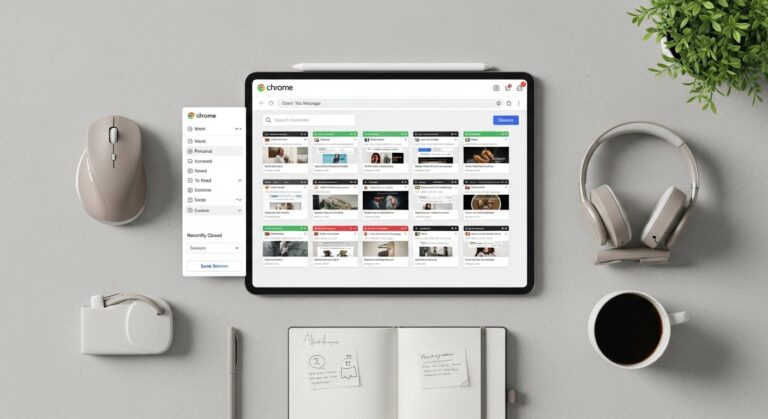

Achieving Browser Tab Inbox Zero: Your Daily Practice Guide
Imagine your email inbox overflowing with unread messages, each one a potential task or piece of information demanding your attention. The concept of “Inbox Zero” revolutionized email management, advocating for a clean, empty inbox as a daily goal. Now, apply that same powerful philosophy to your browser tabs. This comprehensive guide will show you how to achieve “Browser Tab Inbox Zero” – not as a one-time clean-up, but as a sustainable, daily practice that transforms your digital workspace and supercharges your productivity. Get ready to reclaim your browser, your focus, and your peace of mind.
Understanding the “Tab Overload” Problem: More Than Just Clutter
Before we delve into solutions, it’s crucial to fully grasp the pervasive impact of tab overload. You might think those numerous open tabs are harmless, just “there for later.” However, their presence exacts a heavy toll on your system and, more importantly, on your cognitive resources. Each open tab consumes RAM and CPU cycles, slowing down your computer and draining your battery, especially if you’re working on a laptop. This technical drag can lead to frustrating delays, crashes, and a generally sluggish computing experience.
Beyond the technical, the psychological burden is substantial. Every open tab represents an unfinished thought, a pending task, or an unread piece of information. This constant visual noise creates a sense of overwhelm and decision fatigue. Your brain is subconsciously processing all these open loops, even if you’re not actively looking at them. This reduces your ability to concentrate on the task at hand, fragments your attention, and makes deep work incredibly challenging. It’s like trying to have a focused conversation in a crowded, noisy room – your mind is constantly distracted by the surrounding chatter.
Consider the “Zeigarnik effect,” a psychological phenomenon stating that people remember unfinished or interrupted tasks better than completed ones. While useful for remembering what you need to do, in the context of browser tabs, it means all those open tabs are constantly vying for your mental bandwidth, creating a persistent background hum of cognitive load. This isn’t just about aesthetics; it’s about optimizing your mental and digital environment for peak performance. Recognizing tab overload as a significant productivity bottleneck is the first step toward embracing a cleaner, more efficient browsing habit.
The Philosophy of Browser Tab Inbox Zero: A Mindset Shift
Achieving “Browser Tab Inbox Zero” isn’t merely about closing tabs; it’s about adopting a proactive, intentional approach to your digital workspace. It’s a mindset shift that prioritizes focus, efficiency, and mental clarity over the convenience of leaving everything open “just in case.” Just as with email Inbox Zero, the goal isn’t necessarily to have zero tabs open at all times (that’s often impractical for knowledge workers), but rather to process and organize them regularly, ensuring that every open tab serves a clear, immediate purpose.
This philosophy encourages you to treat each new tab as a temporary item that needs to be processed. When you open a tab, you should have a clear intention for it. Will you read it now? Is it part of your current project? Or is it something to save for later? By making these micro-decisions, you prevent the accumulation of digital debris. The benefits are profound:
- Enhanced Focus: With fewer distractions vying for your attention, you can dive deeper into tasks and achieve flow states more easily.
- Improved System Performance: Fewer active tabs mean your browser and computer run faster and more smoothly.
- Reduced Stress and Overwhelm: A clean digital environment contributes to a calmer, more controlled work experience.
- Better Information Retrieval: When tabs are organized or closed, you know exactly where to find what you need without endless searching.
- Conscious Consumption: You become more deliberate about what information you consume and how you interact with web content.
Embracing this philosophy means viewing your browser as a tool to be managed, rather than a passive receptacle for endless information. It’s about being the master of your digital domain, not its overwhelmed subject. It empowers you to take control, reduce cognitive load, and create a more conducive environment for deep work and creative problem-solving.
Essential Browser Extensions for Tab Management
To effectively achieve and maintain Browser Tab Inbox Zero, you’ll need the right tools. Browser extensions are indispensable for automating, organizing, and decluttering your tab landscape. Here are some categories and specific examples that can revolutionize your tab management:
1. Tab Suspenders/Discarders
These extensions automatically “hibernate” inactive tabs, freeing up system resources without actually closing the tab. When you click on a suspended tab, it reloads instantly. This is a game-changer for performance.
- Auto Tab Discard (Chrome): Free. Automatically discards (suspends) tabs after a set period of inactivity. You can whitelist sites, pin tabs, and set custom rules. It’s excellent for passively managing resource consumption.
- Tab Suspender (Firefox): Free. Similar functionality for Firefox users, allowing you to manually suspend tabs or set automatic rules.
- The Great Suspender (Legacy Alternative): While the original “The Great Suspender” had security issues, many forks and alternatives exist that provide similar core functionality. Always check reviews and permissions before installing any extension.
2. Session Managers & Organizers
These tools allow you to save groups of tabs as “sessions” or “workspaces,” making it easy to close them all and reopen them later. This is perfect for project-based work or different contexts.
- Workona (Chrome, Firefox, Edge): Offers a free tier and paid plans ($6/month for Pro, $12/month for Team). Workona creates “workspaces” for different projects or tasks. Within each workspace, you can organize tabs, integrate cloud apps (Google Docs, Trello, Asana), and easily switch between contexts. It’s ideal for professionals juggling multiple projects.
- Toby (Chrome, Edge): Free. Toby acts as a visual tab organizer. You can drag and drop open tabs into named collections, save entire browsing sessions, and quickly access frequently used resources. Its drag-and-drop interface makes it incredibly intuitive for quick organization.
- Session Buddy (Chrome): Free. A robust session manager that allows you to save and restore open tabs at any time. It’s excellent for recovering from crashes or simply preserving your work context. You can also export sessions for backup.
- OneTab (Chrome, Firefox, Edge): Free. With a single click, OneTab converts all your open tabs into a list within a single tab, drastically reducing memory usage. You can restore them individually or all at once. It’s a minimalist, highly effective tool for quick decluttering.
3. Tab Grouping Features (Native Browser)
Modern browsers like Chrome and Edge now offer native tab grouping. While not an extension, it’s a powerful built-in feature. You can group related tabs, collapse them, and even color-code them. This helps in visual organization and reduces visual clutter without needing an extension.
By strategically deploying a combination of these tools, you can transform your browser from a chaotic mess into a highly organized, efficient workspace, making your daily “Inbox Zero” practice far more achievable.
Implementing a Daily Tab Triage Routine

The core of Browser Tab Inbox Zero is a consistent, daily triage routine. This isn’t about a massive overhaul once a month; it’s about small, deliberate actions performed regularly. Think of it as clearing your physical desk at the end of each workday. Here’s a practical, step-by-step routine you can adopt:
-
The Morning Scan: Set Your Intentions
Start your day with a quick scan of any tabs left open from the previous day. Ask yourself: “Is this tab essential for what I need to accomplish right now?” If not, process it immediately. This sets a clean slate for your current tasks.
-
The Midday Check-in: Realign and Refocus
Around midday or after completing a significant task, take another look. Are there tabs open that are no longer relevant to your current focus? Close them, save them, or move them to a dedicated workspace. This prevents accumulation as the day progresses.
-
The End-of-Day Purge: The True Inbox Zero Moment
This is the most critical step. Before you shut down for the day or switch contexts, commit to clearing your tabs. Go through each open tab and apply one of the following actions:
- Close: If you’re done with it and don’t need it again, close it. Be ruthless.
- Bookmark (with folders): If it’s a resource you might need later, bookmark it into a well-organized folder structure (e.g., “Project X Resources,” “Read Later,” “Reference”). Use descriptive names for your bookmarks.
- Send to Read-It-Later App: For articles, blog posts, or long-form content you want to consume but not right now, send them to a dedicated read-it-later app like Pocket or Instapaper. This removes them from your active tabs but ensures they’re saved for leisure reading.
- Add to Task Manager: If the tab represents a task (e.g., a form to fill, an email to send, research to complete), add it as an item in your task manager (e.g., Todoist, Asana, Notion) with a direct link to the tab. Then, close the tab.
- Save to Session/Workspace: If it’s part of an ongoing project that you’ll resume tomorrow, use a session manager like Workona or Toby to save the current set of tabs as a named session. Then, close the individual tabs.
-
Utilize Pinned Tabs Strategically
Reserve pinned tabs for truly essential, always-open applications like your calendar, primary communication tool (Slack, Teams), or task manager. Keep this list minimal to avoid defeating the purpose.
-
Regular Review of Bookmarks and Saved Sessions
Periodically review your bookmark folders and saved sessions. Delete outdated ones, reorganize, and ensure they remain useful resources rather than digital graveyards.
By making this routine a habit, you’ll find that tab clutter becomes a rare occurrence rather than a constant state. It’s about building a muscle memory for digital hygiene.
Advanced Strategies for Proactive Tab Management
Moving beyond daily triage, proactive strategies help prevent tab overload before it even begins. These methods integrate deeper into your workflow, creating a more sustainable and efficient browsing environment.
1. Leverage Browser Profiles for Context Switching
If you manage distinct areas of your life or work (e.g., work vs. personal, client A vs. client B), consider using separate browser profiles. Most modern browsers (Chrome, Edge, Firefox) support this. Each profile has its own history, bookmarks, extensions, and most importantly, its own set of open tabs. This creates a hard separation between contexts, preventing cross-contamination and making “Inbox Zero” easier within each specific domain.
- Use Case: A freelancer might have one profile for client work, another for personal browsing, and a third for professional development/learning. When working on client projects, only the client profile is active, keeping distractions from other areas at bay.
2. Implement Dedicated Workspaces or Virtual Desktops
Operating systems like Windows (Virtual Desktops) and macOS (Spaces) allow you to create multiple virtual desktops. You can assign different browser windows (or even entire browser profiles) to specific desktops. This extends the concept of separate contexts to your entire operating system.
- Example: Desktop 1 for your main work browser, Desktop 2 for research-related tabs, Desktop 3 for communication apps. This physical separation makes it harder to get sidetracked by tabs from other areas.
3. Employ Container Tabs (Firefox) for Identity Separation
Firefox’s “Multi-Account Containers” extension is a powerful tool for separating website data and cookies. This means you can log into multiple accounts on the same site (e.g., multiple Gmail accounts) simultaneously without conflicts. More relevant to tab management, it allows you to create “containers” for different purposes (e.g., “Work,” “Personal,” “Shopping”). Tabs opened in one container cannot interact with tabs in another, providing a strong isolation layer that naturally organizes your browsing by context.
- Benefit: Prevents tracking across different contexts and helps you visually distinguish between work-related and personal tabs, reinforcing your tab management discipline.
4. Embrace the “One Window, Many Tabs” vs. “Many Windows, Few Tabs” Approach
Decide which browsing style works best for you. Some prefer one browser window with many tabs, relying on grouping and session managers. Others prefer multiple smaller windows, each dedicated to a specific task or project, often on different virtual desktops. Experiment to find what reduces cognitive load for you. The key is intentionality, not just letting tabs accumulate haphazardly.
5. Regular “Digital Declutter” Sprints
Beyond daily routines, schedule a weekly or bi-weekly “digital declutter” session. This is where you review your bookmarks, saved sessions, and even browser history. Delete outdated links, archive old projects, and ensure your digital filing system remains lean and efficient. This prevents your organized resources from becoming another form of clutter.
By integrating these advanced, proactive strategies, you move beyond simply reacting to tab overload and start building a browsing environment that inherently supports focus and productivity.
Integrating Tab Management with Your Workflow: Seamless Efficiency
For Browser Tab Inbox Zero to be truly effective, it must be seamlessly integrated into your existing workflow, rather than feeling like an additional chore. The goal is to make tab management an intuitive, almost unconscious part of how you operate digitally. Here’s how you can weave it into various aspects of your professional life:
1. Project-Based Tab Organization
When you start a new project, immediately create a dedicated workspace or session for it using tools like Workona or Toby. As you gather resources, open relevant applications, or conduct research, place all related tabs within that specific project environment. This ensures that when you switch between projects, you’re not overwhelmed by irrelevant tabs.
- Example: For “Client X Marketing Campaign,” you’d have tabs for their website, competitor analysis, design assets in Google Drive, and your project management tool all grouped. When you’re done for the day, save the session and close the workspace.
2. Research and Information Gathering
During deep research, it’s easy to accumulate dozens of tabs. Instead of letting them pile up, use a “research session” approach. As you find useful articles or data points:
- Immediately save critical links to your project workspace or a dedicated “Research” bookmark folder.
- For articles to read later, send them to Pocket or Instapaper.
- Use a temporary “Research” tab group in your browser for the current active search, closing it down once that specific query is resolved.
This prevents a single research dive from derailing your entire tab system.
3. Communication and Collaboration
If you use web-based communication tools like Slack, Microsoft Teams, or Gmail, consider how they fit into your tab strategy. For critical, always-open tools, pin them. For less frequent communication channels or specific meetings, open them as needed and close them immediately after use. If a tab leads to a task, convert it into a task in your project management system and close the tab.
4. Learning and Development
When taking online courses, watching tutorials, or reading educational content, create a “Learning” workspace. This keeps your study materials separate from your work or personal tabs. Use a session manager to save your progress on a course or a collection of tutorials. This compartmentalization helps you focus on learning without distractions.
5. Task Management Integration
The most powerful integration is linking tabs directly to your task manager. If a tab is open because it represents an actionable item (e.g., “Review this document,” “Fill out this form”), create a task in your tool of choice (e.g., Todoist, ClickUp, Notion) and include the URL. Once the task is created, close the tab. This ensures that the action is captured and the tab clutter is eliminated.
By consciously applying these integration strategies, tab management ceases to be an external chore and becomes an organic, supportive element of your daily professional rhythm, allowing you to maintain focus and efficiency across all your digital activities.
Overcoming Common Challenges and Maintaining Discipline
Even with the best tools and intentions, maintaining Browser Tab Inbox Zero can be challenging. Old habits die hard, and the allure of “just keeping it open” is strong. Here’s how to anticipate and overcome common hurdles:
1. The Fear of Missing Out (FOMO) on Information
Many people keep tabs open because they fear losing a valuable piece of information or forgetting to do something. This is where your saving and organizational systems come into play. Trust your bookmarks, your read-later apps, and your task manager. If you’ve saved it properly, you haven’t lost it. Remind yourself that a saved link in an organized folder is far more discoverable than one lost in a sea of open tabs.
2. “I’ll Get To It Later” Procrastination
The “later” often never comes, or by the time it does, you’ve forgotten why the tab was open in the first place. Combat this by making immediate decisions. If it’s not for now, it’s for a specific later (scheduled in your calendar, added to your task list) or it’s gone. Develop a strong “if in doubt, close it” mentality.
3. Over-Reliance on Memory
Your brain is for thinking, not for storing URLs. Trying to remember which tab holds what information is a huge cognitive drain. Externalize that memory to your tools. Use descriptive bookmark names, tag saved articles, and link directly from your task manager. This frees up mental bandwidth for actual work.
4. Tool Overwhelm
There are many tab management tools available. Don’t try to use them all. Start with one or two that address your most pressing needs (e.g., a tab suspender for performance, a session manager for projects). Master those, and then gradually introduce others if genuinely needed. Simplicity often breeds consistency.
5. Lack of a Visual Cue
Sometimes, seeing an open tab reminds you of a task. While this can be true, it’s an inefficient reminder system. Instead, use your task manager as the primary reminder system. For visual cues, consider using a tool like Toby that gives you a visual overview of your saved collections, or simply review your task list regularly.
6. The “Just One More Tab” Syndrome
This is the slippery slope. You open one tab, then another, then suddenly you’re back to twenty. Be mindful of your tab-opening habits. Before opening a new tab, ask yourself: “Do I truly need this right now, or can I save it for later?” If it’s for later, save it to your read-later app or task manager immediately.
Strategies for Maintaining Discipline:
- Set a Timer: Dedicate 5-10 minutes at the beginning and end of each workday specifically for tab triage.
- Use a Checklist: Create a simple mental or physical checklist for processing tabs (Close? Bookmark? Task? Save Session?).
- Reward System: Acknowledge the feeling of satisfaction that comes with a clean browser. Celebrate small wins in digital decluttering.
- Accountability: If you work in a team, share your tab management goals with a colleague.
- Practice, Not Perfection: Don’t get discouraged if you occasionally lapse. The goal is consistent practice, not flawless execution. Just get back on track the next day.
By proactively addressing these challenges and committing to consistent effort, you can transform tab management from a daunting task into a seamless, empowering habit.
The Long-Term Benefits of a Clean Tab Environment
Embracing and maintaining Browser Tab Inbox Zero is not just about momentary relief from clutter; it’s an investment in your long-term productivity, well-being, and digital mastery. The cumulative effects of a consistently clean tab environment extend far beyond faster browser performance and fewer open tabs.
Firstly, you cultivate a profound sense of control over your digital workspace. This mastery translates into reduced cognitive load and mental fatigue. When your browser is tidy, your mind is clearer, allowing you to allocate your mental resources to problem-solving, creativity, and deep analytical work, rather than constantly battling distractions or searching for lost information. This sustained focus is invaluable in today’s demanding professional landscape.
Secondly, your efficiency skyrockets. By having an organized system for saving, retrieving, and managing information, you spend less time searching for links, re-opening forgotten pages, or getting sidetracked. This translates into more time dedicated to actual productive tasks, allowing you to accomplish more in less time and reduce the need for overtime. The friction points in your workflow are significantly minimized.
Thirdly, it improves your decision-making and intentionality. The practice encourages you to be more deliberate about what information you consume and how you interact with it. Each tab opening becomes an intentional act, not a passive accumulation. This heightened awareness can lead to better information diet choices, preventing information overload and ensuring you focus on truly valuable resources.
Finally, a clean tab environment contributes directly to your digital well-being. It reduces the feeling of overwhelm and stress associated with an endless backlog of digital tasks. Knowing that your digital workspace is organized and manageable brings a sense of calm and clarity, fostering a more positive and sustainable relationship with your technology. It’s not just about getting things done; it’s about doing them with greater ease and less stress.
Ultimately, Browser Tab Inbox Zero is a cornerstone of digital minimalism and effective personal knowledge management. It empowers you to work smarter, think clearer, and maintain a healthier balance in your digital life, leading to sustained high performance and greater professional satisfaction.
Key Takeaways
- Browser tab overload significantly impacts focus, productivity, and system performance due to cognitive load and resource drain.
- Adopt the “Inbox Zero” philosophy for tabs: process and organize them daily with intentionality, not just accumulate.
- Utilize essential browser extensions like tab suspenders (e.g., Auto Tab Discard), session managers (e.g., Workona, Toby, Session Buddy), and consolidators (e.g., OneTab).
- Implement a daily tab triage routine: close, bookmark, send to read-later, or add to task manager for every tab.
- Proactively manage tabs using advanced strategies such as browser profiles, virtual desktops, and container tabs for distinct work contexts, integrating management seamlessly into your workflow.
Comparison Table: Popular Tab Management Tools
| Tool Name | Pricing | Key Features | Best For |
|---|---|---|---|
| OneTab | Free |
|
Quick, simple decluttering and memory saving for temporary tab hoards. |
| Workona | Free tier; Pro ($6/month), Teams ($12/month) |
|
Professionals managing multiple projects, contexts, and cloud-based workflows. |
| Toby | Free |
|
Users who prefer a highly visual, intuitive way to organize and save tab groups. |
| Session Buddy | Free |
|
Users needing reliable session saving, crash recovery, and detailed session management. |
| Auto Tab Discard | Free |
|
Users prioritizing browser performance and resource management, especially with many tabs open. |
Frequently Asked Questions
Q: How often should I practice Browser Tab Inbox Zero?
A: Ideally, you should integrate tab triage into your daily routine. A quick scan in the morning, a check-in midday, and a thorough purge at the end of your workday are highly effective. Consistency is more important than infrequent, massive clean-ups.
Q: Will closing tabs make me forget important information?
A: Not if you have a robust system for saving. The goal of Inbox Zero isn’t to delete everything, but to process it. Use bookmarks, read-later apps (like Pocket), your task manager (linking to URLs), or session managers (like Workona or Toby) to save information for later. This ensures information is retrievable without cluttering your active browser.
Q: Which tab management extension is best for me?
A: It depends on your primary need. If you primarily want to save system resources, a tab suspender like Auto Tab Discard is great. If you juggle multiple projects and need organized workspaces, Workona or Toby are excellent. For simple decluttering, OneTab is superb. Consider trying a few free options to see what fits your workflow best.
Q: Can I achieve Inbox Zero for tabs without extensions?
A: Yes, to a degree. Modern browsers offer native features like tab grouping (e.g., in Chrome and Edge) and multiple user profiles, which can help. However, extensions significantly enhance your capabilities for suspending, saving sessions, and organizing tabs, making the process much more efficient and automated.
Q: What if I need to keep many tabs open for a specific project?
A: This is where session managers and workspace tools shine. Instead of keeping them actively open and consuming resources, save them as a dedicated project session or workspace. Tools like Workona or Toby allow you to save entire groups of tabs, close them to free up resources, and then reopen them instantly when you return to that project. You can also use tab suspenders to keep them open but inactive.
By implementing the strategies, tools, and mindset shifts outlined in this guide, you are not just cleaning up your browser; you are investing in a more focused, efficient, and less stressful digital life. Browser Tab Inbox Zero is more than a technique; it’s a foundational practice for anyone serious about optimizing their productivity in the modern world. Take control of your tabs, and you’ll take control of your workday.
Article by Dr. Eleanor Vance, Digital Productivity Strategist at bookmarksharer.com