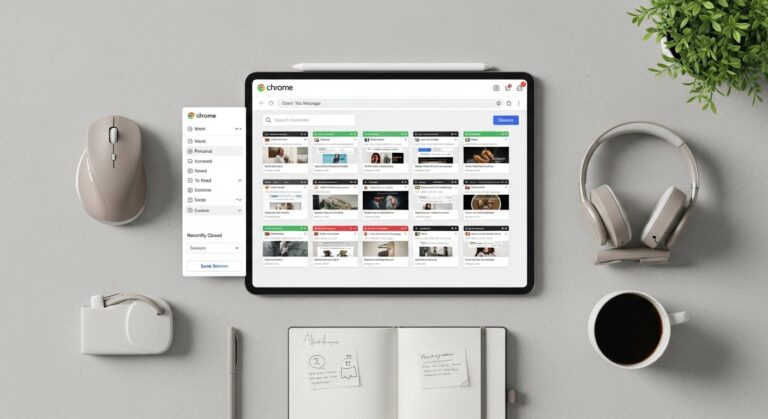

Seamlessly Integrating AI Chat History into Your Personal Knowledge Base
This is where the power of integrating your AI chat history with a personal knowledge base (PKB) comes into play. A PKB, whether it’s a dedicated app like Obsidian or Notion, or a custom system, serves as your digital brain – a centralized repository for all your thoughts, notes, research, and ideas. By connecting your AI conversations to this personal knowledge hub, you transform fleeting interactions into structured, retrievable, and actionable knowledge. This article will guide you through the why and how, offering practical strategies, specific tool recommendations, and real-world workflows to ensure that every valuable nugget from your AI assistant contributes to your ever-growing reservoir of personal knowledge.
The AI Chat Revolution and the Knowledge Management Imperative
The advent of sophisticated AI language models has undeniably ushered in a new era of productivity. Tools like OpenAI’s ChatGPT, Google’s Gemini, and Anthropic’s Claude are no longer just novelties; they are integral parts of many professionals’ daily workflows. You might be using them to:
- Brainstorm innovative solutions for complex problems.
- Rapidly synthesize information from lengthy reports or articles.
- Draft emails, marketing copy, or technical documentation.
- Learn new concepts, programming languages, or historical facts.
- Debug code or troubleshoot technical issues.
Each interaction, each prompt, and each AI-generated response holds a kernel of information that could be vital for future projects, learning, or decision-making. Yet, without a deliberate strategy, this valuable knowledge often remains siloed within the chat interface itself. You find yourself scrolling endlessly through past conversations, struggling to recall specific details, or worse, re-prompting the AI for information you’ve already received. This creates a significant knowledge gap, where valuable insights are generated but not effectively captured or integrated into your long-term memory system.
The imperative, therefore, is clear: to truly maximize the benefits of AI, you must move beyond transient interactions and establish robust systems for knowledge capture and integration. Your personal knowledge base is the ideal destination for this information, transforming ephemeral chat logs into structured, searchable, and interconnected knowledge assets.
Why Integrating AI Chat History is Non-Negotiable for Knowledge Workers

For any professional whose work relies heavily on information, learning, and creative problem-solving, the integration of AI chat history into a personal knowledge base is not just a nice-to-have; it’s a fundamental shift towards more effective knowledge management. Here’s why you absolutely need to prioritize this:
- Preventing Knowledge Loss: AI conversations are often rich with specific instructions, summaries, code snippets, or unique perspectives. Without integration, these insights are easily lost as chat histories become unwieldy or as platforms evolve. Your PKB acts as a permanent, organized archive.
- Enhanced Recall and Contextual Understanding: Imagine needing to revisit a specific AI-generated summary for a project six months later. If it’s linked directly to your project notes, meeting minutes, or relevant research in your PKB, you instantly regain the full context. This significantly reduces the cognitive load of remembering where you saw what.
- Accelerated Learning and Skill Development: When using AI as a tutor or learning assistant, saving explanations, examples, and practice problems directly into your learning notes allows for spaced repetition and easy review. You build a personalized curriculum from your AI interactions.
- Improved Decision-Making and Problem-Solving: By having a comprehensive record of AI-assisted research, brainstorming sessions, and solution explorations, you can make more informed decisions. You can quickly review past approaches, identify patterns, and avoid repeating previous errors.
- Rapid Content Synthesis and Creation: Whether you’re writing a report, developing a presentation, or coding a new feature, having AI-generated drafts, outlines, or code snippets readily available and linked within your PKB drastically speeds up the content creation process. You spend less time searching and more time building.
- Building a “Second Brain” with AI Superpowers: Your PKB is often referred to as a “second brain.” By feeding it high-quality, AI-generated insights, you’re essentially giving your second brain AI superpowers, making it smarter, more comprehensive, and ultimately, more valuable.
Choosing Your Personal Knowledge Base (PKB): Compatibility and Features
The first step in connecting your AI chat history is selecting the right personal knowledge base. The “best” PKB depends on your specific needs, workflow, and technical comfort level. Here are some popular options and what to consider:
| Tool Name | Pricing Tiers | Key Features | Best For |
|---|---|---|---|
| Obsidian | Free (Personal), Sync ($10/month), Publish ($20/month) | Local Markdown files, powerful linking (bidirectional), graph view, vast plugin ecosystem, highly customizable. | Users who prioritize data ownership, deep linking, customizability, and a powerful local graph database. Excellent for Zettelkasten. |
| Notion | Free (Personal), Plus ($8/user/month), Business ($15/user/month), Enterprise (Custom) | All-in-one workspace (notes, databases, wikis, project management), collaborative features, robust API. | Teams and individuals needing a flexible, highly visual, database-driven workspace for project management, documentation, and general knowledge. |
| Logseq | Free (Open Source) | Local Markdown files, outliner-first approach, block references, daily notes, graph view, privacy-focused. | Users who prefer an outliner-based workflow, block-level linking, daily journaling, and open-source principles. |
| Evernote | Free (Basic), Personal ($14.99/month), Professional ($18.99/month) | Web clipping, powerful search, robust tagging, cross-device sync, document annotation. | Users needing a reliable, easy-to-use note-taking app with excellent web clipping and search capabilities. |
| Roam Research | Pro ($15/month), Believer ($30/month) | Outliner-first, bidirectional linking, daily notes, graph database, emphasis on interconnected thoughts. | Users who thrive with an outliner and graph-based thinking, enjoy discovering connections between ideas, similar to Logseq but proprietary. |
| Readwise Reader | Included with Readwise (Lite $4.49/month, Full $7.99/month) | Read-it-later app, highlighting, note-taking, AI summarization (Ghostreader), export to PKBs. | Users who consume a lot of articles, PDFs, and newsletters and want to centralize their reading and highlights before sending to a PKB. |
When making your choice, consider:
- API Access: Does the PKB offer a robust API that allows for programmatic integration? This is crucial for automation.
- Extensibility: Does it support plugins, extensions, or integrations with other tools (e.g., Zapier, Make)?
- Linking Capabilities: How well does it support internal linking, bidirectional linking, and block references? This is key for establishing connections between your AI notes and other knowledge.
- Data Ownership & Portability: Do you prefer local files (Obsidian, Logseq) or cloud-based (Notion, Evernote)? Can you easily export your data?
- Workflow Fit: Does the PKB’s core philosophy (e.g., outliner, block-based, page-based) align with how you think and organize information?
Practical Strategies for Capturing and Structuring AI Interactions

Once you’ve chosen your PKB, the next step is to establish efficient workflows for capturing your AI chat history. There’s a spectrum of methods, ranging from manual to fully automated:
1. Manual Copy-Pasting with Curation
This is the simplest starting point. After a valuable AI interaction:
- Identify Key Segments: Don’t just dump the entire chat. Select the most relevant questions, prompts, and AI responses.
- Copy & Paste: Transfer these segments into a new note in your PKB.
- Curate & Summarize: Refine the raw text. Add your own thoughts, summarize the AI’s output in your own words, and highlight key takeaways. This active processing enhances learning and recall.
- Add Metadata: Include a title, tags (e.g.,
#AI/ChatGPT,#ProjectX,#Summary), and links to related notes or source material. - Link Back: If possible, include a link to the original chat conversation (if the AI platform allows persistent links) for full context.
Use Case: Quickly saving a complex explanation or a short code snippet generated by AI that you immediately need to integrate into a document or project plan.
2. Leveraging Browser Extensions and Read-It-Later Services
Several tools are designed to capture web content, which can be adapted for AI chat interfaces:
- Readwise Reader: This excellent read-it-later app allows you to save web pages, PDFs, and even email newsletters. You can highlight key sections and add notes. Crucially, Readwise has an “Export” feature that can automatically send your highlights and notes to Obsidian, Notion, Logseq, and other PKBs. It even has an AI summarization feature (Ghostreader) that can process the content you’ve saved.
Workflow: Save a lengthy AI chat session as a web page into Readwise Reader. Highlight the most important parts, add your own insights, and then let Readwise export these curated notes to your PKB.
- Glasp / Liner / Instapaper: Similar to Readwise, these tools allow you to highlight and annotate web pages. While not always directly integrating with AI chat platforms, they can capture the web page content of your chat.
Workflow: Use the browser extension to highlight key AI responses directly on the chat page. These highlights are then saved in the extension’s interface and can often be exported or copied to your PKB.
- Specialized AI Savers: Some emerging tools are specifically designed to save AI conversations. For example, some browser extensions allow one-click saving of entire ChatGPT threads. Keep an eye on these as they mature.
3. Harnessing Automation Tools (Zapier, Make)
For a more advanced and hands-off approach, automation platforms are invaluable. These tools connect different applications, allowing you to create custom workflows:
- Zapier: Connects thousands of apps. While direct AI chat platform integrations can be limited, you can often use intermediary steps.
Workflow Example (Conceptual):
- Trigger: You save an AI chat transcript to a specific folder in Google Drive or Dropbox.
- Action 1: Zapier detects the new file.
- Action 2: Zapier parses the file (e.g., extracts text, identifies key sections using AI within Zapier).
- Action 3: Zapier creates a new page in Notion or a Markdown file in Obsidian (via a cloud sync folder) with the extracted content and metadata.
- Make (formerly Integromat): Similar to Zapier but often offers more granular control and complex multi-step scenarios. It excels at visual workflow building.
Workflow Example (Conceptual):
- Trigger: You use a custom script or a simple web form to input an AI chat summary and its URL.
- Action 1: Make receives this input.
- Action 2: Make uses the Notion API to create a new database item with the summary, URL, and any other relevant fields.
- Action 3 (Optional): Make sends a notification to your preferred communication channel (e.g., Slack, Telegram) confirming the capture.
The key to automation is identifying a consistent trigger and a clear destination. This often involves either the AI platform having an API or using a “bridge” application (like a cloud storage service or a simple form) that automation tools can monitor.
4. Direct API Integrations (Emerging)
As AI tools and PKBs mature, we’ll see more direct API integrations. Some AI platforms (e.g., OpenAI’s API) allow developers to interact programmatically. Some PKBs (e.g., Notion) have robust APIs. The challenge is often connecting the two without custom coding.
- Custom Scripts: For those with programming skills, you can write Python scripts to interact with AI APIs, process responses, and then use PKB APIs (like Notion’s) or file system operations (for Obsidian/Logseq) to save the data.
Use Case: A developer building a custom AI assistant that automatically logs specific types of interactions into a Notion database for project tracking.
- Obsidian Plugins: The Obsidian community is incredibly active. Look for plugins that might directly interact with AI chat services or facilitate easier capture. For example, some plugins allow you to paste content and automatically apply templates, or even interact with local AI models.
Key Tools and Technologies for Seamless Integration
Let’s delve deeper into specific tools that facilitate the connection between your AI chat history and your PKB:
1. Personal Knowledge Bases (PKBs)
- Obsidian:
- Strength: Local Markdown files, powerful linking, graph view.
- Integration: Manual copy-paste, Obsidian Sync for multi-device access, extensive plugin ecosystem (e.g., Advanced URI for external app control, Templater for structured notes, Dataview for querying notes). You can set up folders to sync with cloud services (Google Drive, Dropbox) for automation tools to interact with.
- Real-World Use: Create a template for “AI Chat Summary” that automatically adds tags, date, and a placeholder for the original chat URL. Paste AI output into this template, then link it to relevant project notes or topics using
[[wikilinks]].
- Notion:
- Strength: All-in-one workspace, databases, collaborative features, robust API.
- Integration: Manual copy-paste, web clipper, and especially its powerful API that integrates seamlessly with Zapier and Make. You can create databases specifically for AI interactions.
- Real-World Use: Set up a “AI Interactions” database with properties like “AI Tool,” “Topic,” “Summary,” “Link to Chat,” and “Status.” Use Zapier to automatically create a new database item whenever you save a chat transcript to a specific cloud folder.
- Logseq:
- Strength: Outliner-first, block references, local Markdown files, daily notes.
- Integration: Similar to Obsidian, it uses local files, making it amenable to file-system-based automation. Its block-referencing is excellent for granular linking of AI-generated content.
- Real-World Use: Paste AI responses directly into your daily note or a topic page as blocks. Then, use block references (
((block-id))) to pull specific AI insights into other notes or project pages, creating a highly interconnected web of knowledge.
2. Capture and Curation Tools
- Readwise Reader:
- Strength: Centralizes all your reading (articles, PDFs, newsletters), powerful highlighting, AI summarization (Ghostreader), and robust export integrations.
- Integration: Save AI chat sessions (if they can be rendered as web pages) into Reader. Highlight, annotate, and then use Readwise’s native integration to send these curated notes directly to Obsidian, Notion, Logseq, or other PKBs.
- Pricing: Included with Readwise subscription ($4.49/month for Lite, $7.99/month for Full).
- Glasp:
- Strength: Social web highlighter that allows you to highlight and annotate web pages, including YouTube videos.
- Integration: Use it to highlight key sections of your AI chat history directly in the browser. Export your highlights to Markdown or use its integration features (e.g., direct to Obsidian).
- Pricing: Free.
- Web Clippers (Evernote, Notion):
- Strength: Capture entire web pages or selected sections.
- Integration: Useful for grabbing entire AI chat threads as a single note/page.
- Real-World Use: If an AI chat contains a particularly long and valuable explanation, use the Notion Web Clipper to save the entire page to a Notion database, then go back and tag it appropriately.
3. Automation Platforms
- Zapier:
- Strength: Broadest range of app integrations, user-friendly interface for creating “Zaps.”
- Integration: Connects cloud storage (Google Drive, Dropbox), email, and many PKB APIs (like Notion’s) to create automated workflows.
- Pricing: Free (limited tasks), Starter ($19.99/month), Professional ($49/month) and up.
- Make (formerly Integromat):
- Strength: More powerful and flexible for complex multi-step scenarios, visual workflow builder.
- Integration: Excellent for connecting various services, including webhooks (for custom triggers), cloud storage, and PKB APIs.
- Pricing: Free (limited operations), Core ($9/month), Pro ($16/month) and up.
Building Robust Workflows: Step-by-Step Integration Examples
Let’s look at some real-world scenarios and how you can implement these integrations:
Scenario 1: Research & Synthesis for a Project Report
You’re using ChatGPT to summarize research papers, extract key arguments, and generate initial drafts for sections of a project report.
- AI Interaction: Prompt ChatGPT with a research paper URL or text, asking for a summary of key findings, methodologies, and conclusions.
- Capture (Manual & Readwise):
- For short, direct answers, manually copy the summary and paste it into a new note in your Obsidian PKB, linking it to your main project page (e.g.,
[[Project X - Report]]). - For longer, more detailed AI conversations, save the chat page to Readwise Reader. Highlight the most pertinent sections, add your own interpretive notes, and then use Readwise’s export feature to send these curated highlights to your Obsidian “Research Notes” folder.
- For short, direct answers, manually copy the summary and paste it into a new note in your Obsidian PKB, linking it to your main project page (e.g.,
- Structuring in PKB (Obsidian):
- Create a dedicated folder for “AI Research Notes” within your project folder.
- Use a template for each AI summary note that includes:
Title: AI Summary - [Topic]Source: ChatGPT/GeminiDate: {{date}}Tags: #AI #Research #ProjectXOriginal Chat Link: [Link to Chat]---## Summary[Pasted/Exported AI summary]## My Insights[Your critical analysis and connections to other notes]
- Link these notes directly to your main project outline or specific sections of your report draft within Obsidian.
- Benefit: All AI-assisted research is consolidated, contextualized, and directly actionable within your project workspace, making report writing more efficient.
Scenario 2: Brainstorming & Idea Generation for Content Creation
You’re using Gemini to brainstorm blog post ideas, generate headlines, and outline content for your blog.
- AI Interaction: Engage Gemini with prompts like “Generate 10 blog post ideas about AI integration with PKBs,” “Suggest catchy headlines for a post on X,” or “Create an outline for a blog post on Y.”
- Capture (Automation with Notion & Zapier):
- After a brainstorming session, you might copy the best ideas into a plain text file saved in a specific “AI Brainstorming Inbox” folder in Google Drive.
- Set up a Zapier automation:
- Trigger: New file in Google Drive folder.
- Action: Create a new item in your Notion “Content Ideas” database.
- Mapping: Map the file content to a “Brainstorming Notes” property, and the file name to a “Title” property. Add a default tag like “AI Generated.”
- Structuring in PKB (Notion):
- Your Notion “Content Ideas” database will automatically populate with new AI-generated ideas.
- Add properties like “Status” (e.g., Idea, Draft, Published), “Category,” “Target Audience,” and a “Link to Outline” (which could be another Notion page).
- Filter and sort your ideas, linking them to your content calendar.
- Benefit: Your creative flow with AI is uninterrupted, and all ideas are automatically channeled into a structured system for review and development, preventing valuable concepts from being lost.
Scenario 3: Learning & Skill Development (e.g., New Programming Language)
You’re using Claude to understand complex programming concepts, debug code snippets, and get explanations for errors.
- AI Interaction: Ask Claude to explain a specific Python concept, provide examples, or help debug a piece of code.
- Capture (Manual & Logseq):
- As Claude provides explanations and code examples, copy the most useful parts.
- Paste these directly into your Logseq daily note. Use Logseq’s outliner structure to organize the information with bullet points.
- Structuring in PKB (Logseq):
- Within your daily note, create blocks for each concept. For example:
- Python: Decorators [[Programming/Python]]- AI Explanation: [Pasted Claude explanation]- Code Example:```python[Pasted Claude code]```
- My Understanding: [Your summary in your own words]- Related Concepts: [[Closures]], [[Functions as First-Class Objects]]
- Use block references (
((block-id))) to pull specific AI-generated explanations or code snippets into dedicated “Python Concepts” pages or project notes whenever you need to reference them.
- Within your daily note, create blocks for each concept. For example:
- Benefit: You build a personalized, interconnected learning resource from your AI tutor, making it easy to review, reinforce, and apply new knowledge.
Overcoming Challenges and Adopting Best Practices
While the benefits are clear, integrating AI chat history isn’t without its challenges. Here’s how to navigate them and adopt best practices:
Challenges:
- Information Overload: Not every AI interaction is worth saving. Dumping everything will quickly turn your PKB into a cluttered mess.
- Maintaining Context: A raw AI response might lose its meaning if separated from the original prompt and the conversation flow.
- Formatting Inconsistencies: Copy-pasting from different AI platforms can lead to varying formatting (Markdown, plain text, rich text), requiring cleanup.
- Data Privacy and Security: Be mindful of what sensitive information you’re inputting into AI models and subsequently saving into your PKB, especially if it’s cloud-based.
- API Limitations: Not all AI platforms or PKBs offer robust APIs, limiting automation possibilities.
- Cost: Automation tools and some PKBs come with subscription fees, which can add up.
Best Practices:
- Curate, Don’t Just Dump: Be selective. Only capture the most valuable, unique, or insightful parts of your AI conversations. Summarize and rephrase in your own words to aid understanding and retention.
- Standardize Your Capture Process: Whether manual or automated, try to follow a consistent method. Use templates in your PKB for AI notes to ensure uniform metadata (tags, source, date, links).
- Add Contextual Metadata: Always include the AI tool used (e.g., ChatGPT-4,