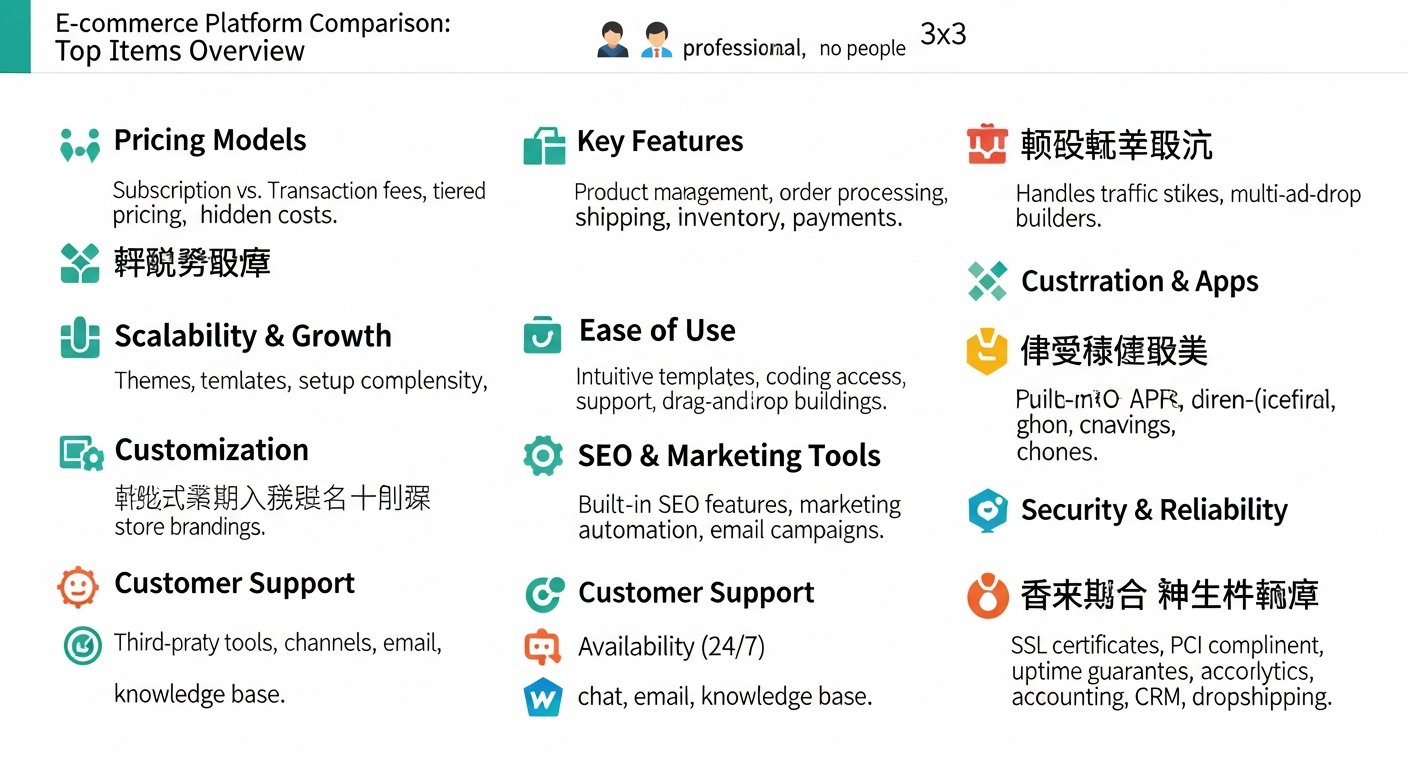

E-commerce Platform Comparison: Choosing the Best Platform for Online Business Growth
In the dynamic landscape of online entrepreneurship, making an informed **e-commerce platform comparison** is not merely a technical decision; it’s a strategic move that profoundly impacts your business’s efficiency, growth trajectory, and ultimately, your ability to embrace a modern, productive lifestyle. With countless options available, each promising to be the ultimate solution, the process of selection can feel overwhelming. This comprehensive guide aims to demystify the leading e-commerce platforms, offering a detailed comparison based on crucial criteria such as ease of use, scalability, cost, and integrated features. Our goal is to empower online business owners, from nascent startups to established enterprises, to make an informed decision that aligns perfectly with their vision for enhanced digital productivity and sustainable online business growth.
Understanding the nuances of each platform is key to unlocking your business’s full potential, ensuring seamless operations, and freeing up valuable time that can be reinvested into innovation or personal pursuits. We will explore how different platforms cater to various business models and technical proficiencies, helping you pinpoint the ideal solution to streamline your operations and foster financial growth. This detailed **e-commerce platform comparison** will guide you through the strengths and weaknesses of each, ensuring you select the best fit for your unique needs.
- **Shopify:** Best for entrepreneurs seeking an all-in-one, user-friendly solution with robust sales and marketing tools.
- **WooCommerce:** Ideal for WordPress users who desire ultimate control and customization over their online store.
- **BigCommerce:** Suited for growing businesses that require advanced scalability, multi-channel selling, and enterprise-grade features.
- **Squarespace:** Perfect for creative brands and small businesses prioritizing stunning design and simplified management.
- **Magento (Adobe Commerce):** Designed for large enterprises needing unparalleled customization, complex integrations, and high performance.
- **Wix E-commerce:** Excellent for small businesses and individuals who value an intuitive drag-and-drop website builder with integrated e-commerce features.
Let’s dive into a detailed comparison to help you find your perfect match.
| Platform | Starting Price (approx.) | Transaction Fees (native) | Ease of Use | Key Features (Highlights) | Scalability | Best For | Integrations |
|---|---|---|---|---|---|---|---|
| Shopify | $29/month | 0-2% (if not using Shopify Payments) | Beginner-Intermediate | POS, Multi-channel, Marketing tools, Apps | Small-Large | All-in-one, quick setup, growth-focused | Extensive App Store, Zapier |
| WooCommerce | Free (plugin) + hosting/themes/plugins | Varies by payment gateway | Intermediate-Advanced | Full customization, Open-source, WordPress ecosystem | Small-Enterprise | WordPress users, tech-savvy, custom needs | Thousands of plugins, WordPress API |
| BigCommerce | $29.95/month | 0% | Intermediate | Advanced SEO, Multi-channel, B2B, API-first | Medium-Enterprise | Growing businesses, high-volume sales, headless commerce | App Marketplace, robust API |
| Squarespace | $27/month (Commerce plan) | 0% | Beginner | Beautiful templates, Blogging, Portfolio, Basic e-commerce | Small-Medium | Creative professionals, artists, lifestyle brands | Limited native, some third-party extensions |
| Magento (Adobe Commerce) | Varies (Enterprise plans) | Varies by payment gateway | Advanced | Enterprise features, B2B, Multi-site, High customization | Enterprise | Large enterprises, complex operations, high traffic | Extensive Marketplace, open API |
| Wix E-commerce | $27/month (Business Basic) | 0% | Beginner | Drag-and-drop builder, SEO wizard, Marketing tools | Small-Medium | Small businesses, personal brands, quick setup | Wix App Market |
What is Shopify and How Does it Serve Modern Entrepreneurs?
Shopify stands as a titan in the e-commerce world, renowned for its user-friendly interface and comprehensive suite of tools designed to simplify online selling. It streamlines operations for busy entrepreneurs, enabling rapid store setup and management, which significantly boosts digital productivity and aligns perfectly with a modern lifestyle focused on efficiency and mobility. From inventory management to marketing, Shopify provides a robust ecosystem that allows businesses to thrive without extensive technical expertise.
Pricing & Fees for Shopify
Shopify offers several pricing plans, typically starting around $29 per month for its basic package, scaling up for more advanced features and lower transaction fees. While Shopify Payments allows for 0% transaction fees, using third-party payment gateways incurs additional fees (usually 0.5% to 2%, depending on the plan), alongside the standard payment processor fees. Understanding Shopify’s pricing structure is crucial for budget planning, especially for businesses with high sales volumes where transaction costs can accumulate.
What are Shopify’s Key Features & Functionality?
- **Intuitive Store Builder:** Easy drag-and-drop functionality for creating visually appealing online stores.
- **Multi-channel Selling:** Integrate with social media, marketplaces (like Amazon and eBay), and even brick-and-mortar stores via Shopify POS.
- **Robust Marketing & SEO Tools:** Built-in SEO features, discount codes, email marketing integrations, and abandoned cart recovery.
- **Extensive App Store:** A vast marketplace of apps to extend functionality for everything from dropshipping to advanced analytics.
- **Secure Hosting & SSL:** Managed hosting infrastructure with automatic updates and SSL certificates included.
How Easy is Shopify to Use and What is its Learning Curve?
Shopify is celebrated for its ease of use, making it an excellent choice for beginners and those new to e-commerce. The learning curve is relatively gentle, with a logical dashboard and clear guidance for setting up products, managing orders, and customizing themes. While advanced customizations might require some basic coding knowledge (or hiring a developer), the core functionality is accessible to everyone.
How Does Shopify Enhance Digital Productivity for Growing Businesses?
Shopify is built to scale, handling everything from small startups to large, high-traffic enterprises. Its infrastructure ensures reliable performance during peak sales periods, while advanced plans offer features like international selling and priority support. Merchants can easily expand product catalogs, manage increasing order volumes, and extend functionality through its app ecosystem.
What Integrations & Ecosystem Does Shopify Offer?
The Shopify App Store is a cornerstone of its appeal, offering thousands of integrations for virtually any business need—from accounting and shipping to customer service and analytics. This extensive ecosystem ensures that businesses can tailor their Shopify store to specific requirements, enhancing overall digital productivity by consolidating various tools.
What Customer Support & Resources Does Shopify Provide?
Shopify provides 24/7 customer support via phone, email, and live chat, alongside an extensive knowledge base, forums, and online tutorials. This comprehensive support system is invaluable for new entrepreneurs and ensures that help is always available, reducing potential downtime and contributing to a more productive operational flow.
What are the Pros & Cons of Shopify?
- Pros: User-friendly, vast app store, excellent scalability, strong marketing tools, 24/7 support.
- Cons: Transaction fees for third-party gateways, monthly subscription can add up with apps, less design flexibility than some platforms.
Who is Shopify Best Suited For?
Shopify is an ideal choice for a wide range of entrepreneurs: startups looking to quickly launch an online store, small to medium-sized businesses aiming for rapid growth, and even larger businesses that value an all-in-one managed solution over complex self-hosted options. It particularly shines for those who prioritize a streamlined workflow and robust sales features to boost their digital productivity.

What is WooCommerce: Flexible E-commerce for WordPress Users?
WooCommerce transforms any WordPress website into a fully functional online store, offering unparalleled flexibility and control. This open-source platform is a natural fit for tech-savvy builders and those already invested in the WordPress ecosystem, allowing for deep customization and seamless integration with existing content. WooCommerce offers unparalleled flexibility for tech-savvy builders, empowering them to craft highly personalized e-commerce experiences that perfectly align with their brand and operational needs, thereby supporting a modern lifestyle of creative freedom and control.
What are the Pricing & Fees for WooCommerce?
WooCommerce itself is a free WordPress plugin, making it seem like a budget-friendly option. However, users must account for the costs of web hosting, a domain name, themes, and potentially premium plugins for advanced functionality. Transaction fees depend entirely on the payment gateways chosen (e.g., Stripe, PayPal), as WooCommerce does not impose its own fees.
What are WooCommerce’s Key Features & Functionality?
- **Full Customization:** Being open-source, WooCommerce offers limitless possibilities for design and functionality through code and plugins.
- **WordPress Integration:** Seamlessly blends with WordPress content, allowing for powerful content marketing strategies.
- **Extensive Plugin Ecosystem:** Access to thousands of free and premium plugins to extend features (e.g., SEO, shipping, inventory).
- **Secure Payments:** Integrates with all major payment gateways, offering flexibility and choice.
- **Scalable:** Can handle everything from small boutiques to large enterprises, though performance depends heavily on hosting quality and optimization.
How Easy is WooCommerce to Use and What is its Learning Curve?
While installing WooCommerce is straightforward for WordPress users, getting the most out of it requires a moderate to advanced technical skill set. Customization often involves tweaking code or navigating complex plugin settings. The learning curve can be steeper for those unfamiliar with WordPress or web development concepts.
How Does WooCommerce Support Scalability & Performance?
WooCommerce can be incredibly scalable, provided you have robust hosting and the technical expertise to optimize your site. For very high-traffic stores, managed WooCommerce hosting or dedicated servers become essential. The platform’s open-source nature means you have full control over performance optimization, a significant benefit for long-term digital productivity.
What Integrations & Ecosystem Does WooCommerce Offer?
The strength of WooCommerce lies in its symbiotic relationship with the vast WordPress ecosystem. Thousands of plugins and extensions are available, covering every conceivable feature from subscriptions and bookings to sophisticated SEO and CRM integrations. This allows businesses to create a highly tailored and efficient digital workflow.
What Customer Support & Resources Does WooCommerce Provide?
As an open-source platform, WooCommerce doesn’t offer direct 24/7 support like SaaS alternatives. Support primarily comes from its extensive documentation, a vibrant community forum, and third-party developers. Users often rely on their hosting provider’s support or invest in premium plugins that offer dedicated assistance.
What are the Pros & Cons of WooCommerce?
- Pros: Unbeatable flexibility, full control, open-source, vast plugin ecosystem, no transaction fees (from WooCommerce).
- Cons: Requires technical expertise, hosting costs can be significant, self-management of security and updates, scattered support.
Who is WooCommerce Best Suited For?
WooCommerce is ideal for existing WordPress users, developers, and businesses that require deep customization and full ownership of their store’s data and infrastructure. It suits those who want to integrate their e-commerce store tightly with content marketing and are willing to manage the technical aspects themselves or hire dedicated support, contributing to a modern lifestyle of technical mastery and independence.
What is BigCommerce: Scalable Power for Growing Online Businesses?
BigCommerce positions itself as the enterprise-grade platform for serious growth, offering a powerful, feature-rich solution designed to handle high volumes of sales and complex business requirements. It provides advanced tools out-of-the-box, reducing the need for numerous apps and fostering greater digital productivity for scaling operations. BigCommerce offers scalable power for growing online businesses by providing a robust, API-first platform that simplifies multi-channel selling and complex catalog management, allowing entrepreneurs to focus on strategic expansion rather than operational hurdles.
What are the Pricing & Fees for BigCommerce?
BigCommerce pricing starts similarly to Shopify but distinguishes itself by offering 0% transaction fees on all plans, regardless of the payment gateway used. Instead, plans have an annual sales threshold; exceeding it automatically upgrades you to the next tier. This model can be more predictable for high-volume sellers, enhancing financial growth planning.
What are BigCommerce’s Key Features & Functionality?
- **Comprehensive Out-of-the-Box Features:** Many features typically requiring apps on other platforms (e.g., advanced SEO tools, gift cards, faceted search, multi-currency support) are built-in.
- **Multi-channel Selling:** Strong native integrations for selling across social media, marketplaces, and even brick-and-mortar stores.
- **Robust API:** An open API allows for extensive customization and integration with enterprise-level systems (ERPs, CRMs).
- **B2B Functionality:** Advanced features for wholesale pricing, customer groups, and corporate accounts.
- **Headless Commerce:** Supports headless commerce architectures for ultimate front-end flexibility.
How Easy is BigCommerce to Use and What is its Learning Curve?
BigCommerce offers a well-organized dashboard and a powerful drag-and-drop page builder. While it is generally user-friendly, its extensive feature set means there’s a slightly steeper learning curve than Shopify for beginners. However, for those looking for advanced control without diving into code, it strikes a good balance.
How Does BigCommerce Support Scalability & Performance?
BigCommerce is engineered for scalability, making it an excellent choice for businesses anticipating significant growth. Its robust infrastructure reliably handles spikes in traffic and large product catalogs. The platform’s emphasis on native features and optimized performance contributes directly to sustained digital productivity for expanding enterprises.
What Integrations & Ecosystem Does BigCommerce Offer?
While its app marketplace isn’t as vast as Shopify’s, BigCommerce offers a curated selection of high-quality integrations for essential business functions. Its powerful API also allows for custom integrations, making it highly adaptable for unique business processes. This ensures that you can connect the tools you need to maintain peak digital productivity.
What Customer Support & Resources Does BigCommerce Provide?
BigCommerce provides 24/7 phone, email, and chat support across all plans. Enterprise clients receive dedicated account management. An extensive knowledge base and community forum further aid users, ensuring that complex issues can be resolved efficiently.
What are the Pros & Cons of BigCommerce?
- Pros: No transaction fees, powerful built-in features, excellent scalability, strong SEO capabilities, robust API for customization.
- Cons: Sales thresholds can force plan upgrades, themes can be less diverse than some competitors, slightly higher learning curve for beginners.
Who is BigCommerce Best Suited For?
BigCommerce is ideally suited for medium to large-sized businesses, fast-growing startups, and enterprises that require a powerful, scalable platform with rich out-of-the-box features and no transaction fees. It’s particularly strong for multi-channel retailers and those looking to implement B2B selling or headless commerce, enhancing their digital productivity for complex operations.
What is Squarespace: Aesthetic Simplicity for Creative Brands?
Squarespace is renowned for its award-winning design templates and intuitive website builder, making it a favorite among creative professionals, artists, and small businesses that prioritize aesthetics and ease of management. Its aesthetic simplicity for creative brands enables users to craft stunning online stores with minimal effort, aligning perfectly with a modern lifestyle that values visual appeal and straightforward content management.
What are the Pricing & Fees for Squarespace?
Squarespace offers various plans, with dedicated Commerce plans starting around $27 per month (when billed annually). Squarespace Commerce plans levy 0% transaction fees. However, its Business plan (a lower tier that includes e-commerce) used to charge a 3% transaction fee, so choosing a dedicated Commerce plan is vital for cost-efficiency in online sales.
What are Squarespace’s Key Features & Functionality?
- **Stunning Design Templates:** Professionally designed, mobile-responsive templates that are easily customizable.
- **Integrated E-commerce Tools:** Basic product management, inventory tracking, shipping options, and secure checkout.
- **Blogging & Portfolio Features:** Excellent tools for content creation, ideal for artists, photographers, and writers selling products.
- **Built-in SEO Tools:** Basic SEO settings to optimize pages and products for search engines.
- **Email Marketing:** Integrated email campaigns for customer engagement.
How Easy is Squarespace to Use and What is its Learning Curve?
Squarespace is incredibly user-friendly, featuring a visual drag-and-drop editor that makes website building accessible to individuals with no coding experience. Its streamlined interface and comprehensive tutorials ensure a very low learning curve, allowing users to quickly establish an online presence and maintain digital productivity.
How Does Squarespace Support Scalability & Performance?
Squarespace is generally well-suited for small to medium-sized businesses. While it can handle a respectable number of products and orders, it may not be the ideal solution for very large enterprises with complex inventory needs or extremely high traffic volumes. Its managed hosting ensures good performance for its target audience.
What Integrations & Ecosystem Does Squarespace Offer?
Compared to Shopify or WooCommerce, Squarespace has a more limited range of third-party integrations. However, it offers essential integrations for payment gateways (Stripe, PayPal), shipping, and some marketing tools. Squarespace’s philosophy prioritizes built-in functionality over an expansive app marketplace.
What Customer Support & Resources Does Squarespace Provide?
Squarespace provides 24/7 email support and live chat during business hours. Its extensive knowledge base and video tutorials are excellent resources for self-help. The support is highly regarded for being helpful and responsive, contributing to a stress-free experience for users.
What are the Pros & Cons of Squarespace?
- Pros: Exceptional design, user-friendly interface, all-in-one platform, integrated blogging/portfolio, no transaction fees on commerce plans.
- Cons: Limited scalability for large enterprises, fewer third-party integrations, less flexible for deep customization than open-source platforms.
Who is Squarespace Best Suited For?
Squarespace is perfect for individual artists, photographers, designers, small boutiques, and lifestyle brands that value strong visual presentation and an easy-to-manage platform. It’s ideal for those who want to integrate e-commerce seamlessly with a beautiful portfolio or blog, fostering a modern lifestyle of creative expression and simplified business management.

What is Magento (Adobe Commerce): Enterprise-Grade Customization?
Magento, now known as Adobe Commerce, is a powerful, open-source e-commerce platform renowned for its unparalleled customization capabilities and enterprise-grade features. It is the choice for large businesses and corporations with complex requirements that demand complete control over their online store. Magento offers enterprise-grade customization, allowing large organizations to tailor every aspect of their e-commerce operations to specific needs, ensuring maximum digital productivity and the ability to adapt to complex, evolving market demands.
What are the Pricing & Fees for Magento (Adobe Commerce)?
Magento Open Source is free to download, but setting up and maintaining a store requires significant investment in hosting, development, security, and ongoing maintenance. Adobe Commerce, the enterprise version, involves substantial licensing fees, which are custom-quoted based on revenue and specific business needs. Transaction fees depend on the chosen payment gateways.
What are Magento’s Key Features & Functionality?
- **Unrivaled Customization:** Open-source nature allows for limitless customization of design, functionality, and integrations.
- **Multi-store & Multi-site Capabilities:** Manage multiple storefronts and brands from a single back-end.
- **Advanced B2B Functionality:** Robust features for wholesale pricing, custom catalogs, customer-specific pricing, and self-service portals.
- **High Performance & Scalability:** Built to handle massive product catalogs, high traffic volumes, and complex order management.
- **Extensive Third-Party Integrations:** Connects with virtually any ERP, CRM, marketing automation, or analytics system.
How Easy is Magento to Use and What is its Learning Curve?
Magento has a very steep learning curve. It requires significant technical expertise in web development, server management, and database administration. While the admin panel is functional, it can be complex to navigate, making it unsuitable for beginners or those without dedicated technical teams.
How Does Magento Support Scalability & Performance?
Magento’s strength lies in its scalability. It’s built to power the largest online retailers in the world, capable of managing millions of products and thousands of orders per minute. Performance, however, is highly dependent on the quality of hosting, server configuration, and ongoing optimization by experienced developers. This robust scalability supports long-term digital productivity and financial growth for enterprise-level operations.
What Integrations & Ecosystem Does Magento Offer?
The Magento Marketplace offers thousands of extensions, and its open API allows for bespoke integrations with almost any external system. This makes it incredibly flexible for businesses with unique workflows and a need to connect complex enterprise software, ensuring a highly integrated digital ecosystem.
What Customer Support & Resources Does Magento Provide?
For Magento Open Source, support comes primarily from a vast developer community, extensive documentation, and third-party agencies. Adobe Commerce clients receive dedicated premium support directly from Adobe, which includes technical assistance, security updates, and performance optimization guidance.
What are the Pros & Cons of Magento (Adobe Commerce)?
- Pros: Ultimate flexibility and customization, powerful B2B features, handles extreme scalability, vast global ecosystem.
- Cons: Very high cost of ownership (development, hosting, maintenance), requires significant technical expertise, steep learning curve.
Who is Magento Best Suited For?
Magento is exclusively suited for large enterprises, global brands, and businesses with highly complex and unique e-commerce requirements that justify significant investment in development and ongoing maintenance. It’s the platform of choice for those who need complete control, advanced B2B features, and the capacity to integrate with sophisticated enterprise resource planning systems, supporting a modern lifestyle of high-stakes business and custom solutions.
What is Wix E-commerce: Intuitive Design for Small Businesses?
Wix E-commerce provides an incredibly intuitive drag-and-drop website builder with integrated online store capabilities, making it an excellent choice for small businesses, personal brands, and those looking to launch quickly with minimal fuss. Wix E-commerce offers intuitive design for small businesses, enabling rapid online store creation and management without coding, thereby simplifying the journey to digital productivity and fostering a modern lifestyle of entrepreneurial accessibility.
What are the Pricing & Fees for Wix E-commerce?
Wix E-commerce plans (Business Basic, Business Unlimited, Business VIP) typically start around $27 per month (billed annually), with higher tiers offering more storage, bandwidth, and advanced features. Wix does not charge transaction fees beyond what your chosen payment gateway (e.g., Wix Payments, PayPal, Stripe) charges. This transparent pricing helps small businesses manage their financial growth effectively.
What are Wix E-commerce’s Key Features & Functionality?
- **Drag-and-Drop Builder:** Highly visual and easy-to-use editor for website and store design.
- **Integrated E-commerce Tools:** Product management, inventory tracking, secure checkout, shipping options, and basic tax calculations.
- **Marketing & SEO Tools:** Built-in SEO wizard, email marketing, social media integrations, and promotional tools.
- **Booking & Events:** Useful for service-based businesses that also sell products.
- **Wix App Market:** A curated marketplace for adding extra functionalities like customer reviews, live chat, and advanced analytics.
How Easy is Wix E-commerce to Use and What is its Learning Curve?
Wix is renowned for its exceptional ease of use, boasting one of the most user-friendly drag-and-drop interfaces on the market. Building a complete website and online store can be achieved rapidly, even by complete beginners. The learning curve is minimal, allowing users to quickly achieve digital productivity in their online presence.
How Does Wix E-commerce Support Scalability & Performance?
Wix E-commerce is well-suited for small to medium-sized businesses with moderate product catalogs and traffic. While it offers reliable performance for its target audience, it may not be the ideal solution for very large enterprises or those requiring highly complex, custom functionalities. Its managed hosting ensures consistent uptime and page loading speeds.
What Integrations & Ecosystem Does Wix E-commerce Offer?
The Wix App Market provides a decent range of integrations for common business needs, including marketing, analytics, and customer service. While not as extensive as Shopify’s, it offers sufficient options for most small businesses. Wix also focuses on providing many features natively, reducing the reliance on third-party apps.
What Customer Support & Resources Does Wix E-commerce Provide?
Wix offers customer support via phone, email, and a comprehensive help center with articles and video tutorials. Priority support is available on higher-tier plans. The responsiveness and quality of support are generally good, assisting users in maintaining their digital productivity without significant roadblocks.
What are the Pros & Cons of Wix E-commerce?
- Pros: Extremely easy to use, beautiful templates, all-in-one solution, no transaction fees (from Wix), good for SEO.
- Cons: Limited design flexibility once a template is chosen, not ideal for large enterprises, limited advanced customization options.
Who is Wix E-commerce Best Suited For?
Wix E-commerce is perfect for small business owners, individual entrepreneurs, artists, and startups who need a quick, intuitive, and visually appealing way to sell products online. It’s ideal for those who prioritize ease of use and integrated solutions over deep technical customization, fostering a modern lifestyle of accessible online entrepreneurship.
Beyond Platforms: What Essential Tools are Needed for E-commerce Success?
Choosing the right e-commerce platform is just the first step on the journey to online business success. To truly boost digital productivity and foster sustainable financial growth, businesses must integrate a suite of complementary tools and strategies. These elements create a holistic ecosystem that supports every facet of your online operation, from attracting customers to managing fulfillment and analyzing performance.
- **Payment Gateways:** Beyond the native options, research and integrate reliable payment solutions like PayPal, Stripe, Square, or Authorize.net to offer diverse payment methods and ensure smooth transactions.
- **Shipping & Fulfillment Software:** Tools like ShipStation, EasyShip, or even platform-specific integrations (e.g., Shopify Shipping) automate label creation, tracking, and carrier selection, drastically improving logistics efficiency.
- **Email Marketing & CRM:** Platforms such as Mailchimp, Klaviyo, or HubSpot are crucial for nurturing leads, engaging customers, and driving repeat business through automated campaigns and personalized communication.
- **SEO & Analytics Tools:** Google Analytics, Google Search Console, Ahrefs, or SEMrush are indispensable for understanding website traffic, optimizing for search engines, and making data-driven decisions that propel online business growth. For more details, see our guide on essential SEO & analytics tools.
- **Customer Service & Live Chat:** Solutions like Zendesk, LiveChat, or Tidio enable prompt customer support, enhancing satisfaction and building loyalty.
- **Inventory Management Systems:** For businesses with complex inventory needs, dedicated IMS tools can provide real-time tracking, multi-warehouse management, and forecasting capabilities, significantly improving digital productivity.
- **Social Media Management:** Tools like Buffer or Hootsuite streamline content scheduling and engagement across various social platforms, amplifying your reach and brand presence. Learn more about social media management strategies.
Integrating these tools effectively creates a seamless operational flow, minimizing manual tasks and maximizing the impact of your efforts. This comprehensive approach is foundational to achieving robust digital productivity and ensuring your online business not only survives but thrives in a competitive market, allowing you to enjoy a modern lifestyle with more time for strategic thinking and less for administrative burden.
What are the Future Trends in E-commerce and How to Adapt Your Online Business?
The e-commerce landscape is in constant evolution, driven by technological advancements and shifting consumer expectations. Staying ahead of these trends is vital for maintaining competitive advantage, ensuring long-term digital productivity, and sustaining financial growth. Adapting your online business to these future directions is not just about keeping up, but about proactively shaping your strategy for a modern, future-proof approach.
- **Personalization and AI:** Artificial intelligence will continue to drive hyper-personalized shopping experiences, from product recommendations to dynamic pricing and tailored content. AI-powered chatbots will enhance customer service, further streamlining operations.
- **Social Commerce:** The integration of shopping directly within social media platforms (e.g., Instagram Shopping, TikTok Shop) will become even more pervasive. Businesses need to optimize their social presence for direct sales and interactive shopping.
- **Augmented Reality (AR) & Virtual Reality (VR):** AR will allow customers to “try on” clothes, visualize furniture in their homes, or interact with products virtually before purchasing, reducing returns and enhancing the shopping experience.
- **Voice Commerce:** As smart speakers and voice assistants become more common, optimizing product listings for voice search and enabling voice-activated purchasing will open new sales channels.
- **Sustainable & Ethical E-commerce:** Consumers are increasingly prioritizing brands with strong ethical and sustainable practices. Transparency in sourcing, production, and packaging will become a key differentiator.
- **Headless Commerce & API-First Architecture:** Decoupling the front-end (customer experience) from the back-end (e-commerce platform) offers ultimate flexibility for design and integrations, enabling highly customized and agile digital experiences. This approach is gaining traction for businesses seeking cutting-edge digital productivity.
- **Subscription Models:** The subscription economy continues to grow, offering recurring revenue streams and building strong customer loyalty for various products and services.
Businesses that embrace these trends will be better positioned to engage customers, optimize operations, and unlock new avenues for online business growth. Regularly reviewing and adapting your e-commerce strategy ensures your platform and tools remain relevant and effective, supporting a dynamic and productive modern lifestyle.
How to Choose the Right E-commerce Platform: A Decision Framework
With a comprehensive understanding of the leading e-commerce platforms and the future trends shaping the industry, the final step is to apply a structured decision framework. This will help you synthesize the information and select the platform that best aligns with your unique business goals, budget, technical capabilities, and vision for digital productivity and financial growth, ensuring a decision that truly supports your modern lifestyle.
- **Define Your Business Needs & Goals:**
- What kind of products or services will you sell?
- What is your anticipated sales volume and traffic?
- Do you need B2B, multi-channel, or international selling capabilities?
- What are your long-term growth aspirations?
- **Assess Your Budget:**
- How much can you afford for monthly subscriptions, transaction fees, themes, apps/plugins, and potential development costs?
- Factor in both initial setup costs and ongoing maintenance.
- **Evaluate Your Technical Proficiency:**
- Are you a complete beginner, or do you have web development experience?
- Do you have (or can you hire) a dedicated technical team for maintenance and customization?
- **Prioritize Key Features:**
- What are the non-negotiable features your business needs (e.g., specific payment gateways, robust SEO tools, advanced inventory management)?
- Which features are nice-to-haves but not critical?
- **Consider Scalability & Future-Proofing:**
- Will the platform accommodate your growth for the next 3-5 years without requiring a complete migration?
- Does it support emerging trends like headless commerce or advanced AI integrations?
- **Test & Experiment:**
- Most platforms offer free trials. Take advantage of them to build a basic store, test functionality, and get a feel for the user interface.
- Read reviews and case studies from businesses similar to yours.
By systematically addressing these points, you can arrive at a well-reasoned decision that not only meets your current needs but also provides a solid foundation for future expansion. The right e-commerce platform is an investment in your digital productivity, financial growth, and the successful realization of your entrepreneurial vision within a modern, efficient lifestyle.
Article by BookmarkSharer Team