
The Evolving Landscape of Student Note-Taking in 2026
The academic environment of 2026 demands more than just rote memorization; it requires critical thinking, effective collaboration, and the ability to manage vast amounts of information from diverse sources. Traditional pen-and-paper methods, while still cherished by some, often fall short when it comes to the demands of modern digital learning, remote classes, and interdisciplinary studies. Digital note-taking apps bridge this gap, offering unparalleled flexibility, searchability, and integration with other digital tools. They transform static notes into dynamic knowledge bases, enabling students to link ideas, embed multimedia, and collaborate in real-time. The shift towards cloud-based solutions has also revolutionized accessibility, ensuring that notes are available anytime, anywhere, across any device. This paradigm shift means that choosing the right app isn’t just a matter of convenience; it’s a strategic decision that can profoundly impact a student’s productivity and academic performance throughout their educational career.
Moreover, the integration of artificial intelligence (AI) is set to become an even more prominent feature in note-taking apps by 2026. Students can anticipate tools that not only transcribe lectures but also summarize key points, suggest related concepts, and even help in structuring essays directly from their notes. This intelligent assistance saves valuable time, allowing students to focus more on understanding and less on the mechanics of note organization. The best note-taking apps for students 2026 are those that embrace these technological advancements, offering intuitive interfaces coupled with powerful backend capabilities to support every aspect of the learning process.
Top Contenders: Best Note-Taking Apps for Students 2026
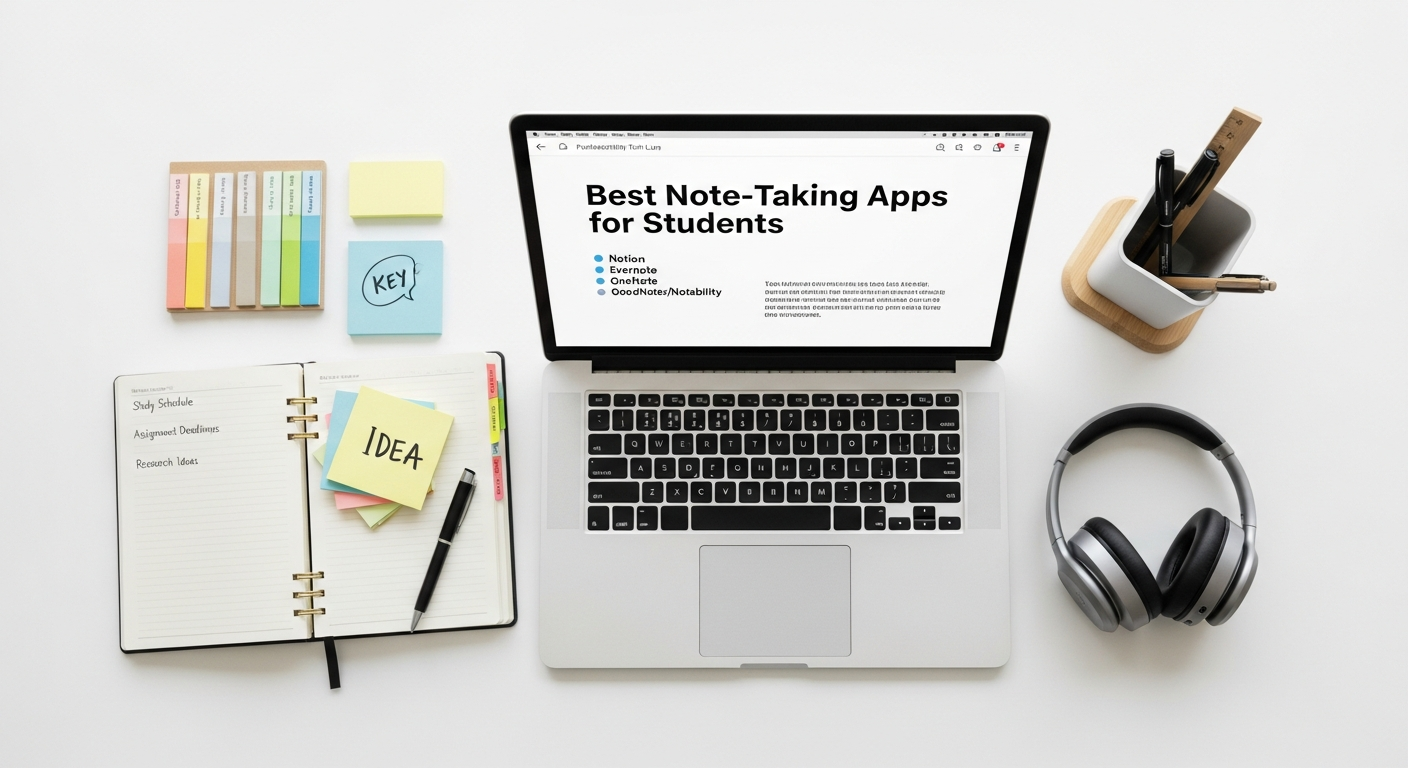
The market is flooded with note-taking solutions, each vying for your attention with unique features and design philosophies. For students, the ideal app balances functionality with ease of use, affordability, and robust organizational capabilities. Here’s a detailed look at the top contenders for best note-taking apps for students 2026, examining their strengths, weaknesses, and who they are best suited for.
Notion: The All-in-One Workspace
Notion has transcended the definition of a mere note-taking app, evolving into a comprehensive workspace that can manage virtually every aspect of a student’s academic and personal life. Its block-based editor allows for incredible versatility, enabling users to create databases, wikis, project trackers, calendars, and, of course, highly structured notes. For students in 2026, Notion’s appeal lies in its ability to consolidate multiple tools into one, reducing context switching and streamlining workflows.
- Pros:
- Extreme Versatility: Create notes, databases, wikis, task lists, and more within a single environment.
- Customizable: Highly adaptable to individual workflows and preferences, with countless templates available.
- Collaboration: Excellent for group projects, allowing real-time editing and commenting.
- Knowledge Management: Powerful linking capabilities to build interconnected knowledge bases.
- Cross-Platform: Available on web, desktop (Windows, macOS), and mobile (iOS, Android).
- Cons:
- Steep Learning Curve: Its extensive features can be overwhelming for new users.
- Offline Access Limitations: While improving, full offline functionality can still be inconsistent.
- Performance: Can sometimes feel slower than simpler note-taking apps, especially with complex pages.
- Best For: Students who want an integrated solution for notes, project management, and personal organization; those comfortable with a steeper learning curve to gain ultimate customization.
Obsidian: The Personal Knowledge Management Powerhouse
Obsidian stands out for its unique approach to note-taking, focusing on building a personal knowledge graph. Unlike traditional apps that silo notes, Obsidian emphasizes linking ideas together, creating a web of interconnected thoughts that mirrors the way our brains work. This makes it an exceptional tool for deep learning, research, and developing complex arguments. Students interested in How To Use Obsidian For Note Taking will find its markdown-based system and local-first storage appealing for privacy and control.
- Pros:
- Personal Knowledge Graph: Visualizes connections between notes, fostering deeper understanding.
- Local-First Storage: Notes are stored as plain text markdown files on your device, offering maximum control and future-proofing.
- Extensible with Plugins: A vast community plugin ecosystem adds features like spaced repetition, kanban boards, and more.
- Privacy-Focused: No cloud vendor has access to your data unless you choose to sync it via a third-party service.
- Free for Personal Use: Core features are free, with paid options for sync and publishing.
- Cons:
- Markdown Dependent: Requires comfort with markdown syntax.
- Sync Requires Setup: Official sync is paid; free alternatives require manual setup (e.g., using cloud storage like Google Drive or Dropbox).
- Less Collaborative Out-of-the-Box: Primarily designed for individual use, though shared vaults are possible.
- Best For: Graduate students, researchers, and undergraduates who prioritize deep learning, complex concept mapping, and personal knowledge management.
Evernote: The Established Digital Brain
Evernote has been a staple in the digital note-taking world for over a decade, known for its robust web clipping, powerful search, and ability to store various content types. While it has faced competition, its core strengths make it a reliable choice for students needing a comprehensive digital archive. In 2026, Evernote continues to refine its interface and add features, maintaining its position as a strong contender.
- Pros:
- Powerful Search: Can search text within images and PDFs, making it easy to find anything.
- Web Clipper: Excellent for saving articles, research papers, and web pages with annotations.
- Versatile Content: Supports text, audio, images, PDFs, and more.
- Cross-Platform Sync: Seamlessly syncs across all devices.
- OCR Capabilities: Optical Character Recognition for handwritten notes and images.
- Cons:
- Pricing: Free tier is quite limited; full functionality requires a paid subscription.
- Interface Can Feel Cluttered: Some users find the interface less modern or minimalist than newer apps.
- Feature Bloat: Over time, some users have felt it has accumulated too many features, making it less focused.
- Best For: Students who need to capture a wide variety of information (web pages, documents, handwritten notes), prioritize powerful search, and are willing to pay for premium features.
Microsoft OneNote: The Digital Binder
Microsoft OneNote offers a freeform canvas that mimics a physical notebook, making it incredibly intuitive for students accustomed to traditional note-taking. Its deep integration with the Microsoft 365 ecosystem is a significant advantage for those already using Word, Excel, and PowerPoint. For students in 2026, OneNote’s ability to combine text, drawings, and multimedia on an infinite canvas makes it a flexible and powerful tool.
- Pros:
- Freeform Canvas: Place text, images, and drawings anywhere on the page.
- Microsoft 365 Integration: Seamlessly works with other Microsoft apps, including Outlook and Teams.
- Handwriting Support: Excellent for stylus users, with ink-to-text conversion.
- Collaboration: Easy to share notebooks and collaborate with classmates.
- Cross-Platform and Free: Available on almost all devices and completely free.
- Cons:
- Organization Can Get Messy: The freeform nature can lead to disorganized notes if not managed carefully.
- Sync Issues (Occasional): Some users report intermittent syncing problems.
- Less Database-Driven: Not as suited for structured project management as Notion.
- Best For: Students who prefer a freeform, digital notebook experience, use a stylus for handwriting, and are heavily invested in the Microsoft ecosystem.
Simplenote: The Minimalist’s Choice
As its name suggests, Simplenote prioritizes speed and simplicity. It’s a no-frills note-taking app designed for quick capture and easy retrieval of text-based notes. For students who find other apps too complex or distracting, Simplenote offers a refreshing minimalist alternative that focuses purely on the act of writing and organizing notes.
- Pros:
- Blazing Fast: Quick to open, write, and search.
- Minimalist Interface: No distractions, just your notes.
- Free and Cross-Platform: Available everywhere at no cost.
- Tagging and Search: Simple yet effective organization through tags and instant search.
- Version History: Keep track of changes to your notes.
- Cons:
- Text-Only: Limited support for images, audio, or other rich media.
- Basic Features: Lacks advanced features like web clipping, complex formatting, or integrations.
- No Offline Access (Full): While notes are cached, it’s primarily an online tool for syncing.
- Best For: Students who need a fast, simple, and distraction-free environment for text-based notes, outlines, and quick thoughts.
Google Keep: The Digital Sticky Note
Google Keep is Google’s answer to quick note-taking, functioning much like digital sticky notes. It’s excellent for capturing ideas on the go, making lists, and setting reminders. Its integration with the Google ecosystem makes it particularly convenient for students already using Gmail, Google Calendar, and Google Docs.
- Pros:
- Speed and Simplicity: Ideal for quick captures and reminders.
- Google Integration: Works seamlessly with other Google services.
- Color-Coding and Labels: Easy visual organization.
- Location-Based Reminders: Get reminders when you arrive at a specific place.
- Transcription: Can transcribe text from images or audio notes.
- Cons:
- Limited Formatting: Not suitable for long-form writing or complex documents.
- Basic Organization: Lacks hierarchical organization or advanced linking.
- No Desktop App: Primarily web and mobile-based, though third-party desktop wrappers exist.
- Best For: Students who need a fast, simple way to capture ideas, create to-do lists, and set reminders, especially those heavily invested in the Google ecosystem.
Apple Notes: The Native Ecosystem Choice
For students primarily using Apple devices, Apple Notes has evolved into a surprisingly powerful and versatile note-taking application. Deeply integrated with iOS and macOS, it offers seamless syncing, robust formatting options, and excellent support for attachments, sketches, and checklists.
- Pros:
- Seamless Apple Ecosystem Integration: Works effortlessly across iPhone, iPad, Mac.
- Rich Formatting: Good support for various text styles, tables, and checklists.
- Attachments and Scanning: Easily add photos, videos, documents, and scan papers directly.
- Handwriting and Sketching: Excellent Apple Pencil support for drawing and handwritten notes.
- Collaboration: Share notes and collaborate in real-time.
- Free and Secure: Included with Apple devices, end-to-end encrypted notes.
- Cons:
- Apple Ecosystem Locked: Not available on Windows or Android, limiting cross-platform flexibility.
- Less Advanced Features: Lacks database features of Notion or knowledge graph of Obsidian.
- Search Can Be Less Robust: Not as powerful as Evernote’s full-text search across all content types.
- Best For: Students fully entrenched in the Apple ecosystem who need a robust, free, and secure note-taking solution with strong handwriting support.
Deep Dive into Key Features: What to Look For in 2026
- AI Integration: By 2026, AI is no longer a novelty but a powerful assistant. Look for features like AI summarization of notes or lectures, automated tagging, smart search suggestions, and even generative AI for drafting summaries or explaining complex concepts based on your notes. This can significantly reduce the time spent on review and synthesis.
- Cross-Platform Sync and Accessibility: Students rarely stick to a single device. A crucial feature is the ability to access and edit your notes seamlessly across your laptop, tablet, and smartphone. Robust cloud synchronization ensures that your notes are always up-to-date, regardless of where you last left off. This often relies on underlying Cloud Computing Explained Simply principles, where your data is stored on remote servers and accessed via the internet, ensuring both accessibility and data redundancy.
- Offline Access: While cloud-based solutions are prevalent, reliable offline access is vital, especially when Wi-Fi is unavailable (e.g., during commutes, in certain classrooms, or at remote study locations). Ensure your chosen app allows you to view, edit, and save notes offline, syncing them once you reconnect.
- Organization and Tagging: The ability to quickly find what you need is paramount. Look for apps that offer flexible organization systems such as notebooks, folders, tags, backlinks, or even database properties. A powerful search function is non-negotiable, ideally capable of searching within attachments and handwritten notes.
- Collaboration Features: Group projects are a cornerstone of modern education. Apps with real-time collaboration, shared notebooks, commenting features, and version history make working with classmates far more efficient, preventing conflicts and ensuring everyone is on the same page.
- Multimedia Support: Beyond text, the ability to embed images, audio recordings (especially for lectures), video links, PDFs, and even handwritten sketches directly into your notes can create richer, more comprehensive study materials.
- Security and Privacy: Your academic notes often contain sensitive information. Prioritize apps that offer strong security measures, including encryption (both in transit and at rest) and clear privacy policies regarding your data. Local-first storage options like Obsidian also offer a high degree of privacy control.
Optimizing Your Workflow: Integrating Note-Taking with Other Productivity Tools
The true power of digital note-taking extends beyond the app itself; it lies in its integration with your broader academic and personal productivity ecosystem. For students in 2026, a siloed note-taking app is a missed opportunity. The best productivity apps 2026 often work in harmony, creating a cohesive system that streamlines every aspect of student life.
Consider how your note-taking app interacts with:
- Task Managers and Calendars: Many note-taking apps (like Notion or OneNote) have built-in task management or calendar views. Alternatively, ensure your notes can easily link to or integrate with dedicated task managers (e.g., Todoist, Microsoft To Do) or calendar apps (e.g., Google Calendar, Outlook Calendar) to manage deadlines and study schedules effectively. You might take notes during a lecture, then convert key action items directly into tasks with due dates.
- Reference Managers: For research-heavy courses, integrating with tools like Zotero or Mendeley allows you to link your notes directly to your sources, making citation and bibliography generation much smoother. Some note-taking apps allow you to attach PDFs directly, which can then be annotated within the app or linked to an external reference manager.
- Cloud Storage Services: While most note-taking apps have their own sync mechanisms, integration with services like Google Drive, Dropbox, or OneDrive can be crucial for storing large files, backups, or sharing documents that aren’t native to the note-taking format. This ties back to the convenience and redundancy offered by Cloud Computing Explained Simply, ensuring your academic assets are secure and accessible.
- Flashcard/Spaced Repetition Systems: For effective memorization, being able to export notes or create flashcards directly from your notes (as some Obsidian plugins allow) can significantly enhance your study process.
- Communication Platforms: When collaborating on group projects, seamless sharing of notes via platforms like Microsoft Teams or Slack can be incredibly valuable, preventing information silos and ensuring real-time alignment among team members.
By consciously building an integrated digital workflow, students can create a powerful system where notes aren’t just stored, but actively contribute to task completion, project management, and long-term knowledge retention. This holistic approach is key to thriving in the demanding academic environment of 2026.
The Power of Personal Knowledge Management (PKM) for Students
In the age of information overload, merely collecting notes isn’t enough; students need systems to connect ideas, synthesize information, and build a lasting personal knowledge base. This is where Personal Knowledge Management (PKM) comes into play, and apps like Obsidian are leading the charge in 2026. PKM is about organizing your notes and thoughts in a way that allows for discovery, insight, and the creation of new knowledge.
For students, a robust PKM system can transform fragmented lecture notes, research findings, and assignment outlines into a cohesive network of understanding. Instead of just reviewing individual topics, students can see how different concepts relate across courses, identify overarching themes, and develop a deeper, more interconnected understanding of their field of study. This is particularly valuable for complex subjects that require drawing connections between various disciplines.
How To Use Obsidian For Note Taking exemplifies the PKM approach. Its core principle revolves around “atomic notes” – small, focused pieces of information – and bidirectional linking. When you link two notes, you can see not only where you’ve referenced another note but also every place that note is referenced. This creates a powerful “graph view” that visually maps your knowledge, revealing unexpected connections and reinforcing learning. Students can:
- Create a note for each key concept, lecture, or reading.
- Link related concepts using
[[wikilinks]], allowing for instant navigation between ideas. - Use tags (
#tag) to categorize notes by course, topic, or assignment type. - Develop a “Zettelkasten” method, a system for creating a vast, interconnected web of ideas that encourages synthesis and critical thinking.
- Utilize community plugins for features like spaced repetition for active recall, or even to create interactive diagrams directly from their notes.
While Obsidian might seem advanced, the benefits for long-term learning and research are immense. It encourages students to think about how new information fits into their existing knowledge framework, fostering a more active and engaged learning process. For students aiming for academic excellence and developing strong research skills, embracing a PKM methodology with tools like Obsidian is a strategic advantage in 2026.
Cloud Computing and Your Notes: Security and Accessibility
The reliance on cloud computing for digital note-taking is fundamental to the functionality and accessibility of almost all the best note-taking apps for students 2026. Understanding what this means, even at a basic level, is crucial for students to make informed decisions about their data and workflow. Let’s simplify Cloud Computing Explained Simply in the context of your notes.
Imagine your notes aren’t stored directly on your laptop’s hard drive, but instead on massive, secure servers maintained by a company (like Microsoft, Google, Apple, or the note-taking app provider). When you create or edit a note, that information is sent over the internet to these servers. When you open the app on another device, it retrieves the latest version of your notes from these same servers.
Key benefits for students:
- Ubiquitous Access: Your notes are available from any device, anywhere with an internet connection. This means you can start writing on your laptop, continue on your tablet during your commute, and review on your phone before class.
- Automatic Backup: You no longer have to worry about losing your notes if your device is lost, stolen, or damaged. The cloud acts as an automatic, continuous backup.
- Seamless Synchronization: Changes made on one device instantly (or near-instantly) appear on all your other devices. This is vital for maintaining a consistent and up-to-date knowledge base.
- Collaboration Made Easy: Cloud computing is the backbone of real-time collaboration. Multiple users can edit the same document simultaneously, with changes reflected instantly for everyone.
Security Considerations: While cloud computing offers immense convenience, security is paramount. When choosing an app, consider:
- Encryption: Does the service encrypt your data both “in transit” (as it travels between your device and the server) and “at rest” (when it’s stored on the server)? End-to-end encryption, where only you can decrypt your notes, offers the highest level of privacy.
- Privacy Policy: What does the company do with your data? Do they share it with third parties? Do they use it for advertising?
- Data Sovereignty: Where are the servers located, and what are the legal implications for your data based on those locations?
Apps like Obsidian offer a “local-first” approach, meaning your data primarily resides on your device, giving you maximum control. While you can sync it via their paid service (Obsidian Sync) or third-party cloud storage, the core principle is that you own and control your files. Other apps like Notion, Evernote, OneNote, Google Keep, and Apple Notes (via iCloud) are inherently cloud-based, offering excellent convenience but relying on the provider’s security measures. Understanding this distinction helps students choose an app that aligns with their personal comfort level regarding data privacy and accessibility in 2026.
Frequently Asked Questions
Recommended Resources
Explore Best Free Design Tools For Beginners 2025 for additional insights.
Related reading: How To Build A Mobile App For Your Business (Eamped).