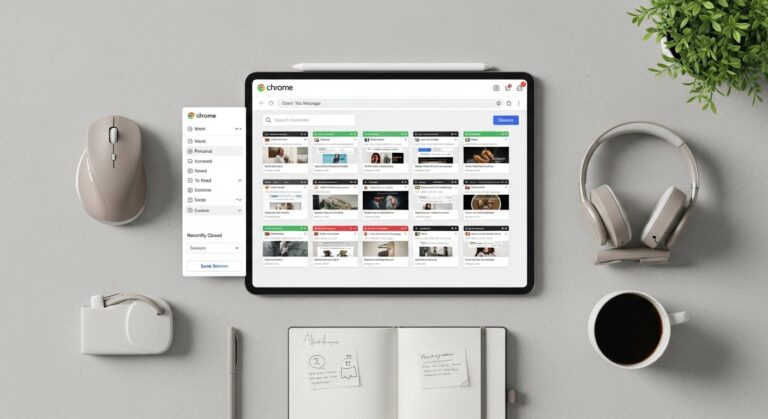

The Best Bookmark Manager 2026: Master Your Digital Information Workflow
Affiliate disclosure: This article may contain affiliate links. Recommendations are independent and editorially driven.
In 2026, the sheer volume of digital information we encounter daily is staggering. From groundbreaking research papers and insightful blog posts to essential work documents and fascinating news articles, the web is a boundless ocean of knowledge. While the internet offers unprecedented access to information, managing that information effectively has become a critical challenge for professionals, students, and casual browsers alike. The days of simply saving a link to your browser”s default bookmark bar are long gone, especially if you aim for true productivity and robust knowledge management.
Enter the dedicated bookmark manager. More than just a list of URLs, the best bookmark manager of 2026 serves as your personal digital librarian, research assistant, and knowledge curator, all rolled into one. These sophisticated tools are designed to help you not only save links but also organize them meaningfully, annotate content, retrieve information rapidly, and even integrate seamlessly with your broader personal knowledge management (PKM) system. Without an effective system, your saved links quickly devolve into a chaotic, unusable graveyard of forgotten potential.
At bookmarksharer, we understand the complexities of digital information management. Our team of senior editors, with over a decade of experience dissecting productivity tools, has meticulously researched and evaluated the leading contenders to identify the best bookmark manager 2026 has to offer. This comprehensive guide will delve into the essential features, compare top-tier options, and provide actionable insights to help you choose the perfect tool to transform your digital hoarding into a well-oiled knowledge machine.
The Evolving Landscape of Digital Bookmarking in 2026
The internet has profoundly changed since its early days, and so too has our interaction with it. What was once a relatively static collection of websites is now a dynamic, ever-expanding universe of content, often overwhelming in its scale and speed. In this environment, rudimentary bookmarking solutions simply don’t cut it. The concept of “bookmarking” has matured from a simple “save-for-later” action to a complex process integral to knowledge acquisition and retention.
Beyond Browser Defaults: Why Specialized Managers Matter
Most modern web browsers (Chrome, Firefox, Edge, Safari) offer built-in bookmarking capabilities. They allow you to save URLs, organize them into folders, and even perform basic searches. For very light users, this might suffice. However, for anyone who regularly engages with online content for work, study, or serious hobbies, these native features quickly expose their limitations:
- Lack of Advanced Organization: Folders are hierarchical and often rigid. They don’t allow for multi-faceted categorization like tags, which is crucial when a single link might relate to multiple topics.
- Limited Search Functionality: Browser bookmark searches typically only look at titles and URLs. They rarely delve into the actual content of the saved page, making it hard to find that one specific article you remember reading.
- No Annotation or Note-Taking: The context of why you saved a link is often lost. Without the ability to add notes, highlights, or summaries, a saved page becomes a passive item rather than an active knowledge asset.
- Poor Cross-Platform Sync and Sharing: While browser sync works, it’s often confined to that specific browser ecosystem. Sharing collections of links or collaborating on research is cumbersome.
- No Archiving: If a webpage goes offline, your browser bookmark becomes useless. Dedicated managers often offer content archiving, preserving the page even if the original URL vanishes.
The PKM Revolution and Link Curation
The rise of Personal Knowledge Management (PKM) systems has profoundly influenced how we think about digital information. PKM is not just about collecting information; it’s about connecting ideas, making sense of data, and transforming raw information into actionable knowledge. In this framework, link curation, powered by a robust bookmark manager, becomes a cornerstone.
A superior bookmark manager in 2026 is no longer a standalone utility; it’s a vital component of your PKM stack. It allows you to:
- Capture web content efficiently, not just links.
- Categorize links using flexible metadata (tags, descriptions, custom fields).
- Contextualize saved content with your own insights and reflections.
- Connect web resources to broader themes and projects within your PKM.
- Easily retrieve information when you need it, fostering serendipitous connections and insights.
By integrating a powerful bookmark manager into your daily workflow, you move beyond mere information hoarding to true knowledge synthesis, making it easier to leverage the vast resources of the web for personal and professional growth.
Key Features Defining the Best Bookmark Manager in 2026

Choosing the best bookmark manager 2026 for your specific needs requires a deep understanding of the features that elevate a tool from basic to exceptional. Our expert analysis points to several non-negotiable functionalities that define the leading solutions in the current landscape:
[INLINE IMAGE 1: place after second H2 | alt=”best bookmark manager 2026 concept illustration”]
Robust Tagging and Organization Systems
Folders are a start, but tags are where true organizational power lies. The best bookmark managers offer flexible tagging systems, allowing you to apply multiple keywords to a single link. This enables multi-dimensional categorization (e.g., a link can be tagged “AI,” “productivity,” and “research” simultaneously). Look for:
- Hierarchical Tags (or nested tags): For more granular organization, e.g., “Research/AI/MachineLearning.”
- Tag Bundles/Groups: To quickly apply sets of related tags.
- Smart Tags/Folders: Dynamically updated based on specific criteria (e.g., all links tagged “AI” that also contain “2026” in the title).
- Bulk Tagging: The ability to apply or modify tags for multiple links at once.
Powerful Search and Retrieval Capabilities
A saved link is only useful if you can find it again. Top-tier bookmark managers go far beyond simple keyword searches:
- Full-Text Search: The holy grail of search. This allows you to search not just the title and URL, but the actual content of the saved webpage, even if it’s offline.
- Advanced Filters: Filter by date, tag, source, type of content, and more.
- Boolean Operators: Use AND, OR, NOT to refine your search queries.
- Saved Searches: Create and save complex search queries for quick access to specific collections.
Cross-Device Sync and Accessibility
Your digital life isn’t confined to a single device. A premium bookmark manager must provide seamless access to your saved links across all your platforms:
- Web App: A functional, responsive web interface is essential.
- Desktop Applications: Native apps for Windows, macOS, and Linux often offer better performance and integration.
- Mobile Apps: Robust iOS and Android apps for saving and accessing links on the go.
- Browser Extensions: Crucial for quick saving and often for advanced clipping features directly from your browser.
Annotation and Note-Taking Integration
To truly turn a link into a knowledge asset, you need to add your own insights. The best managers offer:
- Highlighting: Mark important sections of a webpage.
- In-Page Notes: Add comments directly on the saved content.
- Summary Fields: Dedicated space to write a brief overview or your thoughts on the link.
- Integration with External Note Apps: Ability to send highlighted content or links to tools like Notion, Obsidian, Evernote, or Apple Notes.
Web Clipper and Save-for-Later Functionality
Efficient capture is paramount. A superior web clipper simplifies the process of saving content:
- One-Click Saving: Quick save to your manager with minimal fuss.
- Article View/Reader Mode: Strip away distractions and save only the clean article content.
- Full Page Capture: Save an exact replica of the entire webpage.
- Selected Content Clipping: Save only specific text or images.
- Metadata Auto-Populating: Automatically extract title, author, publish date, and suggested tags.
- Offline Reading: Save content for access without an internet connection.
Sharing and Collaboration Tools
Knowledge is often a collaborative endeavor. Modern bookmark managers facilitate this:
- Public/Private Sharing: Share individual links or entire collections.
- Team Accounts/Spaces: Dedicated environments for collaborative bookmarking.
- Commenting and Feedback: Allow collaborators to add notes or discuss shared links.
- Integration with Project Management Tools: Link directly to relevant resources within tools like Asana, Trello, or Jira.
Privacy and Data Security
In an age of heightened digital awareness, how your data is handled is crucial:
- Encryption: Data at rest and in transit should be encrypted.
- Data Ownership: Clarity on who owns your data and how it can be exported.
- Third-Party Access: Transparent policies on sharing data with external services.
- Ad-Free Experience: A premium service should not rely on selling your data for ads.
Top Contenders for the Best Bookmark Manager in 2026 (Detailed Reviews)
Having established the essential features, let’s dive into the platforms that stand out as the best bookmark manager 2026 has to offer. Each tool brings its own philosophy and strength, catering to different user needs and workflows. We’ve selected a diverse range of options, from minimalist archiving tools to comprehensive knowledge management platforms.
Raindrop.io: Visual Bookmarking Powerhouse
Raindrop.io continues to be a favorite for its stunning visual interface and robust feature set. It excels at making your bookmark collection look appealing and easy to navigate. Think of it as Pinterest meets a powerful bookmark manager.
- Strengths: Highly visual (previews, cover images), excellent organization with nested collections and tags, full-text search, persistent copy (archive), robust web clipper, integrates well with other tools via Zapier. Available on all major platforms (web, desktop, mobile, browser extensions).
- Best For: Creative professionals, visual thinkers, anyone who values aesthetics and a clean, intuitive experience for managing diverse content types (articles, images, videos, files).
- Considerations: While the free tier is generous, the best features like full-text search and permanent copies are reserved for the premium plan.
Pinboard: The Minimalist’s Choice for Archiving
For those who prioritize speed, reliability, and plain-text archiving over fancy visuals, Pinboard remains a gold standard. It’s often described as an anti-social bookmarking site, focusing purely on personal utility and robust archiving.
- Strengths: Extremely fast, simple interface, powerful tagging and search, reliable permanent archiving of saved pages, minimal distractions, API for developers, very affordable one-time payment for archiving.
- Best For: Researchers, developers, writers, and power users who need a no-frills, highly reliable archive of web pages and value plain text and speed. It’s excellent for long-term knowledge retention.
- Considerations: Lacks visual previews, in-page annotation, and the collaborative features found in other tools. The UI is intentionally sparse.
Instapaper & Pocket: Read-It-Later Specialists with Tagging
While often categorized as “read-it-later” apps, both Instapaper and Pocket have evolved into capable bookmark managers, especially for article-heavy content. They excel at stripping clutter for focused reading and offer strong tagging.
- Instapaper Strengths: Superb reader mode, highlighting, text-to-speech, good tagging, Kindle integration, clean interface.
- Pocket Strengths: Strong discovery features, article recommendations, robust tagging, offline access, broad platform support, better for general web content beyond just articles.
- Best For: Avid readers, content curators, journalists, and anyone who wants to save articles for later, read them distraction-free, and then tag them for future reference.
- Considerations: Less ideal for managing diverse link types (e.g., software downloads, image galleries) compared to more general bookmark managers. Full-text search and advanced features often require premium subscriptions.
Diigo: Social Annotation and Research Tool
Diigo stands out for its robust web annotation capabilities, making it a favorite among students and researchers. It allows you to highlight, add sticky notes, and bookmark pages, often collaboratively.
- Strengths: Powerful in-page highlighting and annotation, sticky notes, social bookmarking features (public groups), excellent for research collaboration, permanent archiving, outliner functionality.
- Best For: Students, academics, researchers, teams doing collaborative web research, and anyone who needs to actively interact with the content of saved web pages.
- Considerations: The interface can feel a bit dated to some, and the free tier has limitations on the number of highlights/bookmarks.
Anybox: macOS and iOS Native Excellence
For users deeply embedded in the Apple ecosystem, Anybox offers a truly native and delightful experience. It’s designed from the ground up to leverage macOS and iOS features, making it incredibly smooth to use.
- Strengths: Flawless integration with macOS/iOS, robust tagging, powerful search, smart collections, beautiful UI, markdown support for notes, iCloud sync, quick access from anywhere on your Apple device.
- Best For: macOS and iOS power users who prioritize native app experience, speed, and seamless integration within the Apple ecosystem.
- Considerations: Exclusively for Apple users; not available on Windows, Android, or web. While powerful, it may lack some of the deeper collaborative features or integrations found in cross-platform tools.
Notion / Obsidian (with Integrations): PKM as a Bookmark Manager
For those who view bookmarking as an intrinsic part of a larger Personal Knowledge Management system, general-purpose PKM tools like Notion and Obsidian, when integrated with web clippers or plugins, can serve as excellent bookmark managers.
- Notion Strengths: Highly customizable databases for managing links, rich-text notes, embedded content, collaborative features, incredible flexibility to create a personalized system. Learn more about Notion for knowledge management.
- Obsidian Strengths: Local-first markdown storage, powerful linking and graph view for connecting bookmarks to your notes, community plugins for web clipping and annotation (e.g., Omnivore plugin). Offers ultimate control and privacy.
- Best For: PKM enthusiasts, knowledge workers, researchers, and anyone who wants to deeply integrate their web resources into a broader personal knowledge graph or structured information system.
- Considerations: Requires more setup and customization than dedicated bookmark managers. The “bookmarking” functionality is often achieved through integrations or community plugins rather than being native. Steeper learning curve.
Hypothes.is: Web Annotation and Collaboration
While not a traditional bookmark manager, Hypothes.is is an invaluable tool for researchers and collaborators. It allows for public or private annotation layers directly on web pages, which then serve as a form of contextual bookmarking.
- Strengths: Unparalleled in-page annotation (highlights, notes) directly on any public webpage, collaborative group annotation, open-source and standards-based, robust search of your annotations, excellent for academic and team research.
- Best For: Academics, students, research teams, and educators who need to actively engage with, discuss, and annotate specific sections of web content collaboratively.
- Considerations: Primarily focused on annotation, not general link saving or deep categorization of entire pages. It complements, rather than replaces, a traditional bookmark manager.
Comparison Table: Feature Rundown of Leading Bookmark Managers (2026)
To help you quickly compare the functionalities of the best bookmark manager 2026 options, we’ve compiled a detailed table. This overview highlights key features, pricing models, and specific strengths, allowing you to gauge which tool aligns best with your individual or team requirements.
[INLINE IMAGE 2: place after fourth H2 | alt=”best bookmark manager 2026 comparison illustration”]
| Feature / Tool | Raindrop.io | Pinboard | Instapaper / Pocket | Diigo | Anybox (macOS/iOS) | Notion (PKM) |
|---|---|---|---|---|---|---|
| Primary Use Case | Visual Organization & Discovery | Archiving & Fast Search | Read-It-Later & Article Curation | Research & Social Annotation | Native Apple Bookmarking | Comprehensive PKM & Link Database |
| Tagging / Folders | Nested Collections, Tags | Extensive Tags (flat) | Tags, Folders (Pocket) | Tags, Lists | Nested Tags, Smart Collections | Database Properties, Relations |
| Full-Text Search | ✅ (Premium) | ✅ (Archived pages) | ✅ (Premium) | ✅ (Premium) | ✅ | ✅ |
| Web Clipper | Excellent | Basic (bookmarklet) | Excellent (Reader View) | Excellent (with annotation) | Excellent (native sharing) | Via browser extensions (e.g., Save to Notion) |
| Annotation / Notes | Descriptions, Highlights (limited) | Descriptions only | Highlights, Notes | Highlights, Sticky Notes, Outliner | Markdown Notes | Rich-text blocks, comments |
| Offline Access | ✅ (Premium, archived copies) | ✅ (Archived copies) | ✅ | ✅ (Archived copies) | ✅ | Varies (synced to app) |
| Sharing / Collaboration | Collections, Shared Workspaces | Public/Private, API | Share articles | Public/Private Groups | Limited (exports) | Extensive (workspaces, guest access) |
| Platform Support | Web, Desktop, Mobile, Extensions | Web, Extensions | Web, Desktop, Mobile, Extensions | Web, Extensions, Mobile | macOS, iOS | Web, Desktop, Mobile |
| Pricing Model | Free / Premium ($3/month) | One-time fee (~$11/year archive) | Free / Premium ($3-$8/month) | Free / Premium ($40-$80/year) | Paid App (one-time or subscription) | Free / Premium ($8-$15/month) |
| Pros | Visual, rich features, great UX, archive. | Fast, reliable, excellent archiving, privacy. | Distraction-free reading, discovery, strong mobile. | Deep annotation, research-focused, collaboration. | Seamless Apple integration, beautiful UI, speedy. | Ultimate flexibility, powerful database, team features. |
| Cons | Best features are premium. | Minimalist UI, no in-page annotation, only web. | Less for non-article links, full features premium. | UI can feel dated, learning curve, premium for full archive. | Apple-exclusive, no web/Windows/Android. | Requires significant setup, can be complex, not a dedicated bookmark manager. |
Choosing Your Ideal Bookmark Manager: A Workflow-Centric Approach
The “best” bookmark manager isn’t a one-size-fits-all solution. It’s the one that seamlessly integrates into your unique workflow and helps you achieve your specific information management goals. To make an informed decision, consider these workflow-centric questions:
Identifying Your Primary Use Case (Research, Reading, Archiving, Sharing)
What is the main reason you need a bookmark manager? This is the most crucial question. Your answer will immediately narrow down your options:
- For Active Research & Annotation: If you frequently need to highlight specific sections of articles, add notes, and collaborate with others on web content, tools like Diigo or Hypothes.is (as a complement) are excellent. If you’re building a knowledge base and want deep connections, explore Notion or Obsidian.
- For Distraction-Free Reading & Article Curation: If your primary goal is to save articles and blog posts to read later in a clean, uncluttered format, Instapaper and Pocket are specialized for this.
- For Comprehensive Archiving & Reliability: If ensuring a permanent copy of a webpage is paramount, and you need robust search for future retrieval, Pinboard’s archiving service is exceptional. Raindrop.io also offers reliable archiving with its premium plan.
- For Visual Organization & Discovery: If you enjoy seeing visual previews of your saved content, organizing with nested collections, and appreciate a modern, intuitive interface, Raindrop.io is a top choice.
- For Collaborative Information Gathering: If you work in a team and need to share collections of links, add comments, and discuss resources, Notion, Diigo, or Raindrop.io’s shared workspaces are strong contenders.
Integration with Your Existing PKM and Productivity Stack
Your bookmark manager shouldn’t exist in a silo. Consider how well it plays with other tools you already use:
- Note-Taking Apps: Do you use Obsidian, Notion, Evernote, or Apple Notes? Look for managers that offer direct integrations or easy export options. For instance, Obsidian users might prefer an Omnivore plugin or direct markdown export. Notion users will appreciate tools that can send links directly to Notion databases. You can optimize your workflow by learning more about integrating bookmark managers with note-taking apps.
- Task Managers: Can you link saved resources directly to tasks in Asana, Todoist, or ClickUp?
- Cloud Storage: Does it offer seamless integration with Dropbox, Google Drive, or iCloud for file attachments or backups?
- Browser Ecosystem: If you’re heavily invested in Chrome, Firefox, or Safari, ensure the manager has a robust and well-maintained browser extension. Apple users often find Anybox’s native integration superior.
Budget Considerations: Free vs. Paid Features
Most bookmark managers offer a free tier with basic functionalities, and a premium subscription for advanced features. Evaluate what you genuinely need:
- Free Tiers: Often sufficient for casual users, offering basic saving, tagging, and limited search. Good for testing the waters.
- Premium Features: Typically unlock full-text search, permanent archiving, unlimited highlights/notes, advanced collaboration, priority support, and often an ad-free experience. If your workflow depends on these, the investment is usually worthwhile. Expect to pay anywhere from $3 to $15 per month for a premium experience, or a one-time fee for lifetime access in some cases (like Pinboard’s archiving).
User Interface and Experience Preferences
While often overlooked, the daily interaction with your bookmark manager is crucial for long-term adherence. Some prefer minimalist interfaces, while others thrive with rich visuals and extensive customization:
- Minimalist: If you prefer a clean, uncluttered interface that prioritizes speed and function over aesthetics, Pinboard might be your ideal.
- Visual & Intuitive: If a beautiful, image-rich interface that makes browsing your collection enjoyable is important, Raindrop.io is an excellent choice.
- Highly Customizable: If you love to build and tailor your own systems, and don’t mind a steeper learning curve, Notion offers unparalleled customization.
- Native Experience: For those in a specific ecosystem (e.g., Apple), a native app like Anybox can offer unmatched fluidity and integration.
Integrating Your Bookmark Manager into Your Productivity Ecosystem

The true power of the best bookmark manager 2026 isn’t just in its standalone features, but in how effectively it integrates with your broader digital productivity ecosystem. By weaving it into your daily routines, you transform it from a passive storage bin into an active component of your knowledge workflow.
Syncing with Note-Taking Apps (Obsidian, Notion, Evernote)
Connecting your bookmark manager to your note-taking app creates a powerful synergy, linking external web resources directly to your internal thoughts and projects:
- Bi-directional Linking: Ideally, you want to be able to link from a note in Obsidian to a specific bookmark in Raindrop.io, and vice versa.
- Content Ingestion: Use web clippers (often integrated with the bookmark manager) to send article content or highlights directly into your Notion database or Obsidian vault, creating new notes automatically.
- Contextual Notes: Instead of just saving a link, add your personal reflection, summary, or how the link relates to a current project directly in your note-taking app, referencing the saved URL from your bookmark manager.
- Example: Save a research paper to Diigo, highlight key sections, then export those highlights and the paper’s link into a new page in Notion, categorized under your “Research Project X” database.
Leveraging Browser Extensions for Seamless Saving
The browser extension is the gateway to efficient bookmarking. A good extension makes saving and organizing a frictionless process:
- Quick Save: A single click should save the current page to your default collection.
- Pre-fill Metadata: The extension should intelligently suggest titles, authors, and even tags based on the page content.
- Immediate Tagging/Collection Selection: The ability to add tags, select a collection, or write a quick note directly from the extension pop-up saves valuable time.
- Clipping Options: Choose to save the entire page, article view, or just a selection of text/images.
- Keyboard Shortcuts: Power users will appreciate keyboard shortcuts for even faster saving and interaction.
Automating with Zapier/IFTTT
For advanced users, integration with automation platforms like Zapier or IFTTT unlocks incredible possibilities, streamlining workflows and connecting your bookmark manager to hundreds of other apps:
- Auto-Tagging: Automatically apply specific tags to bookmarks from certain domains (e.g., all links from “techcrunch.com” get an “industry news” tag).
- Cross-App Sync: Send new bookmarks to a specific channel in Slack or Discord for team sharing.
- Backup & Archiving: Automatically send a copy of every new bookmark’s content to a Google Drive folder or an archival service.
- Content Trigger: When you save a link with a specific tag (e.g., “to_read_later”), automatically add it to your Instapaper queue or create a task in your to-do list app.
- RSS Feed Integration: Turn articles from your favorite RSS feeds into bookmarks with relevant tags.
By thoughtfully integrating your chosen bookmark manager, you transform it from a standalone application into a central hub for your digital information, significantly boosting your productivity and knowledge management capabilities.
Future Trends in Bookmark Management and Knowledge Curation
The digital landscape is ever-changing, and the best bookmark manager 2026 will undoubtedly evolve further. Looking ahead, several trends are poised to shape the future of how we save, organize, and interact with online information.
AI-Powered Tagging and Summarization
Artificial Intelligence is already making inroads into knowledge management, and its application in bookmarking is set to become even more sophisticated:
- Smart Auto-Tagging: AI will automatically analyze the content of a saved page and suggest highly relevant, granular tags beyond simple keywords, learning from your existing tag structure.
- Automated Summaries: Imagine saving a lengthy article and having the AI instantly generate a concise summary or extract key takeaways, saving you reading time.
- Contextual Recommendations: Based on your saved links and notes, AI could suggest related articles, research papers, or even people to follow, enriching your knowledge base.
- Sentiment Analysis: Understanding the emotional tone of saved content, particularly useful for market research or tracking public opinion.
Enhanced Semantic Search
Current full-text search is powerful, but semantic search goes a step further. Instead of just matching keywords, it understands the meaning and context of your query:
- Concept-Based Retrieval: Searching for “renewable energy solutions” wouldn’t just bring up pages with those exact words, but also articles discussing “solar panels,” “wind farms,” or “geothermal power,” even if the precise phrase isn’t present.
- Natural Language Queries: You’ll be able to ask your bookmark manager questions in plain English, like “Show me articles from last month about AI ethics that I tagged for my thesis.”
- Cross-Referencing: Semantic search could highlight connections between disparate bookmarks that share underlying concepts, fostering new insights.
Privacy-Focused Decentralized Solutions
As concerns about data privacy and ownership grow, decentralized bookmarking solutions might gain traction:
- Local-First & E2E Encryption: More tools will prioritize local storage by default and offer robust end-to-end encryption for cloud synchronization, giving users full control over their data.
- Blockchain-Based Solutions: While still nascent, blockchain could offer immutable archiving and verifiable content sources, ensuring links remain accessible and authentic over time without relying on a single company’s servers.
- Self-Hosting Options: A growing trend for power users and organizations to host their own bookmarking infrastructure, ensuring maximum privacy and customizability.
These future trends suggest that bookmark managers will continue to evolve from simple storage tools into intelligent, personalized knowledge assistants, deeply integrated with our digital lives and increasingly focused on user control and meaningful information discovery.
Conclusion: Mastering Your Digital Library in 2026
Navigating the vast ocean of digital information in 2026 without a reliable bookmark manager is akin to trying to sail without a compass. The best bookmark manager 2026 is not merely a utility for saving URLs; it is an indispensable tool for curating, organizing, annotating, and retrieving the digital knowledge that fuels your productivity and personal growth. Whether you’re a dedicated researcher, a casual reader, a creative professional, or a team collaborator, the right tool can transform your information chaos into a meticulously organized, easily accessible digital library.
Our in-depth exploration has revealed that the “best” choice is highly personal, dictated by your specific workflow, preferences for user interface, and integration needs. Raindrop.io shines for its visual appeal and broad functionality, Pinboard offers minimalist reliability for archiving, and Instapaper/Pocket excel in distraction-free reading. Diigo empowers collaborative research, Anybox provides a native Apple experience, and the adaptability of PKM tools like Notion and Obsidian allows for ultimate customization.
As we look to the future, AI-driven insights, advanced semantic search, and privacy-centric solutions promise to make bookmark managers even more powerful and intuitive. The key takeaway remains: invest time in understanding your needs, explore the options, and choose a solution that empowers you to not just collect information, but to truly master it. By doing so, you’ll unlock a new level of digital productivity and ensure that no valuable piece of information ever gets lost in the digital ether again. Start building your smarter digital workflow today and experience the profound difference an expertly managed personal knowledge base can make.
Frequently Asked Questions
Q1: Why do I need a dedicated bookmark manager when my browser has one?
A1: Browser-native bookmarking is generally very basic, offering limited organization (folders only), weak search capabilities (usually just titles and URLs), and no robust annotation or archiving features. A dedicated bookmark manager, like the ones reviewed here, provides advanced tagging, full-text search of saved content, in-page notes and highlights, permanent content archiving, cross-device sync, and often integrations with other productivity tools. This allows for much more effective knowledge curation and retrieval, moving beyond simple link storage to true information management.
Q2: What’s the most important feature to look for in a bookmark manager in 2026?
A2: While many features are crucial, the most important often depends on your primary use case. However, for most users in 2026, robust tagging and powerful full-text search are paramount. Flexible tagging allows multi-dimensional organization, making it easy to categorize links by various topics. Full-text search ensures you can find specific information within saved webpages, even if you only remember a few keywords from the content itself, not just the title or URL. This combination greatly enhances discoverability and long-term utility.
Q3: Can a bookmark manager also serve as a “read-it-later” app?
A3: Many modern bookmark managers integrate read-it-later functionality, or are primarily designed for it. Tools like Instapaper and Pocket excel at stripping away webpage clutter for a distraction-free reading experience, often allowing offline access. Other comprehensive bookmark managers like Raindrop.io also offer “article view” or “reader mode” features, making them highly effective for saving and consuming long-form content. So, yes, many can serve both purposes, streamlining your content consumption and organization into a single workflow.
Q4: How do bookmark managers integrate with Personal Knowledge Management (PKM) systems?
A4: The best bookmark manager 2026 options are increasingly designed to integrate seamlessly with PKM systems like Notion, Obsidian, or Evernote. This integration can take several forms: specialized web clippers that send content directly to a PKM database, API
The Best Bookmark Manager 2026: Master Your Digital Information Workflow
Affiliate disclosure: This article may contain affiliate links. Recommendations are independent and editorially driven.
In 2026, the sheer volume of digital information we encounter daily is staggering. From groundbreaking research papers and insightful blog posts to essential work documents and fascinating news articles, the web is a boundless ocean of knowledge. While the internet offers unprecedented access to information, managing that information effectively has become a critical challenge for professionals, students, and casual browsers alike. The days of simply saving a link to your browser”s default bookmark bar are long gone, especially if you aim for true productivity and robust knowledge management.
Enter the dedicated bookmark manager. More than just a list of URLs, the best bookmark manager of 2026 serves as your personal digital librarian, research assistant, and knowledge curator, all rolled into one. These sophisticated tools are designed to help you not only save links but also organize them meaningfully, annotate content, retrieve information rapidly, and even integrate seamlessly with your broader personal knowledge management (PKM) system. Without an effective system, your saved links quickly devolve into a chaotic, unusable graveyard of forgotten potential.
At bookmarksharer, we understand the complexities of digital information management. Our team of senior editors, with over a decade of experience dissecting productivity tools, has meticulously researched and evaluated the leading contenders to identify the best bookmark manager 2026 has to offer. This comprehensive guide will delve into the essential features, compare top-tier options, and provide actionable insights to help you choose the perfect tool to transform your digital hoarding into a well-oiled knowledge machine.
The Evolving Landscape of Digital Bookmarking in 2026
The internet has profoundly changed since its early days, and so too has our interaction with it. What was once a relatively static collection of websites is now a dynamic, ever-expanding universe of content, often overwhelming in its scale and speed. In this environment, rudimentary bookmarking solutions simply don’t cut it. The concept of “bookmarking” has matured from a simple “save-for-later” action to a complex process integral to knowledge acquisition and retention.
Beyond Browser Defaults: Why Specialized Managers Matter
Most modern web browsers (Chrome, Firefox, Edge, Safari) offer built-in bookmarking capabilities. They allow you to save URLs, organize them into folders, and even perform basic searches. For very light users, this might suffice. However, for anyone who regularly engages with online content for work, study, or serious hobbies, these native features quickly expose their limitations:
- Lack of Advanced Organization: Folders are hierarchical and often rigid. They don’t allow for multi-faceted categorization like tags, which is crucial when a single link might relate to multiple topics.
- Limited Search Functionality: Browser bookmark searches typically only look at titles and URLs. They rarely delve into the actual content of the saved page, making it hard to find that one specific article you remember reading.
- No Annotation or Note-Taking: The context of why you saved a link is often lost. Without the ability to add notes, highlights, or summaries, a saved page becomes a passive item rather than an active knowledge asset.
- Poor Cross-Platform Sync and Sharing: While browser sync works, it’s often confined to that specific browser ecosystem. Sharing collections of links or collaborating on research is cumbersome.
- No Archiving: If a webpage goes offline, your browser bookmark becomes useless. Dedicated managers often offer content archiving, preserving the page even if the original URL vanishes.
The PKM Revolution and Link Curation
The rise of Personal Knowledge Management (PKM) systems has profoundly influenced how we think about digital information. PKM is not just about collecting information; it’s about connecting ideas, making sense of data, and transforming raw information into actionable knowledge. In this framework, link curation, powered by a robust bookmark manager, becomes a cornerstone.
A superior bookmark manager in 2026 is no longer a standalone utility; it’s a vital component of your PKM stack. It allows you to:
- Capture web content efficiently, not just links.
- Categorize links using flexible metadata (tags, descriptions, custom fields).
- Contextualize saved content with your own insights and reflections.
- Connect web resources to broader themes and projects within your PKM.
- Easily retrieve information when you need it, fostering serendipitous connections and insights.
By integrating a powerful bookmark manager into your daily workflow, you move beyond mere information hoarding to true knowledge synthesis, making it easier to leverage the vast resources of the web for personal and professional growth.
Key Features Defining the Best Bookmark Manager in 2026
Choosing the best bookmark manager 2026 for your specific needs requires a deep understanding of the features that elevate a tool from basic to exceptional. Our expert analysis points to several non-negotiable functionalities that define the leading solutions in the current landscape:
[INLINE IMAGE 1: place after second H2 | alt=”best bookmark manager 2026 concept illustration”]
Robust Tagging and Organization Systems
Folders are a start, but tags are where true organizational power lies. The best bookmark managers offer flexible tagging systems, allowing you to apply multiple keywords to a single link. This enables multi-dimensional categorization (e.g., a link can be tagged “AI,” “productivity,” and “research” simultaneously). Look for:
- Hierarchical Tags (or nested tags): For more granular organization, e.g., “Research/AI/MachineLearning.”
- Tag Bundles/Groups: To quickly apply sets of related tags.
- Smart Tags/Folders: Dynamically updated based on specific criteria (e.g., all links tagged “AI” that also contain “2026” in the title).
- Bulk Tagging: The ability to apply or modify tags for multiple links at once.
Powerful Search and Retrieval Capabilities
A saved link is only useful if you can find it again. Top-tier bookmark managers go far beyond simple keyword searches:
- Full-Text Search: The holy grail of search. This allows you to search not just the title and URL, but the actual content of the saved webpage, even if it’s offline.
- Advanced Filters: Filter by date, tag, source, type of content, and more.
- Boolean Operators: Use AND, OR, NOT to refine your search queries.
- Saved Searches: Create and save complex search queries for quick access to specific collections.
Cross-Device Sync and Accessibility
Your digital life isn’t confined to a single device. A premium bookmark manager must provide seamless access to your saved links across all your platforms:
- Web App: A functional, responsive web interface is essential.
- Desktop Applications: Native apps for Windows, macOS, and Linux often offer better performance and integration.
- Mobile Apps: Robust iOS and Android apps for saving and accessing links on the go.
- Browser Extensions: Crucial for quick saving and often for advanced clipping features directly from your browser.
Annotation and Note-Taking Integration
To truly turn a link into a knowledge asset, you need to add your own insights. The best managers offer:
- Highlighting: Mark important sections of a webpage.
- In-Page Notes: Add comments directly on the saved content.
- Summary Fields: Dedicated space to write a brief overview or your thoughts on the link.
- Integration with External Note Apps: Ability to send highlighted content or links to tools like Notion, Obsidian, Evernote, or Apple Notes.
Web Clipper and Save-for-Later Functionality
Efficient capture is paramount. A superior web clipper simplifies the process of saving content:
- One-Click Saving: Quick save to your manager with minimal fuss.
- Article View/Reader Mode: Strip away distractions and save only the clean article content.
- Full Page Capture: Save an exact replica of the entire webpage.
- Selected Content Clipping: Save only specific text or images.
- Metadata Auto-Populating: Automatically extract title, author, publish date, and suggested tags.
- Offline Reading: Save content for access without an internet connection.
Sharing and Collaboration Tools
Knowledge is often a collaborative endeavor. Modern bookmark managers facilitate this:
- Public/Private Sharing: Share individual links or entire collections.
- Team Accounts/Spaces: Dedicated environments for collaborative bookmarking.
- Commenting and Feedback: Allow collaborators to add notes or discuss shared links.
- Integration with Project Management Tools: Link directly to relevant resources within tools like Asana, Trello, or Jira.
Privacy and Data Security
In an age of heightened digital awareness, how your data is handled is crucial:
- Encryption: Data at rest and in transit should be encrypted.
- Data Ownership: Clarity on who owns your data and how it can be exported.
- Third-Party Access: Transparent policies on sharing data with external services.
- Ad-Free Experience: A premium service should not rely on selling your data for ads.
Top Contenders for the Best Bookmark Manager in 2026 (Detailed Reviews)
Having established the essential features, let’s dive into the platforms that stand out as the best bookmark manager 2026 has to offer. Each tool brings its own philosophy and strength, catering to different user needs and workflows. We’ve selected a diverse range of options, from minimalist archiving tools to comprehensive knowledge management platforms.
Raindrop.io: Visual Bookmarking Powerhouse
Raindrop.io continues to be a favorite for its stunning visual interface and robust feature set. It excels at making your bookmark collection look appealing and easy to navigate. Think of it as Pinterest meets a powerful bookmark manager.
- Strengths: Highly visual (previews, cover images), excellent organization with nested collections and tags, full-text search, persistent copy (archive), robust web clipper, integrates well with other tools via Zapier. Available on all major platforms (web, desktop, mobile, browser extensions).
- Best For: Creative professionals, visual thinkers, anyone who values aesthetics and a clean, intuitive experience for managing diverse content types (articles, images, videos, files).
- Considerations: While the free tier is generous, the best features like full-text search and permanent copies are reserved for the premium plan.
Pinboard: The Minimalist’s Choice for Archiving
For those who prioritize speed, reliability, and plain-text archiving over fancy visuals, Pinboard remains a gold standard. It’s often described as an anti-social bookmarking site, focusing purely on personal utility and robust archiving.
- Strengths: Extremely fast, simple interface, powerful tagging and search, reliable permanent archiving of saved pages, minimal distractions, API for developers, very affordable one-time payment for archiving.
- Best For: Researchers, developers, writers, and power users who need a no-frills, highly reliable archive of web pages and value plain text and speed. It’s excellent for long-term knowledge retention.
- Considerations: Lacks visual previews, in-page annotation, and the collaborative features found in other tools. The UI is intentionally sparse.
Instapaper & Pocket: Read-It-Later Specialists with Tagging
While often categorized as “read-it-later” apps, both Instapaper and Pocket have evolved into capable bookmark managers, especially for article-heavy content. They excel at stripping clutter for focused reading and offer strong tagging.
- Instapaper Strengths: Superb reader mode, highlighting, text-to-speech, good tagging, Kindle integration, clean interface.
- Pocket Strengths: Strong discovery features, article recommendations, robust tagging, offline access, broad platform support, better for general web content beyond just articles.
- Best For: Avid readers, content curators, journalists, and anyone who wants to save articles for later, read them distraction-free, and then tag them for future reference.
- Considerations: Less ideal for managing diverse link types (e.g., software downloads, image galleries) compared to more general bookmark managers. Full-text search and advanced features often require premium subscriptions.
Diigo: Social Annotation and Research Tool
Diigo stands out for its robust web annotation capabilities, making it a favorite among students and researchers. It allows you to highlight, add sticky notes, and bookmark pages, often collaboratively.
- Strengths: Powerful in-page highlighting and annotation, sticky notes, social bookmarking features (public groups), excellent for research collaboration, permanent archiving, outliner functionality.
- Best For: Students, academics, researchers, teams doing collaborative web research, and anyone who needs to actively interact with the content of saved web pages.
- Considerations: The interface can feel a bit dated to some, and the free tier has limitations on the number of highlights/bookmarks.
Anybox: macOS and iOS Native Excellence
For users deeply embedded in the Apple ecosystem, Anybox offers a truly native and delightful experience. It’s designed from the ground up to leverage macOS and iOS features, making it incredibly smooth to use.
- Strengths: Flawless integration with macOS/iOS, robust tagging, powerful search, smart collections, beautiful UI, markdown support for notes, iCloud sync, quick access from anywhere on your Apple device.
- Best For: macOS and iOS power users who prioritize native app experience, speed, and seamless integration within the Apple ecosystem.
- Considerations: Exclusively for Apple users; not available on Windows, Android, or web. While powerful, it may lack some of the deeper collaborative features or integrations found in cross-platform tools.
Notion / Obsidian (with Integrations): PKM as a Bookmark Manager
For those who view bookmarking as an intrinsic part of a larger Personal Knowledge Management system, general-purpose PKM tools like Notion and Obsidian, when integrated with web clippers or plugins, can serve as excellent bookmark managers.
- Notion Strengths: Highly customizable databases for managing links, rich-text notes, embedded content, collaborative features, incredible flexibility to create a personalized system. Learn more about Notion for knowledge management.
- Obsidian Strengths: Local-first markdown storage, powerful linking and graph view for connecting bookmarks to your notes, community plugins for web clipping and annotation (e.g., Omnivore plugin). Offers ultimate control and privacy.
- Best For: PKM enthusiasts, knowledge workers, researchers, and anyone who wants to deeply integrate their web resources into a broader personal knowledge graph or structured information system.
- Considerations: Requires more setup and customization than dedicated bookmark managers. The “bookmarking” functionality is often achieved through integrations or community plugins rather than being native. Steeper learning curve.
Hypothes.is: Web Annotation and Collaboration
While not a traditional bookmark manager, Hypothes.is is an invaluable tool for researchers and collaborators. It allows for public or private annotation layers directly on web pages, which then serve as a form of contextual bookmarking.
- Strengths: Unparalleled in-page annotation (highlights, notes) directly on any public webpage, collaborative group annotation, open-source and standards-based, robust search of your annotations, excellent for academic and team research.
- Best For: Academics, students, research teams, and educators who need to actively engage with, discuss, and annotate specific sections of web content collaboratively.
- Considerations: Primarily focused on annotation, not general link saving or deep categorization of entire pages. It complements, rather than replaces, a traditional bookmark manager.
Comparison Table: Feature Rundown of Leading Bookmark Managers (2026)
To help you quickly compare the functionalities of the best bookmark manager 2026 options, we’ve compiled a detailed table. This overview highlights key features, pricing models, and specific strengths, allowing you to gauge which tool aligns best with your individual or team requirements.
[INLINE IMAGE 2: place after fourth H2 | alt=”best bookmark manager 2026 comparison illustration”]
| Feature / Tool | Raindrop.io | Pinboard | Instapaper / Pocket | Diigo | Anybox (macOS/iOS) | Notion (PKM) |
|---|---|---|---|---|---|---|
| Primary Use Case | Visual Organization & Discovery | Archiving & Fast Search | Read-It-Later & Article Curation | Research & Social Annotation | Native Apple Bookmarking | Comprehensive PKM & Link Database |
| Tagging / Folders | Nested Collections, Tags | Extensive Tags (flat) | Tags, Folders (Pocket) | Tags, Lists | Nested Tags, Smart Collections | Database Properties, Relations |
| Full-Text Search | ✅ (Premium) | ✅ (Archived pages) | ✅ (Premium) | ✅ (Premium) | ✅ | ✅ |
| Web Clipper | Excellent | Basic (bookmarklet) | Excellent (Reader View) | Excellent (with annotation) | Excellent (native sharing) | Via browser extensions (e.g., Save to Notion) |
| Annotation / Notes | Descriptions, Highlights (limited) | Descriptions only | Highlights, Notes | Highlights, Sticky Notes, Outliner | Markdown Notes | Rich-text blocks, comments |
| Offline Access | ✅ (Premium, archived copies) | ✅ (Archived copies) | ✅ | ✅ (Archived copies) | ✅ | Varies (synced to app) |
| Sharing / Collaboration | Collections, Shared Workspaces | Public/Private, API | Share articles | Public/Private Groups | Limited (exports) | Extensive (workspaces, guest access) |
| Platform Support | Web, Desktop, Mobile, Extensions | Web, Extensions | Web, Desktop, Mobile, Extensions | Web, Extensions, Mobile | macOS, iOS | Web, Desktop, Mobile |
| Pricing Model | Free / Premium ($3/month) | One-time fee (~$11/year archive) | Free / Premium ($3-$8/month) | Free / Premium ($40-$80/year) | Paid App (one-time or subscription) | Free / Premium ($8-$15/month) |
| Pros | Visual, rich features, great UX, archive. | Fast, reliable, excellent archiving, privacy. | Distraction-free reading, discovery, strong mobile. | Deep annotation, research-focused, collaboration. | Seamless Apple integration, beautiful UI, speedy. | Ultimate flexibility, powerful database, team features. |
| Cons | Best features are premium. | Minimalist UI, no in-page annotation, only web. | Less for non-article links, full features premium. | UI can feel dated, learning curve, premium for full archive. | Apple-exclusive, no web/Windows/Android. | Requires significant setup, can be complex, not a dedicated bookmark manager. |
Choosing Your Ideal Bookmark Manager: A Workflow-Centric Approach
The “best” bookmark manager isn’t a one-size-fits-all solution. It’s the one that seamlessly integrates into your unique workflow and helps you achieve your specific information management goals. To make an informed decision, consider these workflow-centric questions:
Identifying Your Primary Use Case (Research, Reading, Archiving, Sharing)
What is the main reason you need a bookmark manager? This is the most crucial question. Your answer will immediately narrow down your options:
- For Active Research & Annotation: If you frequently need to highlight specific sections of articles, add notes, and collaborate with others on web content, tools like Diigo or Hypothes.is (as a complement) are excellent. If you’re building a knowledge base and want deep connections, explore Notion or Obsidian.
- For Distraction-Free Reading & Article Curation: If your primary goal is to save articles and blog posts to read later in a clean, uncluttered format, Instapaper and Pocket are specialized for this.
- For Comprehensive Archiving & Reliability: If ensuring a permanent copy of a webpage is paramount, and you need robust search for future retrieval, Pinboard’s archiving service is exceptional. Raindrop.io also offers reliable archiving with its premium plan.
- For Visual Organization & Discovery: If you enjoy seeing visual previews of your saved content, organizing with nested collections, and appreciate a modern, intuitive interface, Raindrop.io is a top choice.
- For Collaborative Information Gathering: If you work in a team and need to share collections of links, add comments, and discuss resources, Notion, Diigo, or Raindrop.io’s shared workspaces are strong contenders.
Integration with Your Existing PKM and Productivity Stack
Your bookmark manager shouldn’t exist in a silo. Consider how well it plays with other tools you already use:
- Note-Taking Apps: Do you use Obsidian, Notion, Evernote, or Apple Notes? Look for managers that offer direct integrations or easy export options. For instance, Obsidian users might prefer an Omnivore plugin or direct markdown export. Notion users will appreciate tools that can send links directly to Notion databases. You can optimize your workflow by learning more about integrating bookmark managers with note-taking apps.
- Task Managers: Can you link saved resources directly to tasks in Asana, Todoist, or ClickUp?
- Cloud Storage: Does it offer seamless integration with Dropbox, Google Drive, or iCloud for file attachments or backups?
- Browser Ecosystem: If you’re heavily invested in Chrome, Firefox, or Safari, ensure the manager has a robust and well-maintained browser extension. Apple users often find Anybox’s native integration superior.
Budget Considerations: Free vs. Paid Features
Most bookmark managers offer a free tier with basic functionalities, and a premium subscription for advanced features. Evaluate what you genuinely need:
- Free Tiers: Often sufficient for casual users, offering basic saving, tagging, and limited search. Good for testing the waters.
- Premium Features: Typically unlock full-text search, permanent archiving, unlimited highlights/notes, advanced collaboration, priority support, and often an ad-free experience. If your workflow depends on these, the investment is usually worthwhile. Expect to pay anywhere from $3 to $15 per month for a premium experience, or a one-time fee for lifetime access in some cases (like Pinboard’s archiving).
User Interface and Experience Preferences
While often overlooked, the daily interaction with your bookmark manager is crucial for long-term adherence. Some prefer minimalist interfaces, while others thrive with rich visuals and extensive customization:
- Minimalist: If you prefer a clean, uncluttered interface that prioritizes speed and function over aesthetics, Pinboard might be your ideal.
- Visual & Intuitive: If a beautiful, image-rich interface that makes browsing your collection enjoyable is important, Raindrop.io is an excellent choice.
- Highly Customizable: If you love to build and tailor your own systems, and don’t mind a steeper learning curve, Notion offers unparalleled customization.
- Native Experience: For those in a specific ecosystem (e.g., Apple), a native app like Anybox can offer unmatched fluidity and integration.
Integrating Your Bookmark Manager into Your Productivity Ecosystem
The true power of the best bookmark manager 2026 isn’t just in its standalone features, but in how effectively it integrates with your broader digital productivity ecosystem. By weaving it into your daily routines, you transform it from a passive storage bin into an active component of your knowledge workflow.
Syncing with Note-Taking Apps (Obsidian, Notion, Evernote)
Connecting your bookmark manager to your note-taking app creates a powerful synergy, linking external web resources directly to your internal thoughts and projects:
- Bi-directional Linking: Ideally, you want to be able to link from a note in Obsidian to a specific bookmark in Raindrop.io, and vice versa.
- Content Ingestion: Use web clippers (often integrated with the bookmark manager) to send article content or highlights directly into your Notion database or Obsidian vault, creating new notes automatically.
- Contextual Notes: Instead of just saving a link, add your personal reflection, summary, or how the link relates to a current project directly in your note-taking app, referencing the saved URL from your bookmark manager.
- Example: Save a research paper to Diigo, highlight key sections, then export those highlights and the paper’s link into a new page in Notion, categorized under your “Research Project X” database.
Leveraging Browser Extensions for Seamless Saving
The browser extension is the gateway to efficient bookmarking. A good extension makes saving and organizing a frictionless process:
- Quick Save: A single click should save the current page to your default collection.
- Pre-fill Metadata: The extension should intelligently suggest titles, authors, and even tags based on the page content.
- Immediate Tagging/Collection Selection: The ability to add tags, select a collection, or write a quick note directly from the extension pop-up saves valuable time.
- Clipping Options: Choose to save the entire page, article view, or just a selection of text/images.
- Keyboard Shortcuts: Power users will appreciate keyboard shortcuts for even faster saving and interaction.
Automating with Zapier/IFTTT
For advanced users, integration with automation platforms like Zapier or IFTTT unlocks incredible possibilities, streamlining workflows and connecting your bookmark manager to hundreds of other apps:
- Auto-Tagging: Automatically apply specific tags to bookmarks from certain domains (e.g., all links from “techcrunch.com” get an “industry news” tag).
- Cross-App Sync: Send new bookmarks to a specific channel in Slack or Discord for team sharing.
- Backup & Archiving: Automatically send a copy of every new bookmark’s content to a Google Drive folder or an archival service.
- Content Trigger: When you save a link with a specific tag (e.g., “to_read_later”), automatically add it to your Instapaper queue or create a task in your to-do list app.
- RSS Feed Integration: Turn articles from your favorite RSS feeds into bookmarks with relevant tags.
By thoughtfully integrating your chosen bookmark manager, you transform it from a standalone application into a central hub for your digital information, significantly boosting your productivity and knowledge management capabilities.
Future Trends in Bookmark Management and Knowledge Curation
The digital landscape is ever-changing, and the best bookmark manager 2026 will undoubtedly evolve further. Looking ahead, several trends are poised to shape the future of how we save, organize, and interact with online information.
AI-Powered Tagging and Summarization
Artificial Intelligence is already making inroads into knowledge management, and its application in bookmarking is set to become even more sophisticated:
- Smart Auto-Tagging: AI will automatically analyze the content of a saved page and suggest highly relevant, granular tags beyond simple keywords, learning from your existing tag structure.
- Automated Summaries: Imagine saving a lengthy article and having the AI instantly generate a concise summary or extract key takeaways, saving you reading time.
- Contextual Recommendations: Based on your saved links and notes, AI could suggest related articles, research papers, or even people to follow, enriching your knowledge base.
- Sentiment Analysis: Understanding the emotional tone of saved content, particularly useful for market research or tracking public opinion.
Enhanced Semantic Search
Current full-text search is powerful, but semantic search goes a step further. Instead of just matching keywords, it understands the meaning and context of your query:
- Concept-Based Retrieval: Searching for “renewable energy solutions” wouldn’t just bring up pages with those exact words, but also articles discussing “solar panels,” “wind farms,” or “geothermal power,” even if the precise phrase isn’t present.
- Natural Language Queries: You’ll be able to ask your bookmark manager questions in plain English, like “Show me articles from last month about AI ethics that I tagged for my thesis.”
- Cross-Referencing: Semantic search could highlight connections between disparate bookmarks that share underlying concepts, fostering new insights.
Privacy-Focused Decentralized Solutions
As concerns about data privacy and ownership grow, decentralized bookmarking solutions might gain traction:
- Local-First & E2E Encryption: More tools will prioritize local storage by default and offer robust end-to-end encryption for cloud synchronization, giving users full control over their data.
- Blockchain-Based Solutions: While still nascent, blockchain could offer immutable archiving and verifiable content sources, ensuring links remain accessible and authentic over time without relying on a single company’s servers.
- Self-Hosting Options: A growing trend for power users and organizations to host their own bookmarking infrastructure, ensuring maximum privacy and customizability.
These future trends suggest that bookmark managers will continue to evolve from simple storage tools into intelligent, personalized knowledge assistants, deeply integrated with our digital lives and increasingly focused on user control and meaningful information discovery.
Conclusion: Mastering Your Digital Library in 2026
Navigating the vast ocean of digital information in 2026 without a reliable bookmark manager is akin to trying to sail without a compass. The best bookmark manager 2026 is not merely a utility for saving URLs; it is an indispensable tool for curating, organizing, annotating, and retrieving the digital knowledge that fuels your productivity and personal growth. Whether you’re a dedicated researcher, a casual reader, a creative professional, or a team collaborator, the right tool can transform your information chaos into a meticulously organized, easily accessible digital library.
Our in-depth exploration has revealed that the “best” choice is highly personal, dictated by your specific workflow, preferences for user interface, and integration needs. Raindrop.io shines for its visual appeal and broad functionality, Pinboard offers minimalist reliability for archiving, and Instapaper/Pocket excel in distraction-free reading. Diigo empowers collaborative research, Anybox provides a native Apple experience, and the adaptability of PKM tools like Notion and Obsidian allows for ultimate customization.
As we look to the future, AI-driven insights, advanced semantic search, and privacy-centric solutions promise to make bookmark managers even more powerful and intuitive. The key takeaway remains: invest time in understanding your needs, explore the options, and choose a solution that empowers you to not just collect information, but to truly master it. By doing so, you’ll unlock a new level of digital productivity and ensure that no valuable piece of information ever gets lost in the digital ether again. Start building your smarter digital workflow today and experience the profound difference an expertly managed personal knowledge base can make.
Frequently Asked Questions
Q1: Why do I need a dedicated bookmark manager when my browser has one?
A1: Browser-native bookmarking is generally very basic, offering limited organization (folders only), weak search capabilities (usually just titles and URLs), and no robust annotation or archiving features. A dedicated bookmark manager, like the ones reviewed here, provides advanced tagging, full-text search of saved content, in-page notes and highlights, permanent content archiving, cross-device sync, and often integrations with other productivity tools. This allows for much more effective knowledge curation and retrieval, moving beyond simple link storage to true information management.
Q2: What’s the most important feature to look for in a bookmark manager in 2026?
A2: While many features are crucial, the most important often depends on your primary use case. However, for most users in 2026, robust tagging and powerful full-text search are paramount. Flexible tagging allows multi-dimensional organization, making it easy to categorize links by various topics. Full-text search ensures you can find specific information within saved webpages, even if you only remember a few keywords from the content itself, not just the title or URL. This combination greatly enhances discoverability and long-term utility.
Q3: Can a bookmark manager also serve as a “read-it-later” app?
A3: Many modern bookmark managers integrate read-it-later functionality, or are primarily designed for it. Tools like Instapaper and Pocket excel at stripping away webpage clutter for a distraction-free reading experience, often allowing offline access. Other comprehensive bookmark managers like Raindrop.io also offer “article view” or “reader mode” features, making them highly effective for saving and consuming long-form content. So, yes, many can serve both purposes, streamlining your content consumption and organization into a single workflow.
Q4: How do bookmark managers integrate with Personal Knowledge Management (PKM) systems?
A4: The best bookmark manager 2026 options are increasingly designed to integrate seamlessly with PKM systems like Notion, Obsidian, or Evernote. This integration can take several forms: specialized web clippers that send content directly to a PKM database, API