
Mastering the Zettelkasten Method: Your Ultimate Guide to Connected Thinking and Digital Knowledge Management
Affiliate disclosure: This article may contain affiliate links. Recommendations are independent and editorially driven.
In an era defined by information overload, the quest for effective knowledge management has become more critical than ever. Professionals across all fields, from academics and researchers to content creators and entrepreneurs, are grappling with mountains of data, articles, insights, and ideas. Simply collecting information is no longer enough; the real challenge lies in processing, connecting, and leveraging it to foster deeper understanding, generate novel insights, and streamline workflows. This is where the Zettelkasten method emerges as a powerful, transformative paradigm.
Originally conceived by the German sociologist Niklas Luhmann, the Zettelkasten, or “slip-box,” is far more than a simple note-taking system. It’s a comprehensive methodology for developing an interconnected web of thoughts, facts, and arguments that grows organically over time, acting as a “second brain.” While Luhmann famously used physical index cards, the principles of the Zettelkasten method are perfectly suited, and indeed amplified, by the sophisticated digital tools available today. For users of bookmark managers, note-taking apps, browser extensions, and advanced PKM tools, integrating the Zettelkasten method offers a robust framework for turning raw information into refined knowledge and creative output.
This comprehensive guide delves deep into the Zettelkasten method, exploring its foundational principles, historical context, and immense potential in the digital age. We’ll equip you with the knowledge to establish and maintain your own digital Zettelkasten, leveraging modern tools to create a dynamic, interconnected knowledge base that supports enhanced learning, innovative thinking, and unparalleled productivity. Whether you’re a seasoned knowledge worker or just beginning your journey into personal knowledge management (PKM), understanding and applying the Zettelkasten method will undoubtedly revolutionize how you interact with information and cultivate your intellect.
Understanding the Zettelkasten Method: A Foundation for Connected Thinking
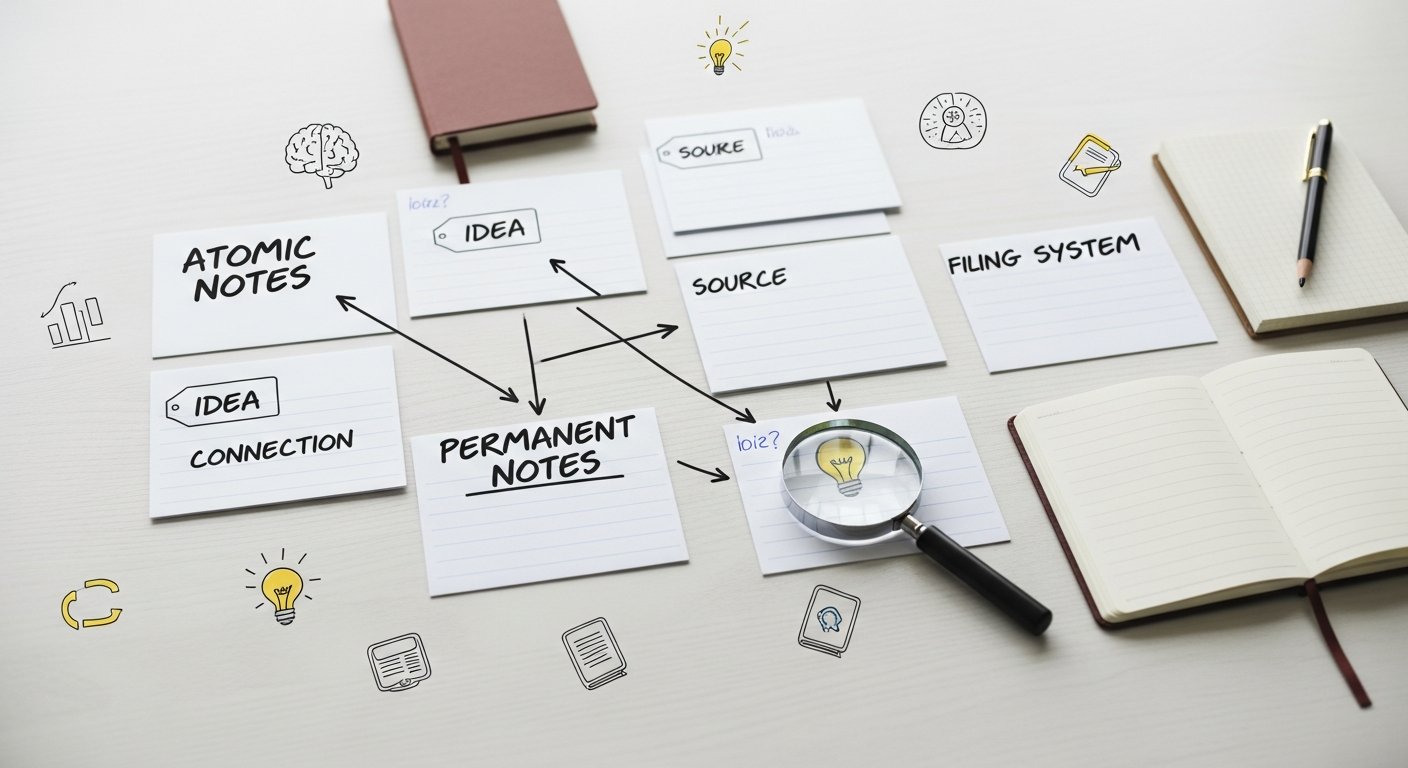
At its heart, the Zettelkasten method is about building a network of interconnected ideas, rather than a hierarchical or linear collection of notes. Unlike traditional note-taking, which often results in isolated pieces of information, the Zettelkasten encourages you to break down complex concepts into atomic units, link them explicitly, and allow new connections and insights to emerge naturally. It shifts the focus from merely storing information to actively working with it, transforming disparate facts into a coherent body of knowledge.
The core philosophy of the Zettelkasten revolves around several key tenets:
- Atomicity: Each note should contain only one idea or piece of information. This makes notes easier to link and combine in various contexts.
- Interconnectedness: Notes are not isolated. They are linked to other relevant notes, creating a web of relationships that reflects the complexity of knowledge itself.
- Self-Contained: Each note should be understandable on its own, without needing to refer to external sources (though references are always included).
- Permanent: Once a note is created and integrated into the system, it is considered a permanent part of your knowledge base, ready to be discovered and reused.
- Emergent Structure: The structure of your Zettelkasten is not pre-determined but emerges from the connections you make between notes. This allows for flexibility and organic growth, mirroring how the human mind works.
By adhering to these principles, a Zettelkasten becomes more than just a repository; it evolves into a dynamic dialogue partner, prompting new thoughts, revealing hidden patterns, and providing a fertile ground for original ideas. It’s a system designed to combat the “forgetting curve” and elevate your thinking beyond mere recall to true synthesis and creation.
The Historical Roots and Modern Relevance of Luhmann’s Zettelkasten

The Zettelkasten method gains its legendary status from the remarkable productivity of Niklas Luhmann, a German sociologist who authored over 70 books and 400 scholarly articles during his lifetime. Luhmann attributed his astounding output directly to his Zettelkasten, a physical system of over 90,000 index cards, each containing a single idea, meticulously linked and cross-referenced.
Luhmann’s system was revolutionary for its time because it challenged traditional archival methods. Instead of filing notes by topic (which can limit their utility), he assigned each note a unique identifier and focused on creating explicit links between related concepts, regardless of their original subject matter. This allowed him to “converse” with his Zettelkasten, discovering connections he might never have made through linear thinking or simple recall. His physical slip-box was a generative engine for thought, not just a storage unit.
[INLINE IMAGE 1: place after second H2 | alt=”zettelkasten method concept illustration”]
Adapting Luhmann’s Vision for the Digital Age
While Luhmann’s system was entirely analog, its core principles translate seamlessly, and often with significant advantages, to digital environments. Modern digital tools offer capabilities that Luhmann could only dream of:
- Effortless Linking: Hyperlinks allow for instantaneous navigation between notes, replicating and enhancing Luhmann’s physical linking.
- Powerful Search: Digital search capabilities make finding specific notes or keywords trivial, a stark contrast to manually flipping through thousands of cards.
- Backlinks: Many digital tools automatically show “backlinks” – notes that link *to* the current note – revealing a note’s context and influence within the entire system.
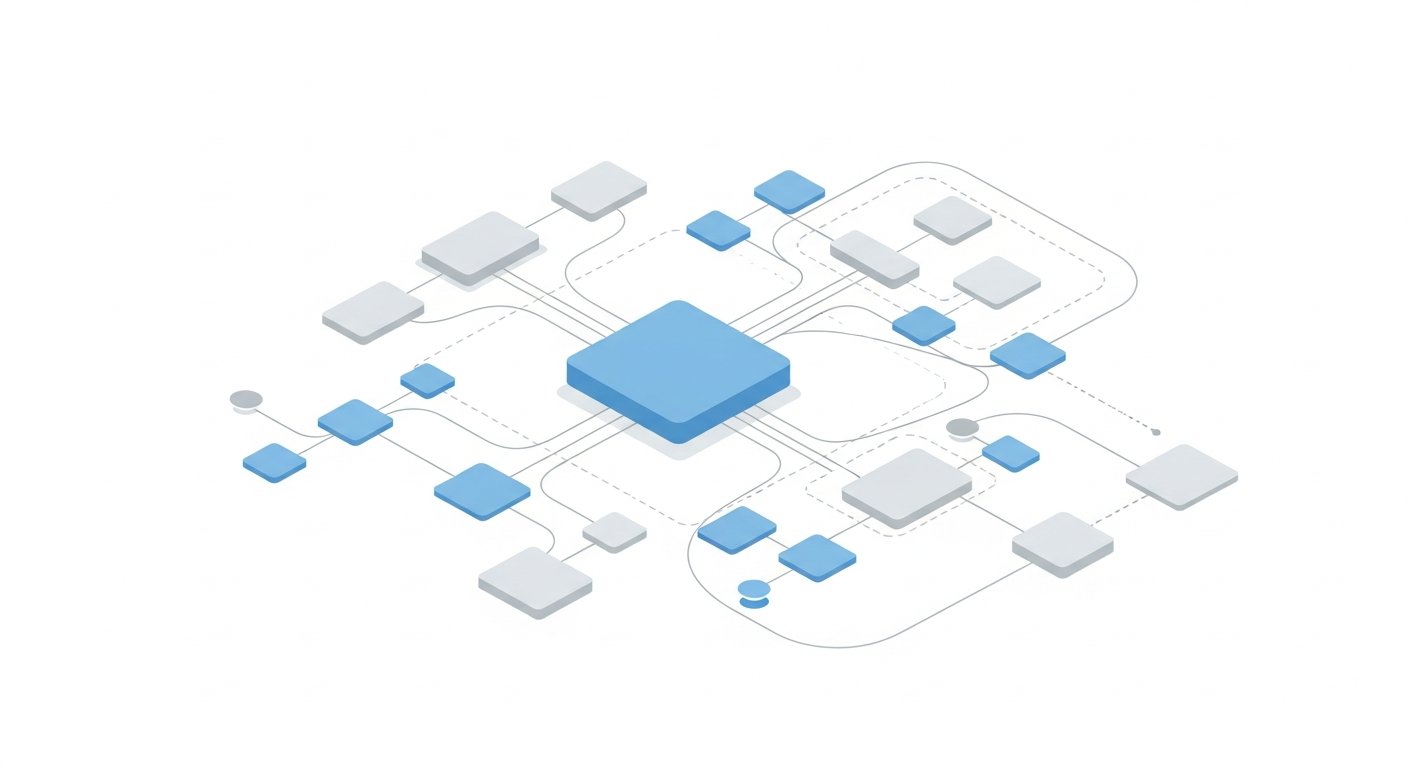
- Visualizations: Graph views can visually represent the network of your ideas, making emergent structures and dense clusters of knowledge immediately apparent.
- Portability and Scalability: A digital Zettelkasten can grow indefinitely without taking up physical space and is accessible from anywhere.
- Multimedia Integration: Digital notes can easily incorporate images, videos, audio, and web links, enriching the content beyond plain text.
In 2026, the relevance of the Zettelkasten method is arguably even greater than in Luhmann’s time. We are constantly bombarded with information, and the ability to process, connect, and synthesize this information is a crucial skill. The Zettelkasten provides a structured yet flexible framework for doing exactly that, making it an indispensable tool for anyone serious about knowledge work.
Core Principles of an Effective Digital Zettelkasten System
Building a successful Zettelkasten, especially in a digital environment, hinges on a clear understanding and consistent application of its fundamental principles. These aren’t just rules; they are the guiding philosophy that transforms a collection of notes into a dynamic, interconnected knowledge network.
Atomic Notes: The Building Blocks
The concept of “atomicity” is arguably the most crucial principle. Each note in your Zettelkasten, often called a “permanent note” or “evergreen note,” should encapsulate a single, complete idea or piece of information. Why is this so important?
- Reusability: An atomic note can be linked and integrated into countless different contexts without needing to be re-written or edited.
- Clarity: Focusing on one idea forces you to articulate it clearly and concisely, improving your understanding.
- Flexibility: Small, modular notes are easier to combine and recombine, allowing you to explore new relationships between ideas.
- Searchability: Clear, focused notes are easier to find through search, and their content is less ambiguous.
Think of each note as a standalone sentence or paragraph that conveys a single insight. Avoid bundling multiple distinct ideas into one note, even if they seem related. If you have two distinct points, create two distinct notes and then link them.
Linking Notes: Forging Intellectual Connections
While atomicity makes notes reusable, linking makes them powerful. The connections between notes are what transform a static archive into a dynamic “second brain.” When you create a new note, always ask yourself:
- Which existing notes does this new note relate to?
- Which existing notes does this new note elaborate on, contradict, or support?
- Where might this new note be relevant in the future?
Digital tools make linking incredibly simple, often requiring just a special syntax (e.g., [[Note Title]]). These links are the pathways through your knowledge system, guiding you to related ideas and fostering serendipitous discovery. Aim for a dense network of links, as this is where the true value of the Zettelkasten lies. The more connections you make, the richer and more robust your knowledge graph becomes.
The Role of Unique IDs and Reference Notes
In Luhmann’s physical system, unique alphanumeric identifiers (e.g., 2/1a1b) were crucial for referencing notes without relying on titles alone. In digital systems, note titles often serve as implicit unique IDs, especially with features like “note name” as the primary identifier. However, the spirit of unique identification remains vital for clarity and unambiguous referencing.
- Digital Unique IDs: Most modern Zettelkasten tools use the note title as a unique identifier for linking. If titles are not unique, the system might prompt you to make them so or use internal GUIDs.
- Reference Notes (Source Notes/Literature Notes): These are distinct from your permanent atomic notes. When you read a book, article, or watch a video, you create a “literature note” summarizing the source and extracting key ideas. These literature notes then serve as a source for your atomic, permanent notes. Each permanent note should always reference its source, ensuring intellectual integrity and traceability. This practice ensures that your Zettelkasten is built on a solid foundation of reliable information, and you can easily trace any idea back to its origin.
By diligently applying these core principles, you build a Zettelkasten that is not just a storage system, but a powerful intellectual partner capable of stimulating insights and aiding in complex thought processes.
Implementing Zettelkasten Digitally: Tools and Workflows
The beauty of the Zettelkasten method is its adaptability. While Luhmann operated with physical index cards, the digital landscape of 2026 offers an unparalleled array of tools that not only replicate but significantly enhance the Zettelkasten experience. Choosing the right tools and establishing efficient workflows is crucial for a smooth and productive digital Zettelkasten practice.
Dedicated Zettelkasten Software
Several applications have been purpose-built or heavily optimized for the Zettelkasten methodology, often featuring graph views, powerful linking capabilities, and local storage for data ownership.
- Obsidian: A highly popular choice, Obsidian stores notes as local Markdown files, giving users complete control over their data. Its powerful graph view, robust plugin ecosystem (including Zettelkasten-specific plugins), and elegant linking mechanisms make it a favorite for many. It supports bidirectional linking, meaning if note A links to note B, note B automatically shows that note A links to it.
- Logseq: Similar to Obsidian in its local-first Markdown approach, Logseq is an outliner that emphasizes block-level linking and daily journaling, making it excellent for incremental note-taking and seamless integration into existing routines. Its focus on atomic blocks lends itself naturally to Zettelkasten principles.
- The Archive: A minimalist, macOS-specific application designed explicitly for the Zettelkasten method by the creator of the popular Zettelkasten.de website. It focuses on plain text files, quick linking, and powerful search.
[INLINE IMAGE 2: place after fourth H2 | alt=”zettelkasten method comparison illustration”]
General Note-Taking Apps with Zettelkasten Capabilities
Many general-purpose note-taking applications, while not exclusively Zettelkasten tools, can be adapted to support the method, especially if they offer robust linking features.
- Roam Research: A pioneer in graph databases for personal knowledge, Roam popularized bidirectional linking and block-level referencing. Its non-linear approach is very conducive to Zettelkasten principles, though its cloud-based nature and subscription model differ from local-first alternatives.
- Notion: A versatile workspace, Notion can be configured to act as a Zettelkasten using its database features. You can create a database of notes, link them using relation properties, and even create templates for atomic notes. While not inherently designed for graph-based thinking, its flexibility allows for powerful custom setups.
- Bear / Ulysses / Drafts: Markdown-based editors with good tagging and internal linking features can serve as simpler Zettelkastens, especially for those who prefer a less visual or complex system. Their strength lies in their writing experience.
- Evernote / OneNote: While more suited for clipping and archiving, these tools can be used for Zettelkasten if you commit to disciplined linking and atomic note creation within their respective organizational structures. Their strength lies in capturing a wide variety of content.
Browser Extensions and Bookmark Managers for Zettelkasten Input
The first step in any Zettelkasten system is capturing information. This is where browser extensions and dedicated bookmark managers become indispensable, particularly for the bookmarksharer audience.
- Readwise Reader / Omnivore: These tools are designed to capture articles, tweets, and web pages, allowing you to highlight, annotate, and then export those highlights to dedicated Zettelkasten tools like Obsidian or Roam. They act as excellent “literature note” processors.
- Raindrop.io / Pocket / Instapaper: High-quality bookmark managers that allow you to save articles, videos, and web pages. While they primarily focus on saving, their tagging, collection, and annotation features can feed directly into your Zettelkasten. You can save a link, add initial thoughts as annotations, and then process those annotations into atomic notes in your Zettelkasten tool.
- Web Clipper Extensions: Most note-taking apps (Evernote, Notion, OneNote) offer browser extensions to clip web content directly into your chosen app, serving as the raw material for your literature notes.
The key here is to establish a seamless workflow from capture to processing. Instead of simply saving a link, use your bookmark manager or web clipper to capture the context, highlight key passages, and then immediately prompt yourself to turn those highlights into atomic Zettelkasten notes.
Integration with Link-Curation Workflows
For individuals already deeply entrenched in link-curation, the Zettelkasten method offers a way to elevate passive collection into active knowledge building. Instead of just accumulating links, integrate them directly into your Zettelkasten workflow:
- Curated Collections to Literature Notes: When you curate a list of links on a specific topic (e.g., “AI Ethics” in Raindrop.io), dedicate time to process each link. Create a literature note for the collection itself, and then individual literature notes for each significant article. From these, extract permanent Zettelkasten notes.
- Annotations as Seeds: Use the annotation features of your bookmark manager or read-it-later app. Your highlighted text and margin notes become the initial seeds for your permanent Zettelkasten notes. Export these annotations to your Zettelkasten tool for further processing.
- Contextual Linking: When saving a link related to an existing Zettelkasten note, ensure you link the literature note (or the permanent note derived from it) back to the relevant concepts in your Zettelkasten. This reinforces the interconnectedness.
By strategically integrating your link-curation with the Zettelkasten method, you transform passive consumption into an active, generative process that strengthens your overall knowledge base. This synergy is particularly powerful for those who rely heavily on web-based information gathering.
Explore advanced strategies for managing digital bookmarks and web clippings efficiently.
Building Your Digital Zettelkasten: A Step-by-Step Guide
Embarking on your Zettelkasten journey can feel daunting, but breaking it down into manageable steps makes the process clear and achievable. This guide will walk you through the essential stages of building and maintaining an effective digital Zettelkasten.
Step 1: Capturing Information (Literature Notes)
The first stage involves gathering raw material. This is where your reading, listening, and observing translate into preliminary notes.
- Active Consumption: Don’t just passively consume information. Read with a critical eye, listen actively, and engage with the material.
- Highlight and Annotate: Use your digital tools (e.g., Readwise Reader, browser extensions, PDF annotators) to highlight key passages and add your initial thoughts or questions directly on the source.
- Create Literature Notes: For each significant source (book, article, video, podcast), create a dedicated “literature note” in your Zettelkasten tool. This note should contain:
- Bibliographic information (author, title, date, URL/link to original source).
- A concise summary of the source in your own words.
- Key highlights, quotes, or paraphrased ideas from the source.
- Your initial reactions, questions, or connections that come to mind.
This literature note serves as a bridge between the original source and your own permanent knowledge base.
Step 2: Processing and Atomizing (Permanent Notes)
This is the most critical step, where raw information transforms into usable knowledge. Do this shortly after creating literature notes, while the ideas are still fresh.
- Review Literature Notes: Go through your literature notes. Identify the most important, atomic ideas.
- Create New Permanent Notes: For each distinct idea, create a new, separate “permanent note” (also called a “Zettel”) in your Zettelkasten.
- Formulate in Your Own Words: Crucially, write the idea down in your own words. Don’t copy-paste directly from the source. This forces you to understand and internalize the concept. Imagine you’re explaining it to someone else.
- One Idea Per Note: Ensure each permanent note contains only one atomic idea. If an idea has sub-points that could stand alone, break them into separate notes.
- Add Context and Questions: A good permanent note often includes not just the idea, but also its implications, related questions, or how it might connect to other fields.
- Reference the Source: Always link back to the literature note from which the idea originated. This maintains traceability.
Step 3: Linking and Structuring
Once you have an atomic permanent note, the next step is to integrate it into your network of knowledge.
- Establish Connections: The moment you create a new permanent note, actively look for connections to existing notes. Ask:
- What existing note does this new note support?
- Which note does it contradict or provide a counter-argument to?
- Does it offer a new perspective on an old idea?
- Does it generalize or specialize an existing concept?
- Create Bidirectional Links: Most digital Zettelkasten tools support bidirectional linking. Make sure the link goes both ways (e.g., if Note A links to Note B, Note B should show that Note A links to it). This reveals the full context.
- Avoid Over-Tagging: While tags can be useful for broad categories, prioritize direct links. Links show relationships, while tags primarily group. Relying too heavily on tags can lead to a flat structure, whereas links create a rich, multidimensional web.
- Add “Structure Notes” (Optional but Recommended): For large clusters of ideas, create a “structure note” (also called an “index note” or “hub note”). This note serves as a table of contents or an entry point to a specific topic, linking out to all the relevant permanent notes on that subject. This helps navigate larger areas of your Zettelkasten without imposing a rigid hierarchy.
Step 4: Reviewing and Iterating
Your Zettelkasten is a living system that requires ongoing attention to grow and flourish.
- Regular Review: Periodically review your notes. Some people do this daily, weekly, or before starting a new project. Re-reading notes can spark new connections or reveal areas needing clarification.
- Refine and Elaborate: Don’t hesitate to edit, refine, or expand upon existing notes as your understanding evolves. The Zettelkasten is never truly “finished.”
- Explore the Graph: Use graph views (if your tool has one) to visually explore your network of ideas. This can uncover unexpected connections and dense areas of knowledge.
- Write from Your Zettelkasten: The ultimate goal is to use your Zettelkasten for creative output. When starting a writing project, browse your Zettelkasten for relevant notes, follow links, and synthesize the ideas into an outline or first draft. The Zettelkasten provides the building blocks; you assemble them into something new.
Consistency is key. Even dedicating 15-30 minutes a day to processing and linking notes will lead to remarkable growth in your Zettelkasten and your intellectual capabilities over time.
Discover the best note-taking apps for capturing diverse information.
The Benefits of Adopting the Zettelkasten Method
Beyond simply organizing notes, the Zettelkasten method offers a profound transformation in how you learn, think, and create. Its adoption leads to a multitude of tangible benefits that amplify intellectual capacity and productivity.
Enhanced Understanding and Retention
Traditional rote memorization often leads to fleeting knowledge. The Zettelkasten, however, builds deep, durable understanding:
- Active Processing: The act of articulating ideas in your own words and identifying their atomic nature forces deeper engagement with the material, cementing understanding.
- Contextual Learning: By linking notes, you’re not just learning isolated facts but understanding how different ideas relate to and influence each other. This rich context makes information more meaningful and easier to recall.
- Spaced Repetition (Implicit): The natural process of reviewing, linking, and revisiting notes provides a form of spaced repetition, strengthening memory pathways over time.
- Combatting the Forgetting Curve: Instead of passively forgetting information, the Zettelkasten provides an active system for reinforcing and building upon previously acquired knowledge.
Unleashing Creative Idea Generation
One of Luhmann’s greatest achievements was his prolific output of original work, directly stemming from his Zettelkasten. The method is a powerful engine for creativity:
- Serendipitous Discovery: The interconnected nature of the Zettelkasten often reveals unexpected connections between seemingly disparate ideas, leading to novel insights and creative breakthroughs.
- Idea Incubation: Your Zettelkasten becomes a fertile ground where ideas can “talk” to each other, evolve, and combine into something new without conscious effort.
- Overcoming Writer’s Block: When faced with a blank page, you can turn to your Zettelkasten, browse related notes, and let the existing web of ideas inspire and guide your thoughts, making the initial drafting process significantly smoother.
- Developing Thought Chains: By following chains of links, you can develop complex arguments and narratives, seeing how different ideas build upon one another to form a coherent whole.
Streamlined Writing and Research
For anyone involved in writing, research, or content creation, the Zettelkasten is a game-changer:
- Pre-Structured Arguments: Because you’ve already broken down arguments into atomic notes and linked them, much of the foundational work for writing is already done. Your Zettelkasten effectively contains outlines, arguments, counter-arguments, and evidence.
- Effortless Referencing: Every permanent note is linked back to its source, making citation and bibliography generation straightforward.
- Faster Drafting: Instead of staring at an empty document, you can assemble notes from your Zettelkasten into a coherent draft, significantly reducing the time and mental effort required for writing.
- Project Management: For larger projects, you can create specific “project notes” or “structure notes” that link to all relevant Zettelkasten entries, providing a centralized hub for all your research and ideas pertaining to that project.
Ultimately, the Zettelkasten method transforms your interaction with information from a passive storage activity into an active, dynamic process that fuels intellectual growth and creative output. It’s not just about taking notes; it’s about building a better brain.
Challenges and Common Pitfalls to Avoid
While the Zettelkasten method offers immense benefits, like any powerful system, it comes with its own set of potential challenges and common pitfalls. Being aware of these can help you navigate your journey more effectively and build a robust, sustainable Zettelkasten.
The Perfectionism Trap
A common hurdle for beginners is the desire to make every note perfect from the outset. This “perfectionism trap” can lead to analysis paralysis and prevent you from even starting or consistently adding notes.
- Don’t Overthink It: The Zettelkasten is an evolving system. Your notes don’t need to be flawless. Focus on getting the idea down and linking it. You can always refine them later.
- Embrace Imperfection: It’s better to have many imperfectly linked notes than a few perfectly polished but isolated ones. The strength of the system comes from its density and interconnectedness, not individual note perfection.
- Start Small: Don’t try to migrate your entire existing knowledge base at once. Start with new information and gradually integrate older ideas.
Neglecting the Linking Process
Some users might get good at creating atomic notes but then fail to establish sufficient links between them. A collection of atomic notes without strong interconnections is just an organized archive, not a true Zettelkasten.
- Link Religiously: Make linking a non-negotiable part of your note-creation process. For every new permanent note, dedicate time to find at least one or two relevant existing notes to link it to.
- Ask Linking Questions: As mentioned before, actively ask yourself: “What does this connect to? What does it contradict? What does it elaborate on?”
- Utilize Bidirectional Linking: If your tool supports it, leverage bidirectional linking to see incoming connections, which can often spark new linking opportunities.
Over-Reliance on Tags Instead of Links
Tags are useful for broad categorization and quick filtering, but they are often misused as a substitute for explicit links. Tags create flat relationships (e.g., all notes about “AI” are tagged with #AI), while links create rich, contextual relationships (e.g., this specific note about “AI ethics” is specifically linked to notes about “data privacy” and “algorithmic bias”).
- Prioritize Links for Ideas: Use direct links (
[[Note Title]]) to connect specific ideas and arguments. - Use Tags for Meta-Information: Reserve tags for meta-information like project names (e.g., #ProjectX), status (e.g., #toReview), or very broad categories that don’t warrant an entire structure note.
- Tags Don’t Replace Relationships: A tag tells you what a note is *about*. A link tells you what a note *relates to* in a meaningful way. Focus on establishing meaningful relationships.
Learn how to avoid common pitfalls in your personal knowledge management workflow.
Ignoring Your “Literature Note” Step
Jumping directly from a source to atomic permanent notes without creating an intermediary literature note can lead to several problems:
- Loss of Context: Without a literature note, it’s harder to recall the original context of an idea or to find the source if you need to revisit it.
- Plagiarism Risk: It becomes easier to accidentally present paraphrased ideas as your own without a clear record of the source.
- Poor Summarization: The step of summarizing the source in a literature note forces you to grasp the main argument before dissecting it into atomic parts. Skipping this can lead to fragmented understanding.
Always create a concise literature note for your sources. This acts as your personal digest and clear reference point, ensuring intellectual rigor and providing a foundation for your atomic notes.
Comparing Zettelkasten Tools: A Curated Selection for 2026
The digital landscape for personal knowledge management is rich and varied, offering a range of tools that cater to different preferences and workflows. For those seeking to implement the Zettelkasten method, the choice of tool can significantly impact the experience. Here, we compare some of the leading contenders in 2026, highlighting their strengths and suitability for Zettelkasten principles.
| Tool | Zettelkasten Focus | Key Features | Integration Potential | Price Model (2026) |
|---|---|---|---|---|
| Obsidian | Local-first, Markdown-based, highly customizable Zettelkasten powerhouse. | Bidirectional links, Graph View, rich plugin ecosystem, Markdown files (future-proof), themes, local storage. | Sync with cloud services (Dropbox, iCloud), Readwise, Zotero, extensive API for community plugins. | Free for personal use; Catalyst license for early access/extra features; Obsidian Sync for cloud syncing (optional). |
| Roam Research | Cloud-based, graph database for networked thought, emphasizing daily notes and block-level linking. | Bidirectional links, block references, Daily Notes, embedded blocks, sidebar, query language. | API for integrations, limited export options, works well with web clipping tools via manual input. | Subscription-based (monthly/annual). |
| Logseq | Local-first, open-source outliner, focused on block-level Zettelkasten and daily journaling. | Markdown files, bidirectional links (page & block level), Graph View, query language, open-source, spaced repetition features. | Sync with cloud services (Git, Dropbox), Readwise, integrates with local files/folders. | Free (open-source). |
| Notion | Highly flexible, all-in-one workspace; adaptable for Zettelkasten via databases. | Databases (for notes), relations (for linking), templates, rich content embedding, web clipper, collaboration. | Extensive API, Zapier/Make integrations, direct links from bookmark managers, embed various content types. | Free for personal use (some limits); various paid tiers for teams and advanced features. |
| Raindrop.io | Premium bookmark manager; valuable for Zettelkasten input. | Tagging, collections, full-text search, highlights/annotations (Pro), web clipper, nested folders. | Integration with IFTTT, Zapier, export options (JSON, HTML), can feed into Zettelkasten tools via manual processing or automation. | Free (some limits); Pro subscription for advanced features like full-text search and permanent copies. |
Obsidian: The King of Local Zettelkastens
For many Zettelkasten practitioners, Obsidian has become the de facto standard. Its commitment to local Markdown files means your data remains yours, portable and future-proof. The robust plugin architecture allows for incredible customization, from Zettelkasten-specific workflows to spaced repetition and advanced graph analysis. Its active community consistently develops new tools and insights, making it a dynamic ecosystem. If you value data ownership, extensibility, and a vibrant community, Obsidian is a top contender.
Roam Research / Logseq: Graph-Based Thinking
Roam Research ignited the “graph database” trend in PKM, emphasizing block-level linking and daily notes as the entry point to a web of thoughts. Its unique approach fosters a very fluid, non-linear way of thinking, making it highly effective for connecting disparate ideas. Logseq, often seen as an open-source alternative to Roam, shares many of its core principles (local-first Markdown, block references, outliner structure) but offers greater transparency and community-driven development. Both are excellent for those who appreciate seeing their thoughts emerge from granular connections.
Notion / Coda: Flexible Database Powerhouses
While not purpose-built for Zettelkasten, tools like Notion and Coda offer unparalleled flexibility. Through clever use of databases and “relation” properties, you can design a Zettelkasten system that perfectly fits your needs. Each “note” can be a database entry, and “links” can be established through relations. These tools shine when you need to combine your Zettelkasten with other aspects of your life, such as project management, task tracking, or content calendars, all within one integrated workspace. The trade-off is often a steeper learning curve to configure the system to Zettelkasten principles.
Specialized Bookmark Managers: Integrating Web Captures
Tools like Raindrop.io, Pocket, or Instapaper are not Zettelkasten tools themselves, but they are crucial for feeding your Zettelkasten. They serve as the initial “literature note” capture mechanism for web content. By efficiently saving, tagging, and annotating web articles, these managers provide the raw material that you then process into atomic notes in your chosen Zettelkasten application. Integrating them into your workflow means you’re moving beyond simple bookmarking to actively ingesting and transforming web knowledge into personal insights.
The best tool for you will depend on your specific needs: do you prioritize local data, a vibrant plugin ecosystem, cloud accessibility, or an all-in-one workspace? Regardless of the tool, the underlying principles of the Zettelkasten method remain paramount.
Advanced Zettelkasten Strategies for Power Users
Once you’ve mastered the fundamentals of the Zettelkasten method, you can explore advanced strategies to further enhance its power, integrate it with other productivity techniques, and unlock even deeper insights from your knowledge base.
Combining Zettelkasten with Spaced Repetition Systems (SRS)
While the Zettelkasten inherently aids memory through active processing and linking, you can explicitly combine it with Spaced Repetition Systems (SRS) like Anki for targeted recall and long-term retention of key facts and concepts.
- Extract Core Concepts: When creating a particularly important permanent note or a challenging concept, identify the core question-and-answer pairs within it.
- Create Anki Cards: Transform these Q&A pairs into flashcards in your Anki deck. Link the Anki card back to the original Zettelkasten note for context.
- Review and Reinforce: Regularly review your Anki cards. If you struggle with a concept, revisit the corresponding Zettelkasten note to re-establish its context and connections.
This integration ensures that not only do you understand ideas deeply (Zettelkasten), but you can also recall specific facts reliably over time (SRS), creating a formidable learning and memory system.
Developing “Structure Notes” and “Maps of Content” (MOCs)
As your Zettelk
Mastering the Zettelkasten Method: Your Ultimate Guide to Connected Thinking and Digital Knowledge Management
Affiliate disclosure: This article may contain affiliate links. Recommendations are independent and editorially driven.
In an era defined by information overload, the quest for effective knowledge management has become more critical than ever. Professionals across all fields, from academics and researchers to content creators and entrepreneurs, are grappling with mountains of data, articles, insights, and ideas. Simply collecting information is no longer enough; the real challenge lies in processing, connecting, and leveraging it to foster deeper understanding, generate novel insights, and streamline workflows. This is where the Zettelkasten method emerges as a powerful, transformative paradigm.
Originally conceived by the German sociologist Niklas Luhmann, the Zettelkasten, or “slip-box,” is far more than a simple note-taking system. It’s a comprehensive methodology for developing an interconnected web of thoughts, facts, and arguments that grows organically over time, acting as a “second brain.” While Luhmann famously used physical index cards, the principles of the Zettelkasten method are perfectly suited, and indeed amplified, by the sophisticated digital tools available today. For users of bookmark managers, note-taking apps, browser extensions, and advanced PKM tools, integrating the Zettelkasten method offers a robust framework for turning raw information into refined knowledge and creative output.
This comprehensive guide delves deep into the Zettelkasten method, exploring its foundational principles, historical context, and immense potential in the digital age. We’ll equip you with the knowledge to establish and maintain your own digital Zettelkasten, leveraging modern tools to create a dynamic, interconnected knowledge base that supports enhanced learning, innovative thinking, and unparalleled productivity. Whether you’re a seasoned knowledge worker or just beginning your journey into personal knowledge management (PKM), understanding and applying the Zettelkasten method will undoubtedly revolutionize how you interact with information and cultivate your intellect.
Understanding the Zettelkasten Method: A Foundation for Connected Thinking
At its heart, the Zettelkasten method is about building a network of interconnected ideas, rather than a hierarchical or linear collection of notes. Unlike traditional note-taking, which often results in isolated pieces of information, the Zettelkasten encourages you to break down complex concepts into atomic units, link them explicitly, and allow new connections and insights to emerge naturally. It shifts the focus from merely storing information to actively working with it, transforming disparate facts into a coherent body of knowledge.
The core philosophy of the Zettelkasten revolves around several key tenets:
- Atomicity: Each note should contain only one idea or piece of information. This makes notes easier to link and combine in various contexts.
- Interconnectedness: Notes are not isolated. They are linked to other relevant notes, creating a web of relationships that reflects the complexity of knowledge itself.
- Self-Contained: Each note should be understandable on its own, without needing to refer to external sources (though references are always included).
- Permanent: Once a note is created and integrated into the system, it is considered a permanent part of your knowledge base, ready to be discovered and reused.
- Emergent Structure: The structure of your Zettelkasten is not pre-determined but emerges from the connections you make between notes. This allows for flexibility and organic growth, mirroring how the human mind works.
By adhering to these principles, a Zettelkasten becomes more than just a repository; it evolves into a dynamic dialogue partner, prompting new thoughts, revealing hidden patterns, and providing a fertile ground for original ideas. It’s a system designed to combat the “forgetting curve” and elevate your thinking beyond mere recall to true synthesis and creation.
The Historical Roots and Modern Relevance of Luhmann’s Zettelkasten
The Zettelkasten method gains its legendary status from the remarkable productivity of Niklas Luhmann, a German sociologist who authored over 70 books and 400 scholarly articles during his lifetime. Luhmann attributed his astounding output directly to his Zettelkasten, a physical system of over 90,000 index cards, each containing a single idea, meticulously linked and cross-referenced.
Luhmann’s system was revolutionary for its time because it challenged traditional archival methods. Instead of filing notes by topic (which can limit their utility), he assigned each note a unique identifier and focused on creating explicit links between related concepts, regardless of their original subject matter. This allowed him to “converse” with his Zettelkasten, discovering connections he might never have made through linear thinking or simple recall. His physical slip-box was a generative engine for thought, not just a storage unit.
[INLINE IMAGE 1: place after second H2 | alt=”zettelkasten method concept illustration”]
Adapting Luhmann’s Vision for the Digital Age
While Luhmann’s system was entirely analog, its core principles translate seamlessly, and often with significant advantages, to digital environments. Modern digital tools offer capabilities that Luhmann could only dream of:
- Effortless Linking: Hyperlinks allow for instantaneous navigation between notes, replicating and enhancing Luhmann’s physical linking.
- Powerful Search: Digital search capabilities make finding specific notes or keywords trivial, a stark contrast to manually flipping through thousands of cards.
- Backlinks: Many digital tools automatically show “backlinks” – notes that link *to* the current note – revealing a note’s context and influence within the entire system.
- Visualizations: Graph views can visually represent the network of your ideas, making emergent structures and dense clusters of knowledge immediately apparent.
- Portability and Scalability: A digital Zettelkasten can grow indefinitely without taking up physical space and is accessible from anywhere.
- Multimedia Integration: Digital notes can easily incorporate images, videos, audio, and web links, enriching the content beyond plain text.
In 2026, the relevance of the Zettelkasten method is arguably even greater than in Luhmann’s time. We are constantly bombarded with information, and the ability to process, connect, and synthesize this information is a crucial skill. The Zettelkasten provides a structured yet flexible framework for doing exactly that, making it an indispensable tool for anyone serious about knowledge work.
Core Principles of an Effective Digital Zettelkasten System
Building a successful Zettelkasten, especially in a digital environment, hinges on a clear understanding and consistent application of its fundamental principles. These aren’t just rules; they are the guiding philosophy that transforms a collection of notes into a dynamic, interconnected knowledge network.
Atomic Notes: The Building Blocks
The concept of “atomicity” is arguably the most crucial principle. Each note in your Zettelkasten, often called a “permanent note” or “evergreen note,” should encapsulate a single, complete idea or piece of information. Why is this so important?
- Reusability: An atomic note can be linked and integrated into countless different contexts without needing to be re-written or edited.
- Clarity: Focusing on one idea forces you to articulate it clearly and concisely, improving your understanding.
- Flexibility: Small, modular notes are easier to combine and recombine, allowing you to explore new relationships between ideas.
- Searchability: Clear, focused notes are easier to find through search, and their content is less ambiguous.
Think of each note as a standalone sentence or paragraph that conveys a single insight. Avoid bundling multiple distinct ideas into one note, even if they seem related. If you have two distinct points, create two distinct notes and then link them.
Linking Notes: Forging Intellectual Connections
While atomicity makes notes reusable, linking makes them powerful. The connections between notes are what transform a static archive into a dynamic “second brain.” When you create a new note, always ask yourself:
- Which existing notes does this new note relate to?
- Which existing notes does this new note elaborate on, contradict, or support?
- Where might this new note be relevant in the future?
Digital tools make linking incredibly simple, often requiring just a special syntax (e.g., [[Note Title]]). These links are the pathways through your knowledge system, guiding you to related ideas and fostering serendipitous discovery. Aim for a dense network of links, as this is where the true value of the Zettelkasten lies. The more connections you make, the richer and more robust your knowledge graph becomes.
The Role of Unique IDs and Reference Notes
In Luhmann’s physical system, unique alphanumeric identifiers (e.g., 2/1a1b) were crucial for referencing notes without relying on titles alone. In digital systems, note titles often serve as implicit unique IDs, especially with features like “note name” as the primary identifier. However, the spirit of unique identification remains vital for clarity and unambiguous referencing.
- Digital Unique IDs: Most modern Zettelkasten tools use the note title as a unique identifier for linking. If titles are not unique, the system might prompt you to make them so or use internal GUIDs.
- Reference Notes (Source Notes/Literature Notes): These are distinct from your permanent atomic notes. When you read a book, article, or watch a video, you create a “literature note” summarizing the source and extracting key ideas. These literature notes then serve as a source for your atomic, permanent notes. Each permanent note should always reference its source, ensuring intellectual integrity and traceability. This practice ensures that your Zettelkasten is built on a solid foundation of reliable information, and you can easily trace any idea back to its origin.
By diligently applying these core principles, you build a Zettelkasten that is not just a storage system, but a powerful intellectual partner capable of stimulating insights and aiding in complex thought processes.
Implementing Zettelkasten Digitally: Tools and Workflows
The beauty of the Zettelkasten method is its adaptability. While Luhmann operated with physical index cards, the digital landscape of 2026 offers an unparalleled array of tools that not only replicate but significantly enhance the Zettelkasten experience. Choosing the right tools and establishing efficient workflows is crucial for a smooth and productive digital Zettelkasten practice.
Dedicated Zettelkasten Software
Several applications have been purpose-built or heavily optimized for the Zettelkasten methodology, often featuring graph views, powerful linking capabilities, and local storage for data ownership.
- Obsidian: A highly popular choice, Obsidian stores notes as local Markdown files, giving users complete control over their data. Its powerful graph view, robust plugin ecosystem (including Zettelkasten-specific plugins), and elegant linking mechanisms make it a favorite for many. It supports bidirectional linking, meaning if note A links to note B, note B automatically shows that note A links to it.
- Logseq: Similar to Obsidian in its local-first Markdown approach, Logseq is an outliner that emphasizes block-level linking and daily journaling, making it excellent for incremental note-taking and seamless integration into existing routines. Its focus on atomic blocks lends itself naturally to Zettelkasten principles.
- The Archive: A minimalist, macOS-specific application designed explicitly for the Zettelkasten method by the creator of the popular Zettelkasten.de website. It focuses on plain text files, quick linking, and powerful search.
[INLINE IMAGE 2: place after fourth H2 | alt=”zettelkasten method comparison illustration”]
General Note-Taking Apps with Zettelkasten Capabilities
Many general-purpose note-taking applications, while not exclusively Zettelkasten tools, can be adapted to support the method, especially if they offer robust linking features.
- Roam Research: A pioneer in graph databases for personal knowledge, Roam popularized bidirectional linking and block-level referencing. Its non-linear approach is very conducive to Zettelkasten principles, though its cloud-based nature and subscription model differ from local-first alternatives.
- Notion: A versatile workspace, Notion can be configured to act as a Zettelkasten using its database features. You can create a database of notes, link them using relation properties, and even create templates for atomic notes. While not inherently designed for graph-based thinking, its flexibility allows for powerful custom setups.
- Bear / Ulysses / Drafts: Markdown-based editors with good tagging and internal linking features can serve as simpler Zettelkastens, especially for those who prefer a less visual or complex system. Their strength lies in their writing experience.
- Evernote / OneNote: While more suited for clipping and archiving, these tools can be used for Zettelkasten if you commit to disciplined linking and atomic note creation within their respective organizational structures. Their strength lies in capturing a wide variety of content.
Browser Extensions and Bookmark Managers for Zettelkasten Input
The first step in any Zettelkasten system is capturing information. This is where browser extensions and dedicated bookmark managers become indispensable, particularly for the bookmarksharer audience.
- Readwise Reader / Omnivore: These tools are designed to capture articles, tweets, and web pages, allowing you to highlight, annotate, and then export those highlights to dedicated Zettelkasten tools like Obsidian or Roam. They act as excellent “literature note” processors.
- Raindrop.io / Pocket / Instapaper: High-quality bookmark managers that allow you to save articles, videos, and web pages. While they primarily focus on saving, their tagging, collection, and annotation features can feed directly into your Zettelkasten. You can save a link, add initial thoughts as annotations, and then process those annotations into atomic notes in your Zettelkasten tool.
- Web Clipper Extensions: Most note-taking apps (Evernote, Notion, OneNote) offer browser extensions to clip web content directly into your chosen app, serving as the raw material for your literature notes.
The key here is to establish a seamless workflow from capture to processing. Instead of simply saving a link, use your bookmark manager or web clipper to capture the context, highlight key passages, and then immediately prompt yourself to turn those highlights into atomic Zettelkasten notes.
Integration with Link-Curation Workflows
For individuals already deeply entrenched in link-curation, the Zettelkasten method offers a way to elevate passive collection into active knowledge building. Instead of just accumulating links, integrate them directly into your Zettelkasten workflow:
- Curated Collections to Literature Notes: When you curate a list of links on a specific topic (e.g., “AI Ethics” in Raindrop.io), dedicate time to process each link. Create a literature note for the collection itself, and then individual literature notes for each significant article. From these, extract permanent Zettelkasten notes.
- Annotations as Seeds: Use the annotation features of your bookmark manager or read-it-later app. Your highlighted text and margin notes become the initial seeds for your permanent Zettelkasten notes. Export these annotations to your Zettelkasten tool for further processing.
- Contextual Linking: When saving a link related to an existing Zettelkasten note, ensure you link the literature note (or the permanent note derived from it) back to the relevant concepts in your Zettelkasten. This reinforces the interconnectedness.
By strategically integrating your link-curation with the Zettelkasten method, you transform passive consumption into an active, generative process that strengthens your overall knowledge base. This synergy is particularly powerful for those who rely heavily on web-based information gathering.
Explore advanced strategies for managing digital bookmarks and web clippings efficiently.
Building Your Digital Zettelkasten: A Step-by-Step Guide
Embarking on your Zettelkasten journey can feel daunting, but breaking it down into manageable steps makes the process clear and achievable. This guide will walk you through the essential stages of building and maintaining an effective digital Zettelkasten.
Step 1: Capturing Information (Literature Notes)
The first stage involves gathering raw material. This is where your reading, listening, and observing translate into preliminary notes.
- Active Consumption: Don’t just passively consume information. Read with a critical eye, listen actively, and engage with the material.
- Highlight and Annotate: Use your digital tools (e.g., Readwise Reader, browser extensions, PDF annotators) to highlight key passages and add your initial thoughts or questions directly on the source.
- Create Literature Notes: For each significant source (book, article, video, podcast), create a dedicated “literature note” in your Zettelkasten tool. This note should contain:
- Bibliographic information (author, title, date, URL/link to original source).
- A concise summary of the source in your own words.
- Key highlights, quotes, or paraphrased ideas from the source.
- Your initial reactions, questions, or connections that come to mind.
This literature note serves as a bridge between the original source and your own permanent knowledge base.
Step 2: Processing and Atomizing (Permanent Notes)
This is the most critical step, where raw information transforms into usable knowledge. Do this shortly after creating literature notes, while the ideas are still fresh.
- Review Literature Notes: Go through your literature notes. Identify the most important, atomic ideas.
- Create New Permanent Notes: For each distinct idea, create a new, separate “permanent note” (also called a “Zettel”) in your Zettelkasten.
- Formulate in Your Own Words: Crucially, write the idea down in your own words. Don’t copy-paste directly from the source. This forces you to understand and internalize the concept. Imagine you’re explaining it to someone else.
- One Idea Per Note: Ensure each permanent note contains only one atomic idea. If an idea has sub-points that could stand alone, break them into separate notes.
- Add Context and Questions: A good permanent note often includes not just the idea, but also its implications, related questions, or how it might connect to other fields.
- Reference the Source: Always link back to the literature note from which the idea originated. This maintains traceability.
Step 3: Linking and Structuring
Once you have an atomic permanent note, the next step is to integrate it into your network of knowledge.
- Establish Connections: The moment you create a new permanent note, actively look for connections to existing notes. Ask:
- What existing note does this new note support?
- Which note does it contradict or provide a counter-argument to?
- Does it offer a new perspective on an old idea?
- Does it generalize or specialize an existing concept?
- Create Bidirectional Links: Most digital Zettelkasten tools support bidirectional linking. Make sure the link goes both ways (e.g., if Note A links to Note B, Note B should show that Note A links to it). This reveals the full context.
- Avoid Over-Tagging: While tags can be useful for broad categories, prioritize direct links. Links show relationships, while tags primarily group. Relying too heavily on tags can lead to a flat structure, whereas links create a rich, multidimensional web.
- Add “Structure Notes” (Optional but Recommended): For large clusters of ideas, create a “structure note” (also called an “index note” or “hub note”). This note serves as a table of contents or an entry point to a specific topic, linking out to all the relevant permanent notes on that subject. This helps navigate larger areas of your Zettelkasten without imposing a rigid hierarchy.
Step 4: Reviewing and Iterating
Your Zettelkasten is a living system that requires ongoing attention to grow and flourish.
- Regular Review: Periodically review your notes. Some people do this daily, weekly, or before starting a new project. Re-reading notes can spark new connections or reveal areas needing clarification.
- Refine and Elaborate: Don’t hesitate to edit, refine, or expand upon existing notes as your understanding evolves. The Zettelkasten is never truly “finished.”
- Explore the Graph: Use graph views (if your tool has one) to visually explore your network of ideas. This can uncover unexpected connections and dense areas of knowledge.
- Write from Your Zettelkasten: The ultimate goal is to use your Zettelkasten for creative output. When starting a writing project, browse your Zettelkasten for relevant notes, follow links, and synthesize the ideas into an outline or first draft. The Zettelkasten provides the building blocks; you assemble them into something new.
Consistency is key. Even dedicating 15-30 minutes a day to processing and linking notes will lead to remarkable growth in your Zettelkasten and your intellectual capabilities over time.
Discover the best note-taking apps for capturing diverse information.
The Benefits of Adopting the Zettelkasten Method
Beyond simply organizing notes, the Zettelkasten method offers a profound transformation in how you learn, think, and create. Its adoption leads to a multitude of tangible benefits that amplify intellectual capacity and productivity.
Enhanced Understanding and Retention
Traditional rote memorization often leads to fleeting knowledge. The Zettelkasten, however, builds deep, durable understanding:
- Active Processing: The act of articulating ideas in your own words and identifying their atomic nature forces deeper engagement with the material, cementing understanding.
- Contextual Learning: By linking notes, you’re not just learning isolated facts but understanding how different ideas relate to and influence each other. This rich context makes information more meaningful and easier to recall.
- Spaced Repetition (Implicit): The natural process of reviewing, linking, and revisiting notes provides a form of spaced repetition, strengthening memory pathways over time.
- Combatting the Forgetting Curve: Instead of passively forgetting information, the Zettelkasten provides an active system for reinforcing and building upon previously acquired knowledge.
Unleashing Creative Idea Generation
One of Luhmann’s greatest achievements was his prolific output of original work, directly stemming from his Zettelkasten. The method is a powerful engine for creativity:
- Serendipitous Discovery: The interconnected nature of the Zettelkasten often reveals unexpected connections between seemingly disparate ideas, leading to novel insights and creative breakthroughs.
- Idea Incubation: Your Zettelkasten becomes a fertile ground where ideas can “talk” to each other, evolve, and combine into something new without conscious effort.
- Overcoming Writer’s Block: When faced with a blank page, you can turn to your Zettelkasten, browse related notes, and let the existing web of ideas inspire and guide your thoughts, making the initial drafting process significantly smoother.
- Developing Thought Chains: By following chains of links, you can develop complex arguments and narratives, seeing how different ideas build upon one another to form a coherent whole.
Streamlined Writing and Research
For anyone involved in writing, research, or content creation, the Zettelkasten is a game-changer:
- Pre-Structured Arguments: Because you’ve already broken down arguments into atomic notes and linked them, much of the foundational work for writing is already done. Your Zettelkasten effectively contains outlines, arguments, counter-arguments, and evidence.
- Effortless Referencing: Every permanent note is linked back to its source, making citation and bibliography generation straightforward.
- Faster Drafting: Instead of staring at an empty document, you can assemble notes from your Zettelkasten into a coherent draft, significantly reducing the time and mental effort required for writing.
- Project Management: For larger projects, you can create specific “project notes” or “structure notes” that link to all relevant Zettelkasten entries, providing a centralized hub for all your research and ideas pertaining to that project.
Ultimately, the Zettelkasten method transforms your interaction with information from a passive storage activity into an active, dynamic process that fuels intellectual growth and creative output. It’s not just about taking notes; it’s about building a better brain.
Challenges and Common Pitfalls to Avoid
While the Zettelkasten method offers immense benefits, like any powerful system, it comes with its own set of potential challenges and common pitfalls. Being aware of these can help you navigate your journey more effectively and build a robust, sustainable Zettelkasten.
The Perfectionism Trap
A common hurdle for beginners is the desire to make every note perfect from the outset. This “perfectionism trap” can lead to analysis paralysis and prevent you from even starting or consistently adding notes.
- Don’t Overthink It: The Zettelkasten is an evolving system. Your notes don’t need to be flawless. Focus on getting the idea down and linking it. You can always refine them later.
- Embrace Imperfection: It’s better to have many imperfectly linked notes than a few perfectly polished but isolated ones. The strength of the system comes from its density and interconnectedness, not individual note perfection.
- Start Small: Don’t try to migrate your entire existing knowledge base at once. Start with new information and gradually integrate older ideas.
Neglecting the Linking Process
Some users might get good at creating atomic notes but then fail to establish sufficient links between them. A collection of atomic notes without strong interconnections is just an organized archive, not a true Zettelkasten.
- Link Religiously: Make linking a non-negotiable part of your note-creation process. For every new permanent note, dedicate time to find at least one or two relevant existing notes to link it to.
- Ask Linking Questions: As mentioned before, actively ask yourself: “What does this connect to? What does it contradict? What does it elaborate on?”
- Utilize Bidirectional Linking: If your tool supports it, leverage bidirectional linking to see incoming connections, which can often spark new linking opportunities.
Over-Reliance on Tags Instead of Links
Tags are useful for broad categorization and quick filtering, but they are often misused as a substitute for explicit links. Tags create flat relationships (e.g., all notes about “AI” are tagged with #AI), while links create rich, contextual relationships (e.g., this specific note about “AI ethics” is specifically linked to notes about “data privacy” and “algorithmic bias”).
- Prioritize Links for Ideas: Use direct links (
[[Note Title]]) to connect specific ideas and arguments. - Use Tags for Meta-Information: Reserve tags for meta-information like project names (e.g., #ProjectX), status (e.g., #toReview), or very broad categories that don’t warrant an entire structure note.
- Tags Don’t Replace Relationships: A tag tells you what a note is *about*. A link tells you what a note *relates to* in a meaningful way. Focus on establishing meaningful relationships.
Learn how to avoid common pitfalls in your personal knowledge management workflow.
Ignoring Your “Literature Note” Step
Jumping directly from a source to atomic permanent notes without creating an intermediary literature note can lead to several problems:
- Loss of Context: Without a literature note, it’s harder to recall the original context of an idea or to find the source if you need to revisit it.
- Plagiarism Risk: It becomes easier to accidentally present paraphrased ideas as your own without a clear record of the source.
- Poor Summarization: The step of summarizing the source in a literature note forces you to grasp the main argument before dissecting it into atomic parts. Skipping this can lead to fragmented understanding.
Always create a concise literature note for your sources. This acts as your personal digest and clear reference point, ensuring intellectual rigor and providing a foundation for your atomic notes.
Comparing Zettelkasten Tools: A Curated Selection for 2026
The digital landscape for personal knowledge management is rich and varied, offering a range of tools that cater to different preferences and workflows. For those seeking to implement the Zettelkasten method, the choice of tool can significantly impact the experience. Here, we compare some of the leading contenders in 2026, highlighting their strengths and suitability for Zettelkasten principles.
| Tool | Zettelkasten Focus | Key Features | Integration Potential | Price Model (2026) |
|---|---|---|---|---|
| Obsidian | Local-first, Markdown-based, highly customizable Zettelkasten powerhouse. | Bidirectional links, Graph View, rich plugin ecosystem, Markdown files (future-proof), themes, local storage. | Sync with cloud services (Dropbox, iCloud), Readwise, Zotero, extensive API for community plugins. | Free for personal use; Catalyst license for early access/extra features; Obsidian Sync for cloud syncing (optional). |
| Roam Research | Cloud-based, graph database for networked thought, emphasizing daily notes and block-level linking. | Bidirectional links, block references, Daily Notes, embedded blocks, sidebar, query language. | API for integrations, limited export options, works well with web clipping tools via manual input. | Subscription-based (monthly/annual). |
| Logseq | Local-first, open-source outliner, focused on block-level Zettelkasten and daily journaling. | Markdown files, bidirectional links (page & block level), Graph View, query language, open-source, spaced repetition features. | Sync with cloud services (Git, Dropbox), Readwise, integrates with local files/folders. | Free (open-source). |
| Notion | Highly flexible, all-in-one workspace; adaptable for Zettelkasten via databases. | Databases (for notes), relations (for linking), templates, rich content embedding, web clipper, collaboration. | Extensive API, Zapier/Make integrations, direct links from bookmark managers, embed various content types. | Free for personal use (some limits); various paid tiers for teams and advanced features. |
| Raindrop.io | Premium bookmark manager; valuable for Zettelkasten input. | Tagging, collections, full-text search, highlights/annotations (Pro), web clipper, nested folders. | Integration with IFTTT, Zapier, export options (JSON, HTML), can feed into Zettelkasten tools via manual processing or automation. | Free (some limits); Pro subscription for advanced features like full-text search and permanent copies. |
Obsidian: The King of Local Zettelkastens
For many Zettelkasten practitioners, Obsidian has become the de facto standard. Its commitment to local Markdown files means your data remains yours, portable and future-proof. The robust plugin architecture allows for incredible customization, from Zettelkasten-specific workflows to spaced repetition and advanced graph analysis. Its active community consistently develops new tools and insights, making it a dynamic ecosystem. If you value data ownership, extensibility, and a vibrant community, Obsidian is a top contender.
Roam Research / Logseq: Graph-Based Thinking
Roam Research ignited the “graph database” trend in PKM, emphasizing block-level linking and daily notes as the entry point to a web of thoughts. Its unique approach fosters a very fluid, non-linear way of thinking, making it highly effective for connecting disparate ideas. Logseq, often seen as an open-source alternative to Roam, shares many of its core principles (local-first Markdown, block references, outliner structure) but offers greater transparency and community-driven development. Both are excellent for those who appreciate seeing their thoughts emerge from granular connections.
Notion / Coda: Flexible Database Powerhouses
While not purpose-built for Zettelkasten, tools like Notion and Coda offer unparalleled flexibility. Through clever use of databases and “relation” properties, you can design a Zettelkasten system that perfectly fits your needs. Each “note” can be a database entry, and “links” can be established through relations. These tools shine when you need to combine your Zettelkasten with other aspects of your life, such as project management, task tracking, or content calendars, all within one integrated workspace. The trade-off is often a steeper learning curve to configure the system to Zettelkasten principles.
Specialized Bookmark Managers: Integrating Web Captures
Tools like Raindrop.io, Pocket, or Instapaper are not Zettelkasten tools themselves, but they are crucial for feeding your Zettelkasten. They serve as the initial “literature note” capture mechanism for web content. By efficiently saving, tagging, and annotating web articles, these managers provide the raw material that you then process into atomic notes in your chosen Zettelkasten application. Integrating them into your workflow means you’re moving beyond simple bookmarking to actively ingesting and transforming web knowledge into personal insights.
The best tool for you will depend on your specific needs: do you prioritize local data, a vibrant plugin ecosystem, cloud accessibility, or an all-in-one workspace? Regardless of the tool, the underlying principles of the Zettelkasten method remain paramount.
Advanced Zettelkasten Strategies for Power Users
Once you’ve mastered the fundamentals of the Zettelkasten method, you can explore advanced strategies to further enhance its power, integrate it with other productivity techniques, and unlock even deeper insights from your knowledge base.
Combining Zettelkasten with Spaced Repetition Systems (SRS)
While the Zettelkasten inherently aids memory through active processing and linking, you can explicitly combine it with Spaced Repetition Systems (SRS) like Anki for targeted recall and long-term retention of key facts and concepts.
- Extract Core Concepts: When creating a particularly important permanent note or a challenging concept, identify the core question-and-answer pairs within it.
- Create Anki Cards: Transform these Q&A pairs into flashcards in your Anki deck. Link the Anki card back to the original Zettelkasten note for context.
- Review and Reinforce: Regularly review your Anki cards. If you struggle with a concept, revisit the corresponding Zettelkasten note to re-establish its context and connections.
This integration ensures that not only do you understand ideas deeply (Zettelkasten), but you can also recall specific facts reliably over time (SRS), creating a formidable learning and memory system.
Developing “Structure Notes” and “Maps of Content” (MOCs)
As your Zettelk