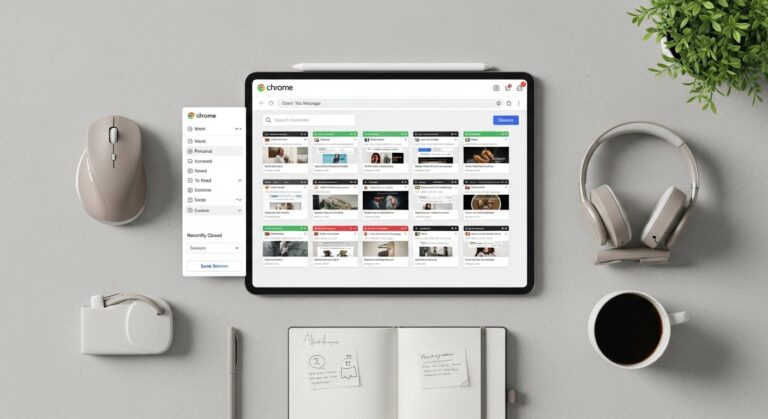

Navigating the Nuances: Understanding Bookmarking Workflow Differences on Mobile vs. Desktop
In today’s information-rich world, the ability to save and revisit valuable web content is paramount for professionals, students, and curious minds alike. Whether you’re researching a complex project, curating articles for later reading, or simply saving a recipe, bookmarking is an essential digital skill. However, the experience of bookmarking isn’t uniform across all devices. The way you interact with information on your smartphone – often in short bursts, on the move, and with a single hand – is vastly different from how you engage with it on a desktop computer, typically in a dedicated workspace, with a keyboard and mouse, and for more extended periods of focused work.
This fundamental divergence in context gives rise to significant differences in bookmarking workflows. Understanding these distinctions is not just an academic exercise; it’s crucial for building an efficient, frustration-free system that truly supports your productivity. Without a tailored approach, you risk a fragmented digital life, where valuable links get lost in the shuffle, or you spend precious time wrestling with tools that don’t align with your current device or intent. This article will deep dive into these workflow differences, explore popular tools, offer strategies for integration, and help you forge a cohesive bookmarking ecosystem that works for you, no matter where you are.
The Fundamental Divide: Context and Intent
The primary reason why mobile and desktop bookmarking workflows diverge lies in the inherent differences in their usage contexts and the user’s intent. Recognizing these foundational elements is the first step to crafting an effective strategy.
Mobile: The On-the-Go Capture Machine
Your mobile device is your constant companion, a gateway to information available anywhere, anytime. When you’re bookmarking on mobile, you’re often:
- On the move: Commuting, waiting in line, or taking a quick break.
- Multitasking: Juggling several activities simultaneously.
- Reacting quickly: Saving something you stumble upon serendipitously before it’s gone or forgotten.
- Consuming casually: Skimming headlines, browsing social media, or reading short articles.
- Sharing instantly: Often saving content with the immediate intent to share it with someone else.
The intent here is typically immediate, reactive, and focused on quick capture and later consumption. The physical interaction is touch-based, often one-handed, emphasizing speed and minimal friction.
Desktop: The Deep Work Command Center
Conversely, your desktop computer (or laptop in a stationary setup) is usually where you engage in more focused, intentional work. Desktop bookmarking scenarios often involve:
- Dedicated work sessions: Researching, writing, or planning.
- Structured organization: Categorizing, tagging, and filing content for long-term reference.
- Extensive content consumption: Reading lengthy reports, watching webinars, or diving deep into a topic.
- Content creation: Gathering resources to inform your own writing or projects.
- Archiving and reference: Building a personal knowledge base or resource library.
The intent on desktop is typically deliberate, proactive, and centered on structured saving, detailed organization, and integration into a larger workflow. The physical interaction involves a keyboard and mouse, allowing for more precise control and extensive data entry.
These differing contexts and intentions naturally lead to distinct approaches to saving and managing web content, which we’ll explore in detail.
Mobile Bookmarking: Speed, Sharing, and Serendipity
Mobile bookmarking is all about efficiency and accessibility. You need to save something quickly, often with limited screen real estate and while your attention is divided.
Leveraging Share Sheets and System Integrations
The cornerstone of mobile bookmarking is the device’s native “Share Sheet” (iOS) or “Share Menu” (Android). This ubiquitous feature allows you to send a link from almost any app – browser, social media, news app – directly to a bookmarking service.
- iOS Share Sheet: Typically accessed via an icon resembling a square with an upward arrow. Once tapped, it presents a row of app icons (including many bookmarking tools) and system actions. You can customize this to prioritize your preferred services.
- Android Share Menu: Often found under a “Share” icon (three dots connected by two lines) or within a menu. It lists a wide array of apps capable of receiving the link, making it incredibly versatile.
Real-world Use Case: You’re scrolling through Twitter on your commute and spot a fascinating article. Instead of opening it immediately (and potentially missing your stop), you tap the share icon, select your “read-it-later” app like Pocket, and it’s saved for later, often stripped of ads and optimized for reading. This quick, one-tap action ensures you don’t lose the content without disrupting your flow.
The Rise of “Read-It-Later” Apps
Mobile devices popularized the “read-it-later” concept, where articles are saved to be consumed offline or at a more convenient time. These apps excel on mobile due to their focus on clean reading experiences and offline access.
- Pocket: A perennial favorite, Pocket (free with premium features for advanced search, permanent library) allows you to save articles, videos, and web pages with a single tap. It syncs across devices, offers a distraction-free reading mode, and even has text-to-speech functionality. Its mobile app is incredibly intuitive for quick saves and consumption.
- Instapaper: Similar to Pocket, Instapaper (free with premium options for full-text search, ad-free experience) focuses on a minimalist reading experience. It excels at stripping away clutter, offering customizable fonts and themes, and providing highlighting and note-taking features. Its mobile interface is designed for effortless saving and comfortable reading.
These apps transform a cluttered web page into a clean, readable document, perfect for consuming content during downtime without an active internet connection.
Ephemeral Content and Social Bookmarking
Mobile is often where we encounter more ephemeral content – short videos, social media posts, quick news bites. Bookmarking here can take different forms:
- Social Media “Save” features: Platforms like Instagram, Twitter, and Pinterest have their own internal “save” or “bookmark” functions, allowing you to save posts within the platform for later viewing. While not traditional web bookmarks, they serve a similar purpose for platform-specific content.
- Quick notes/reminders: Sometimes, a link is just a temporary reminder. You might save it to a note-taking app like Apple Notes, Google Keep, or Evernote for a very short-term purpose.
One-Handed Operation and Gesture-Based Saving
Mobile UI/UX designers understand that phones are often used with one hand. Many apps are designed to place key actions (like saving) within thumb’s reach. Some browsers or apps even offer gesture-based saving, where a swipe or long-press can trigger a bookmark action, further streamlining the process.
Desktop Bookmarking: Organization, Research, and Archiving
On the desktop, the focus shifts from quick capture to systematic organization and deep engagement. You have more screen space, a physical keyboard for typing tags and descriptions, and the expectation of long-term retention.
Browser Native Bookmarks and Folders
Every major web browser offers native bookmarking capabilities. These are often the first port of call for desktop users.
- Chrome Bookmarks: Accessible via the star icon in the address bar, Chrome allows you to save bookmarks into a hierarchical folder structure. The Bookmark Manager (
chrome://bookmarks/) provides a powerful interface for organizing, searching, and even importing/exporting bookmarks. You can drag and drop links into folders, create new folders on the fly, and add detailed descriptions. - Firefox Bookmarks: Similar to Chrome, Firefox offers robust bookmark management. The Library (
Ctrl+Shift+Bor via the menu) allows for extensive tagging, folder creation, and search. Firefox also has a “Bookmarks Toolbar” for quick access to frequently used links. - Edge Favorites: Microsoft Edge integrates bookmarks (called “Favorites”) into its “Collections” feature, allowing users to gather web pages, text, and images into themed boards, which can be exported to Word or Excel. Standard favorites are managed in a sidebar panel.
- Safari Bookmarks: Safari on macOS provides a clean sidebar for bookmarks and reading list items. It supports folders, and with iCloud sync, these bookmarks are available across all Apple devices.
Real-world Use Case: You’re conducting research for a marketing report. As you find relevant articles, competitor websites, and data sources, you save them into a dedicated “Marketing Report Q4” folder within your browser’s bookmarks. You might create subfolders for “Competitor Analysis,” “Market Trends,” and “Data Sources,” ensuring everything is neatly categorized for easy retrieval during your writing process.
Dedicated Bookmarking Tools and Extensions
Beyond native browser functions, a plethora of dedicated tools and browser extensions offer advanced bookmarking capabilities, often with robust cross-platform synchronization.
- Raindrop.io: A modern, visually rich bookmark manager that excels in organization. Its desktop extensions for Chrome, Firefox, Safari, and Edge allow for one-click saving with tagging, collections, and even screenshot capture. It supports nested collections, advanced search, and offers a beautiful, customizable interface. Pricing: Free for basic, Pro for $3/month (or $28/year) for cloud backup, nested collections, and full-text search.
- Pinboard: A minimalist, tag-based bookmarking service. Pinboard (one-time fee of $11/year for basic account, $25/year for archiving) is loved by power users for its speed, reliability, and robust API. It focuses purely on text and tags, eschewing visual clutter. Its desktop extensions are straightforward, allowing for quick saving with multiple tags. It’s particularly strong for long-term archiving and full-text search of saved pages.
- Pocket/Instapaper Extensions: While excellent on mobile, these apps also offer desktop browser extensions that allow you to save articles directly from your browser with a single click, sending them to your reading list for later.
Browser Extensions and Add-ons: Power User Features
Desktop browsers truly shine with the extensibility offered by their add-on ecosystems. Many bookmarking tools offer extensions that integrate deeply with your browsing experience:
- One-click save buttons: Most dedicated services provide a button in your browser toolbar for instant saving.
- Contextual menus: Right-clicking on a page often reveals an option to “Save to [Your Bookmarking Tool].”
- Tagging and annotation: Advanced extensions allow you to add tags, notes, or even highlight text directly on the page before saving it to your bookmark manager.
- Bulk saving: Some extensions can save all open tabs or a selection of links from a page, ideal for intensive research sessions.
Drag-and-Drop and Bulk Saving
On desktop, the ability to drag and drop links into folders, or to save multiple open tabs at once, significantly enhances productivity. This level of granular control and batch processing is often cumbersome or impossible on mobile.
Tool Deep Dive: Bridging the Gap or Specializing?
The best bookmarking tools today aim to offer a seamless experience across devices, but some inherently lean towards one platform’s strengths. Here’s a comparison of popular tools, highlighting their cross-platform capabilities.
| Tool Name | Pricing Tiers | Key Features | Best For |
|---|---|---|---|
| Free; Premium: $4.99/month or $44.99/year | Save articles/videos, offline reading, distraction-free view, text-to-speech, tagging, recommended content. Premium adds permanent library, advanced search, suggested tags. | Mobile-first reading, content curation, ad-free consumption, casual saving, cross-device syncing. | |
| Instapaper | Free; Premium: $2.99/month or $29.99/year | Clean reading interface, customizable fonts/themes, highlighting, note-taking, offline access, speed reading. Premium adds full-text search, ad-free experience, send to Kindle. | Minimalist reading, academic research, deep reading, Kindle integration, highly customizable view. |
| Raindrop.io | Free; Pro: $3/month or $28/year | Visual bookmarks, nested collections, tagging, full-text search (Pro), cloud backup (Pro), duplicate finder (Pro), screenshot capture, multiple views (list, card, moodboard). | Visual organizers, extensive collection management, cross-platform power users, those who need robust organization beyond simple tags. |
| Pinboard | One-time fee: $11/year (basic), $25/year (archival) | Tag-based organization, minimalist design, fast, reliable, robust API, full-text archiving (archival account), public/private bookmarks. | Power users, developers, minimalists, long-term archiving, API integration, text-focused bookmarking. |
| Browser Native Bookmarks (Chrome, Firefox, Edge, Safari) | Free (included with browser) | Folder hierarchy, basic search, toolbar access, automatic sync across devices (with browser account). | Simple saving, casual users, those who prefer to keep bookmarks within their browsing environment, quick access to frequently visited sites. |
Bridging the Gap
Tools like Raindrop.io and the premium versions of Pocket and Instapaper are excellent examples of services that strive to provide a consistent and powerful experience across both mobile and desktop. They typically offer:
- Robust browser extensions: For quick saving and organization on desktop.
- Intuitive mobile apps: Optimized for quick capture via share sheets and comfortable reading.
- Cloud synchronization: Ensuring your bookmarks are always up-to-date on all devices.
- Consistent tagging/folder structures: Allowing you to organize once and access everywhere.
Specializing
Some tools, however, excel primarily in one domain. While they may have companion apps or extensions, their core strength lies in a specific workflow:
- Mobile-first: Many social media “save” features are primarily mobile-centric, not offering robust desktop counterparts.
- Desktop-first: Highly complex bookmark management systems that require extensive tagging, annotation, or integration with other desktop-centric productivity tools might feel clunky on mobile. Pinboard, while having mobile apps, is often appreciated for its desktop power.
Workflow Strategies for Seamless Integration
The goal isn’t to force identical workflows on both platforms, but to create an integrated system where mobile and desktop complement each other.
1. Consistent Tagging and Folder Structures
This is perhaps the most critical element for cross-platform harmony. If you use tags like “Research,” “Recipes,” or “To Read” on desktop, ensure you use the exact same tags on mobile. Many dedicated bookmarking apps allow you to create or select tags at the point of saving, regardless of the device.
- Example: When saving an article on your phone, immediately add the tag “Marketing Strategy.” Later, on your desktop, you can quickly filter by “Marketing Strategy” to find all related content, regardless of where it was saved.
- Tip: Create a standardized set of tags. Keep them concise and descriptive.
2. The “Bookmark Inbox” Approach
Treat your bookmarks like an email inbox. On mobile, the priority is often quick capture. Don’t worry about perfect organization in the moment. Instead, save links to a default “Inbox” or “Unsorted” collection.
- Mobile Capture: Quickly save to your “Inbox” using the share sheet.
- Desktop Processing: During a dedicated session on your desktop, review your “Inbox.” Categorize, tag, and move these bookmarks to their appropriate folders or collections. This leverages the desktop’s superior interface for detailed organization.
This strategy minimizes friction on mobile while ensuring everything gets properly filed later.
3. Scheduled Review and Organization
Regardless of your chosen tools, dedicate specific time slots (e.g., 15 minutes every Friday) to review and organize your saved content. This prevents accumulation of clutter and ensures your system remains effective.
- Weekly Audit: Check for duplicates, broken links, or content that’s no longer relevant.
- Re-tagging: Refine tags for better discoverability.
4. Leveraging Automation with IFTTT/Zapier
For advanced users, automation tools can bridge gaps and streamline workflows.
- IFTTT (If This Then That): You can create applets like “If I bookmark an article with tag ‘Read Later’ in Pocket, then add it to my Instapaper queue.” Or “If I save a link in Raindrop.io, then add it to a specific row in a Google Sheet.”
- Zapier: Offers more powerful, multi-step integrations. For instance, “When a new bookmark is added to my ‘Research’ collection in Raindrop.io, then create a new task in Todoist with the link.”
These tools can help synchronize data between services that don’t natively integrate, creating a truly bespoke bookmarking ecosystem.
Challenges and Solutions in a Hybrid Workflow
Even with the best tools and strategies, hybrid bookmarking workflows can present challenges.
Challenge 1: Duplication and Information Overload
Saving the same article multiple times across different apps or folders is common, leading to clutter and difficulty finding the definitive version.
- Solution: Choose one primary bookmarking tool for most content. Use specialized tools only when their unique features are essential (e.g., Pocket for reading, Raindrop for visual curation). Many premium bookmarking services offer duplicate detection features. Regularly review your “Inbox” for duplicates before filing.
Challenge 2: Inconsistent Tagging and Folder Structures
Using different tags on mobile versus desktop, or having a disorganized folder structure, makes content unsearchable.
- Solution: Develop a standardized tagging convention and stick to it. Tools like Raindrop.io allow for nested collections, offering a robust hierarchical structure that can be mirrored across devices. Use a “Bookmark Style Guide” if necessary.
Challenge 3: Broken Links and Dead Content
Web pages disappear, change URLs, or become outdated, rendering your bookmarks useless.
- Solution: Utilize bookmarking services that offer archiving (e.g., Pinboard archival account, Pocket Premium’s permanent library). These services save a copy of the actual webpage content, ensuring you can access it even if the original link goes dead. Regularly audit your bookmarks with tools like ‘Bookmark Checker’ extensions.
Challenge 4: Privacy and Data Ownership Concerns
Entrusting your valuable bookmarks to third-party services raises questions about data privacy and vendor lock-in.
- Solution: Research the privacy policies of your chosen tools. For critical data, consider services that allow you to export your bookmarks periodically (most do, typically in HTML or JSON format). Self-hosted solutions (like Wallabag) offer complete control but require more technical expertise.
Challenge 5: Synchronization Issues
Bookmarks not syncing correctly between devices can lead to frustration and lost content.
- Solution: Ensure all devices are logged into the correct accounts and have stable internet connections. Check the sync status within your bookmarking app or browser settings. If issues persist, try logging out and back in, or reinstalling the app/extension.
Optimizing Your Bookmarking Ecosystem
Building an effective bookmarking ecosystem requires conscious choices and continuous refinement.
1. Choose the Right Tools for Your Needs
Don’t try to use every bookmarking tool. Identify your primary use cases:
- Quick reading on the go? Pocket or Instapaper.
- Extensive visual organization and project research? Raindrop.io.
- Minimalist, text-based archiving and power searching? Pinboard.
- Simple, everyday links? Browser native bookmarks.
Often, a combination of 1-2 primary tools is most effective, complemented by browser natives for quick, transient saves.
2. Regular Maintenance is Key
Like any system, your bookmarking ecosystem needs upkeep. Schedule weekly or bi-weekly sessions to:
- Delete irrelevant bookmarks: If you saved something “just in case” and haven’t touched it in months, it’s probably safe to delete.
- Re-categorize and re-tag: As your interests and projects evolve, so should your organizational structure.
- Check for broken links: Use browser extensions specifically designed for this.
3. Leverage Search and Filtering
Modern bookmarking tools offer powerful search capabilities. Don’t rely solely on folders. Get comfortable using search queries, tags, and filters to quickly pinpoint what you need. The better you tag, the more effective your search will be.
4. Consider Offline Access
If you frequently travel or work in areas with unreliable internet, prioritize tools that offer robust offline reading capabilities (e.g., Pocket, Instapaper). This is a significant advantage, especially for mobile workflows.
5. Integrate with Other Productivity Tools
Think about how your bookmarks fit into your broader productivity stack. Can you send a bookmark to your task manager (Todoist, Asana) if it requires action? Can you integrate it with your note-taking app (Evernote, Notion) for deeper context?
- Example: Save an article about a new software feature to Raindrop.io, then use Zapier to create a task in your project management tool to “Review new software feature article from Raindrop.”
Ultimately, the goal is to create a frictionless pathway from discovering information to saving it, and then to retrieving it when needed, regardless of the device you’re using. By understanding the inherent differences between mobile and desktop workflows and strategically choosing and integrating your tools, you can transform your digital clutter into a highly organized, accessible personal knowledge base.
Key Takeaways
- Mobile bookmarking emphasizes quick capture, on-the-go consumption, and leveraging share sheets, while desktop bookmarking focuses on detailed organization, research, and long-term archiving with robust folder structures and extensions.
- “Read-it-later” apps like Pocket and Instapaper excel on mobile for distraction-free, offline reading, while dedicated desktop tools like Raindrop.io and Pinboard offer powerful organization and archiving features.
- A seamless cross-platform workflow requires consistent tagging, a “bookmark inbox” strategy for quick mobile saves, and regular desktop-based organization sessions.
- Common challenges like duplication and broken links can be mitigated by choosing primary tools with archiving features and performing routine maintenance.
- Optimizing your ecosystem means selecting tools that match your specific needs, integrating them with other productivity apps, and committing to ongoing organization.
Frequently Asked Questions
Q: Should I use my browser’s native bookmarks or a dedicated bookmarking app?
A: It depends on your needs. Browser native bookmarks are great for simple, everyday links you access frequently. For more complex organization, cross-device sync, ad-free reading, or long-term archiving, a dedicated app like Pocket, Raindrop.io, or Pinboard offers significantly more power and flexibility. Many users effectively combine both, using browser bookmarks for quick access and a dedicated app for structured curation.
Q: How can I prevent my bookmarks from becoming a disorganized mess?
A: Implement a consistent tagging and folder (or collection) structure across all your devices and tools. Use an “inbox” approach for quick mobile saves, then regularly process and organize these on your desktop. Schedule short, dedicated times (e.g., 15 minutes weekly) for bookmark review, deletion of old links, and re-tagging. Avoid creating too many tags; keep them concise and relevant.
Q: What’s the best way to save articles for offline reading on mobile?
A: Dedicated “read-it-later” apps like Pocket and Instapaper are specifically designed for this. They allow you to save articles, strip them of ads and clutter, and download them for offline access. Most also offer customizable reading experiences, making them ideal for reading on planes, commutes, or areas with poor internet connectivity.
Q: My bookmarks aren’t syncing between my phone and computer. What should I do?
A: First, ensure you’re logged into the same account on both devices within your chosen bookmarking service or browser. Check your internet connection. If issues persist, try logging out and then logging back in on both devices. For browser-native bookmarks, check your browser’s sync settings (e.g., Chrome Sync, Firefox Sync) to ensure bookmark synchronization is enabled. Sometimes, reinstalling the app or browser extension can resolve persistent sync problems.
Q: Can I automate parts of my bookmarking workflow?
A: Yes, absolutely! Tools like IFTTT (If This Then That) and Zapier allow you to create automated workflows. For example, you can set up an applet to automatically send new bookmarks from one service to another, add specific tags based on keywords in the URL, or even create a task in your to-do list whenever you save a link that requires action. This can significantly streamline your process, especially for repetitive tasks.
Navigating the Nuances: Understanding Bookmarking Workflow Differences on Mobile vs. Desktop
In today’s information-rich world, the ability to save and revisit valuable web content is paramount for professionals, students, and curious minds alike. Whether you’re researching a complex project, curating articles for later reading, or simply saving a recipe, bookmarking is an essential digital skill. However, the experience of bookmarking isn’t uniform across all devices. The way you interact with information on your smartphone – often in short bursts, on the move, and with a single hand – is vastly different from how you engage with it on a desktop computer, typically in a dedicated workspace, with a keyboard and mouse, and for more extended periods of focused work.
This fundamental divergence in context gives rise to significant differences in bookmarking workflows. Understanding these distinctions is not just an academic exercise; it’s crucial for building an efficient, frustration-free system that truly supports your productivity. Without a tailored approach, you risk a fragmented digital life, where valuable links get lost in the shuffle, or you spend precious time wrestling with tools that don’t align with your current device or intent. This article will deep dive into these workflow differences, explore popular tools, offer strategies for integration, and help you forge a cohesive bookmarking ecosystem that works for you, no matter where you are.
The Fundamental Divide: Context and Intent
The primary reason why mobile and desktop bookmarking workflows diverge lies in the inherent differences in their usage contexts and the user’s intent. Recognizing these foundational elements is the first step to crafting an effective strategy.
Mobile: The On-the-Go Capture Machine
Your mobile device is your constant companion, a gateway to information available anywhere, anytime. When you’re bookmarking on mobile, you’re often:
- On the move: Commuting, waiting in line, or taking a quick break.
- Multitasking: Juggling several activities simultaneously.
- Reacting quickly: Saving something you stumble upon serendipitously before it’s gone or forgotten.
- Consuming casually: Skimming headlines, browsing social media, or reading short articles.
- Sharing instantly: Often saving content with the immediate intent to share it with someone else.
The intent here is typically immediate, reactive, and focused on quick capture and later consumption. The physical interaction is touch-based, often one-handed, emphasizing speed and minimal friction.